

ASML says AI chipmaking bottlenecks are beginning to ease as it expands capacity

- ASML raised its 2026 revenue guidance to €43 billion to €45 billion and pledged to expand production capacity by 30% in each of the next two years, easing fears that its lithography machines would cap the AI buildout.
- It matters to chipmakers like TSMC, Samsung and SK Hynix and to the data-center operators behind AI, because ASML is the sole maker of EUV tools and its output has been the industry’s tightest bottleneck.
- The pledge signals the constraint on AI hardware may be shifting away from chipmaking equipment toward other parts of the supply chain.
On Wednesday (July 15), ASML announced to investors its intention to boost production capacity by 30% in each of the coming two years, and to increase its forecast revenues for 2026 for the second time already this year.
This suggests that the machinery for making advanced AI chips may no longer serve as the tightest bottleneck in the industry. This is crucial for all the companies building data centers and training large models, as ASML’s lithography equipment is at the very beginning of the supply chain that feeds into Nvidia, TSMC, and memory makers.
For several months, the limitation on AI technology has been traced back to one Dutch company. ASML is the sole company involved in the manufacture of extreme ultraviolet (EUV) lithography machines used in the fabrication of circuits at the nanometer level for memory and logic chips used in modern AI servers.
Semafor claims that ASML can produce only a few units of this equipment each year, creating an artificial limit for the growth of the industry. An increase in production capacity of this nature means that the cap will become less significant.
ASML expects €43 billion-€45 billion ($49 billion-51 billion) in 2026
The numbers point to the rapid increase of demand in the market. ASML expects to make full-year revenues of €43 billion-€45 billion ($49 billion-51 billion) in 2026 which is 16% more than the previous guide of €36 billion-€40 billion, according to Reuters.
The second quarter saw a year-on-year increase of sales of 21%, according to Semafor. For this quarter ASML saw net sales rise to €9.3 billion, with net income at €2.9 billion. The company shares have risen by 75% since the beginning of the year and the company also achieved a rise of 3.7%, with shares at €1,613 by 1000 GMT on the day of the announcement.
According to CEO Christophe Fouquet, the expected raise is based on the information from the customers. He defined the demand for the “chip-printing” system as “extremely strong”. He also added that the customers “continue to accelerate their capacity expansion plans,” thus, letting ASML see clearer in terms of long-term orders. Michael Roeg, an analyst of Degroof Petercam, said the quarter showed “blow-out” results in all respects.
Where the constraint moves next
Market analysts characterized the news as something that extends beyond ASML alone. “Easing lithography constraints is also positive for the broader equipment ecosystem, where ASML has been viewed as a key bottleneck,” said Marc Hesselink in a note carried by Reuters.
If the lithography process is no longer a limiting factor, focus shifts to the remaining parts of the stack: advanced packaging, high-bandwidth memory, and the power and cooling infrastructure needed to support data centers being built by companies like Google and Amazon in order to host models developed by firms such as OpenAI and Anthropic.
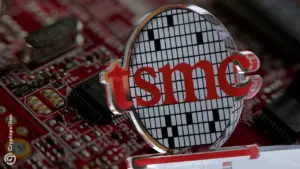
Its customer list clearly indicates why ASML’s order book is expanding. ASML provides the EUV machines to TSMC, the contract manufacturer responsible for producing Nvidia chips, and the memory suppliers Samsung and SK Hynix.
Reports from Semafor suggested that great results achieved by Intel and TSMC could signal new demand in the future. Simultaneously with the earnings declaration, ASML announced that its High NA EUV technology has achieved a readiness milestone of producing its first high-volume logic product, meaning the company is now seeking to put its state-of-the-art products into mass production.
Why ASML has a monopoly status
Competitors afford ASML space that others are not able to cover. There is no competitor manufacturing an EUV machine, thereby leaving ASML with no direct rivals in cutting-edge chip lithography. Nikon and Canon, Japanese producers of chip-making machinery, provide competition in less sophisticated deep ultra-violet lithography techniques, but they do not develop EUV. This is why ASML has a monopoly status and any decision about its capacity can affect the entire chip market.
One significant aspect to watch is whether ASML’s clients implement their announced plans regarding expansion and whether they will place firm orders until the end of 2026 and how quickly the 30% additional production capacity mentioned by them will be put to use. As long as the equipment is not delivered, the predictions remain predictions and nothing more than that.
What’s next?
Logan Gilland, CFP Director of Wealth Management at Bluespring Wealth and Co-Host of the DIY Money Podcast, and Nick Raich, CFA and CEO at The Earnings Scout, discuss their takeaways from ASML earnings and what they mean for AI semiconductor stocks. They talk about what the report signals for the AI chip trade, with Nick making the case that the earnings couldn’t have come in any better.
If you're reading this, you’re already ahead. Stay there with our newsletter.
FAQs
Why has ASML been considered a bottleneck for AI chips?
ASML is the world's only maker of extreme ultraviolet (EUV) lithography machines needed to produce advanced logic and memory chips, and Semafor reported it can build only a few dozen of them a year, limiting how fast the sector can scale.
How much is ASML expanding capacity and raising its forecast?
The company pledged to increase capacity by 30% in each of the next two years and lifted its 2026 net revenue outlook to €43 billion to €45 billion ($49 billion to $51 billion), about 16% higher at the midpoint than its previous €36 billion to €40 billion range.
Who are ASML's main customers?
Its customers include TSMC, which makes Nvidia's chips, along with memory manufacturers Samsung and SK Hynix and chipmaker Intel, whose strong results Semafor said pointed to further demand.
Disclaimer. The information provided is not trading advice. Cryptopolitan.com holds no liability for any investments made based on the information provided on this page. We strongly recommend independent research and/or consultation with a qualified professional before making any investment decisions.

Micah Abiodun
Micah Abiodun makes good use of his Environmental Engineering and Management (MSc) at Tallinn University of Technology (TalTech) to polish content and price prediction news at Cryptopolitan. Now on his 7th year in the crypto media space, he covers major cryptos, altcoins, DeFi, stablecoins, macro trends, and emerging tech.