






- Singapore, Hong Kong and Japan are building regulated frameworks that allow stablecoins to be used for payments and settlement.
- Stablecoin activity is already growing, with Asia emerging as a major hub for cross-border stablecoin flows and payments.
- Regulators are moving from rulemaking to real-world implementation, with licensed issuers, payment firms and transaction-monitoring requirements now in place.
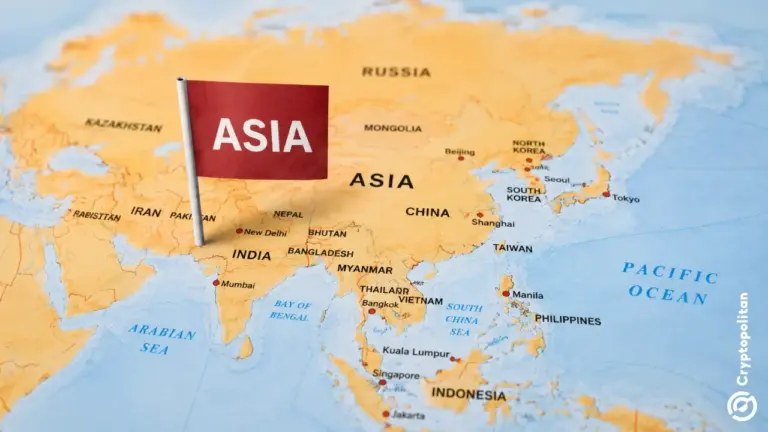
Asia is becoming the first region where large-scale pilot programs for blockchain-implemented payments are taking place. Authorities in Singapore, Hong Kong, and Japan are creating regulatory frameworks that will enable the use of stablecoins to transfer money under supervision. This is important because these frameworks are progressing from being only in consultation mode to being used in practice, giving payment companies a clear legal basis for their actions.
The approach is the same: create a regulated zone, then allow stablecoins to function as means of payment and settlement.
Three Asian regulators drawing the lines
According to Visa’s 2026 payments outlook, Singapore, Hong Kong, and Japan are among those jurisdictions that are seeing regulatory clarity advance most rapidly.
Singapore implemented its stablecoin framework in 2023. As of August 13, 2026, the Monetary Authority of Singapore includes companies such as Circle, Coinbase, BitGo, and Anchorage as Major Payment Institutions that are allowed to provide digital payment token services.
Hong Kong put in place its Stablecoins Ordinance on August 1, 2025, creating a licensing environment for issuers of stablecoins that are backed by fiat money. The Hong Kong Monetary Authority started accepting applications for licensing in August 2025. The first two licenses were granted on April 10, 2026, to Anchorpoint Financial Limited (FRS01) and HSBC (FRS02). The issuance of the licenses is a transition from rulemaking to a regulated market, where the issuers are obliged to comply with the necessary measures regarding their operations.
In Japan, the Financial Services Agency has issued the final amendment to the crypto “travel rule” on July 7, adding five new jurisdictions, effective on August 3, 2026. Exchanges and stablecoin service providers will be required to include information about senders and recipients on transfers, creating easier tracing of transactions.
The money is already moving
Regulation is catching up with activity that is already substantial.
Reap, a Hong Kong firm that issues stablecoin-backed cards, now moves roughly $6 billion a year, its co-founder Daren Guo said on Solana’s Bits to Bricks podcast. Its B2B research found business-to-business stablecoin flows rose from less than $100 million a month in early 2023 to more than $3 billion by 2025.
The report by Reap shows that Asia is the largest region in terms of stablecoin flows, which reached a figure of $12.5 trillion in 2025, with the Singapore-China route being the most active one. Visa also noted that the total stablecoin supply reached $250 billion and that the settlement volume was $3.5 billion a year.
Why did the rails form here first?
According to Guo, Asia has been designed for cross-border finance even before stablecoins were invented. Asian banks are sophisticated enough to work with different currencies, and businesses have established operations for sending and exchanging foreign money across different borders. Guo further postulates that stablecoins contribute more speed and programmability to an already advanced infrastructure built for cross-border transactions.
He takes care not to go too far in his argument. The dollar still supports roughly half of worldwide trade, according to Guo. However, he is making the more specific point that Asia is where the most advanced infrastructure for moving dollar stablecoins is evolving first.
According to Guo, “that’s been the biggest unlock of stablecoins,” pointing towards a scenario wherein a platform can cater to a global market right from inception rather than catering to one country at a time.
What are the transactions, actually?
According to some recent findings, these flows are not just simple cash transfers. A working paper of the Bank for International Settlements published on June 11, 2026, studied 593 million records of events based on 141 million Ethereum transactions in 2025 involving USDT, USDC, and PYUSD. Approximately 1/3 of all stablecoin transactions have involved several stages such as trading, borrowing, and settlement, while about 60% of the transfer events were made through those multi-stage operations.
The lesson is significant: treating every stablecoin transfer as an independent transaction can create an inaccurate understanding of the industry. This concept becomes important as Asian regulators are refining their supervision over tokens that are becoming more and more programmable settlement instruments instead of just digital money transfers.
The Asian market hasn’t cracked yet
The work is still ongoing for some regional regulators. In South Korea, there was still no stablecoin legislation at the end of June 2026, as reported by the World Payments Monitor. Currently, there is a delay in the implementation of its Digital Asset Basic Act (DABA) as there is an ongoing dispute about which institution— banks or fintechs— should issue stablecoins. Meanwhile, the private sector continues to make strides with BDACS launching the won-pegged proof of concept in September 2025 and Naver allocating up to 10 trillion won for a stablecoin project.
The next test will be if the licensed issuers of Hong Kong can translate regulatory approval into commercial rollout, while in South Korea, the DABA debate has been pushed back to the latter half of 2026, which will serve as a yardstick for Asia’s stablecoin experiment.
Don’t just read crypto news. Understand it. Subscribe to our newsletter. It's free.
FAQs
Why is Asia ahead on stablecoin payments?
Reap co-founder Daren Guo argues Asia's banking infrastructure was already built for cross-border, multi-currency flows, so stablecoins add speed and programmability to systems designed for international money movement, and the region recorded $12.5 trillion in stablecoin flows in 2025.
When does Japan's stablecoin travel rule take effect?
Japan's Financial Services Agency finalized its amendment on July 7, 2026, adding five jurisdictions to the travel rule's scope, and it takes effect on August 3, 2026.
Has South Korea passed a stablecoin law?
No. As of late June 2026, South Korea's Digital Asset Basic Act had not been enacted and was delayed into the second half of 2026 amid a dispute between the Bank of Korea and the Financial Services Commission.
Is Asia actually ahead of the U.S. and Europe on stablecoins?
Not conclusively. The strongest evidence is that Asia is becoming an important testing ground. The OECD says Asia accounted for about 30% of global stablecoin trading activity in 2025, but trading volume is not the same as payment adoption.
What is the strongest evidence that stablecoins are moving into real-world payments in Asia?
Hong Kong's HKDAP launch is one of the clearest current examples. Anchorpoint began its institutional rollout on August 12, with payments and settlement among its targeted applications.
Which Asian countries are furthest along?
Hong Kong, Singapore and Japan currently provide some of the clearest examples of regulatory and institutional development. South Korea is also important for its large crypto market, but its dedicated stablecoin rules are still under development.
Why could Asia be particularly suited to stablecoin payments?
Asia has extensive cross-border trade and multiple currencies and banking systems. Stablecoins could potentially provide a common digital settlement rail, particularly for businesses operating across several jurisdictions.
That is still a potential use case, rather than proof that stablecoins have already solved the region's payment problems.
What could prevent Asia from becoming the stablecoin leader?
Regulatory fragmentation is a major obstacle. Different countries are developing different rules for issuers, reserves, redemption and cross-border transfers.
Disclaimer. The information provided is not trading advice. Cryptopolitan.com holds no liability for any investments made based on the information provided on this page. We strongly recommend independent research and/or consultation with a qualified professional before making any investment decisions.

Ashish Kumar
Ashish Kumar is a crypto and financial journalist with eight years of newsroom experience. He covers what’s happening with crypto markets, regulation, DeFi, and exchange ecosystems. He has worked with Coingape, Todayq, and Newsroompost. Ashish holds a PGDP in English Journalism from the IIMC. He has also interviewed industry figures including Arthur Hayes, Yat Siu, Austin Federa, and more.









