



South Korea expands oversight with Travel Rule, VASP reporting proposals

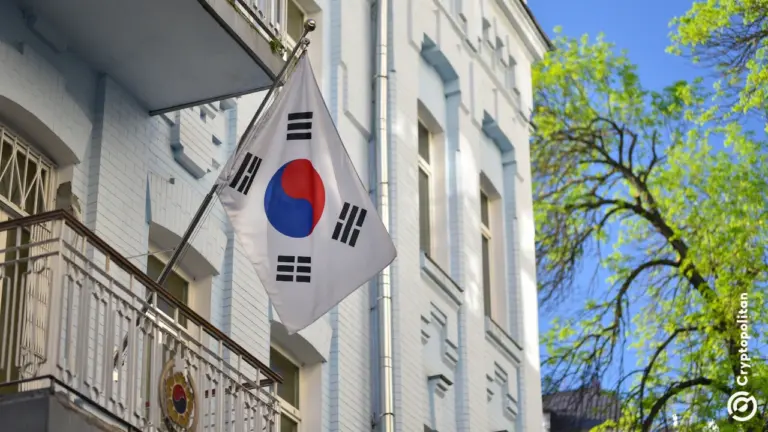
- South Korea’s Cabinet cleared a rule change on August 11, 2026 that eliminates the 1 million won reporting threshold for crypto transfers.
- The rule change also affects shareholder vetting and adds a 200% debt-ratio cap for exchange operators.
- The registration rules take effect August 20 and the full Travel Rule expansion follows in February 2027.
South Korea’s Cabinet has approved an amendment that gets rid of the requirement for exchanges to report crypto transfers over 1 million won.
The amendment also mandates financial-health tests for exchange operators.
What is changing about reporting requirements for South Korean exchanges?
The Financial Intelligence Unit of the Financial Services Commission (FSC) has approved a change that revises the enforcement decree of the Act on Reporting and Using Specified Financial Transaction Information.
The main change is to the Travel Rule, which is the requirement that a sending platform must pass sender and receiver details to the receiving platform. Since it went live on March 25, 2022, it only applied to transfers above 1 million won, roughly $700, but now, with the amendment, that threshold is deleted completely, attaching the reporting obligation to transfers of any value.
Platforms that receive transfers without the required information from the originating platform are now required to ask for the missing data and refuse the transaction if it never arrives.
Transfers to foreign platforms and self-hosted wallets are now sorted by risk. Overseas exchanges deemed as low-risk can be transferred with no restrictions, while transfers to other foreign exchanges and personal wallets are only allowed when the sender and recipient are the same verified party. Anything rated high risk is blocked outright.
The FIU said it decided to change the policy after seeing crypto split into sub-1 million won pieces, scattered across personal wallets of murky origin, then pooled back into a single address.
What changes about how South Korea vets exchange operators?
The amendment changes who counts as a controlling shareholder at a virtual asset service provider (VASP), so now the pool of controlling shareholders covers anyone who installed a majority of a firm’s directors or its chief executive, and in cases where the largest shareholder is itself a company, that company’s own top shareholder and representative fall under review as well.
Exchange operators that are just registering have to hold a debt-to-equity ratio at or below 200%, must not have damaged credit order through default in the prior three years, and must show no canceled license under financial law over the past five years, or their registration can be rejected. Existing operators get a one-year reprieve on the debt-ratio test
Meanwhile, executives have to clear the eligibility bar set by the Act on Corporate Governance of Financial Companies.
The registration provisions and the notice rules for sanctioned former staff take effect on August 20, while the expanded Travel Rule and the overseas-transfer restrictions arrive six months after in February 2027.
The FIU has redrafted its registration manual to match and, with the Financial Supervisory Service, planned a public briefing on August 13 for licensed VASPs and firms preparing to apply.
The FSC has been tightening its rules since Bithumb made a mistaken payout of about $40 billion in Bitcoin, prompting a five-minute ledger reconciliation for exchanges and stricter registration rules for major exchanges, Cryptopolitan reported.
If you're reading this, you’re already ahead. Stay there with our newsletter.
FAQs
What is changing about South Korea's crypto Travel Rule?
The FIU is removing the 1 million won threshold, so exchanges must share sender and receiver information on every transfer regardless of amount.
When do the new South Korean crypto rules take effect?
The VASP registration provisions start on August 20, 2026, while the expanded Travel Rule and overseas-transfer restrictions apply six months after promulgation, in February 2027.
What financial requirements must Korean crypto exchanges now meet?
An operator must keep its debt-to-equity ratio at or below 200%, avoid any credit-order default in the past three years, and hold no license cancellation under financial law over the past five years, with a one-year grace period on the debt ratio for existing firms.
Disclaimer. The information provided is not trading advice. Cryptopolitan.com holds no liability for any investments made based on the information provided on this page. We strongly recommend independent research and/or consultation with a qualified professional before making any investment decisions.

Hannah Collymore
Hannah is a writer and editor with nearly a decade of blog writing and event reporting experience in the crypto space. At Cryptopolitan, Hannah contributes to the news page, reporting and analyzing the latest developments in DeFi, RWA, crypto regulation, AI and frontier tech industries. She graduated from Arcadia university with a degree in Business Administration.









