







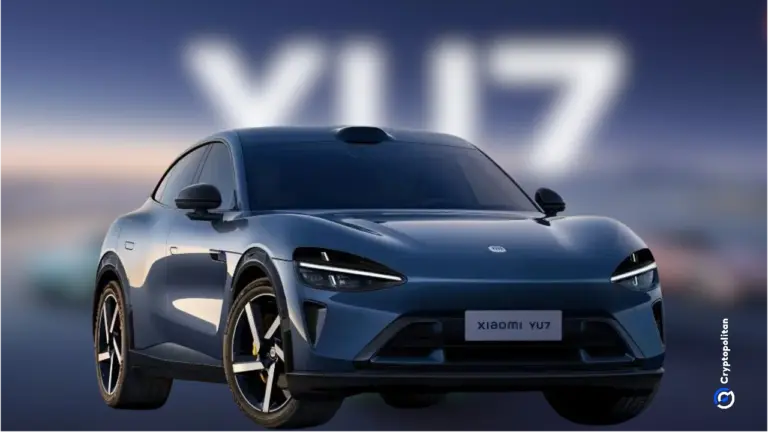
- Xiaomi raises its 2025 electric vehicle delivery target to 400,000 after breaking even.
- The electronics maker realized that its EV sector had started generating more profits faster than any other sector.
- The company is concerned that a previously reported global shortage of memory chips may impact these strong earnings.
Xiaomi’s electric vehicle (EV) division has hit a major milestone, producing its 500,000th car, and concurrently raised its full‑year 2025 delivery target to over 400,000 units, according to company announcements and media reports.
This news came after the electronics maker realized that its EV sector had started generating more profits faster than any other sector. During its third-quarter earnings call, Xiaomi announced that it is on track to achieve its previous goal of delivering 350,000 units by the end of this week.
On Thursday, November 20, Xiaomi’s founder, chairman, and CEO Lei Jun shared this update on social media and celebrated the production of the company’s 500,000th vehicle.
Xiaomi’s EV and AI division records an impressive earnings report
Best known for its smartphones and the development of a network of smart devices connected through an IoT platform, Xiaomi has consistently surpassed analysts’ expectations since tapping into the car market.
According to reports, the Beijing-based tech company transitioned from its first sale early last year to achieving profitability in this venture just last quarter.
In the company, the EV and AI division reported impressive results, achieving a profit of 700 million yuan, equivalent to approximately $98 million. The division yielded this profit roughly 19 months after launching its first SU7 electric sedan last year.
Xiaomi’s EV business made money faster than ever — just 19 months after debuting its first SU7 sedan. For Q3 2025, under the heading “Smart EV, AI & new initiatives”, the company obtained 28.3 billion yuan of EV revenue and reported its first-ever quarterly operating profit of 700 million yuan, comprising a very strong gross margin of 25.5%. And it highlights how the integration of operations, pace of production scale-up, and mix of premium models are already being realized, turning the EV division into a fundamental driver of progress for the company.
This earnings report sparked debates among individuals in the tech ecosystem. When reporters reached out to Xiaomi to comment on these controversies, the company stated that the rapid rise in production and the swift journey to generating more profits are crucial to the company’s success. This is particularly relevant at this time, as Xiaomi faces challenges in both the smartphone and electric vehicle markets.
However, the company is concerned that a global shortage of memory chips, previously reported, may impact these strong earnings. This is because it is anticipated that the shortage will consequently increase the costs for both of Xiaomi’s key business sectors. Additionally, the slow removal of a Chinese tax incentive for EV purchases is expected to lower demand.
Despite these challenges, Lei remains optimistic about the potential for growth in the EV sector. In his statement, the CEO highlighted that Xiaomi intends to adopt various strategies, such as reducing customer wait times, improving production, and making significant investments in research and development to launch new features, including smarter AI for its driver-assistance system, to boost its earnings and address these challenges.
Supply shortage for memory chips sparks concerns among tech firms
Reports dated November 18 pointed out that Xiaomi’s expectation that a shortage of memory chips will result in price hikes for mobile devices in 2026 aligns with the warning from other tech firms regarding a potential supply challenge for this significant component next year.
Lu Weibing, the Partner and President of Xiaomi Corporation, stated that the tech company has made various deals to ensure sufficient supplies for next year. He also mentioned that Xiaomi would increase the prices of its products to offset the predicted surge in component costs during a post-earnings call. According to him, the memory chip shortage could be worse and last longer than the previous one.
Xiaomi’s president made these remarks after Semiconductor Manufacturing International Corp. (SMIC), a major Chinese chipmaker, issued a warning about a potential memory shortage that could impact both the manufacturing of cars and consumer electronics in 2026.
Meanwhile, a wave of investments worldwide in data centers has fueled the need for advanced memory to power AI accelerators, prompting a shortage of lower-end chips as major companies such as SK Hynix Inc. and Samsung Electronics Co. focus on supplying components to Nvidia Corp.
On the other hand, Xiaomi has been enhancing its smartphone lineup with more premium models, including the flagship 17 series, which is intended to compete with Apple Inc.’s latest devices.
Don’t just read crypto news. Understand it. Subscribe to our newsletter. It's free.

Nellius Irene
Nellius is a Business Management and IT graduate with five years of experience in the cryptocurrency industry. She is also a graduate of Bitcoin Dada. Nellius has contributed to leading media publications, including BanklessTimes, Cryptobasic, and Riseup Media.









