







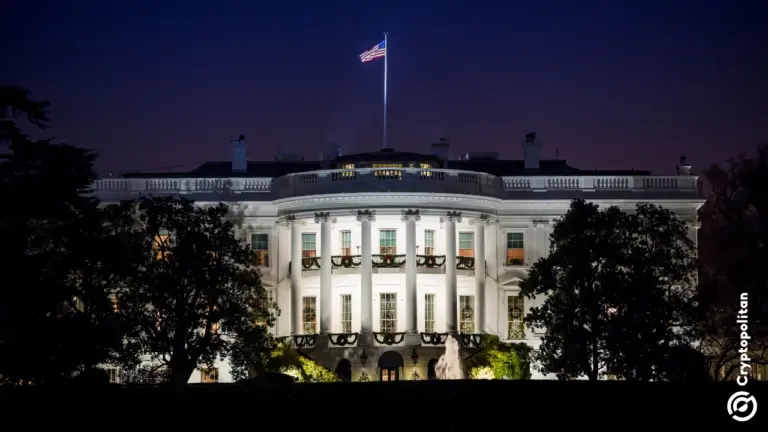
- The White House bought a 10% stake in Intel for $8.9 billion using CHIPS Act funds and other government allocations.
- Trump said he plans to make similar deals and wants to build a U.S. sovereign wealth fund.
- Intel warned the stake could hurt international sales and dilute existing shareholders.
The Trump administration confirmed on Friday that the federal government now owns 10% of Intel, as reported by CNBC. The deal, worth around $8.9 billion, is being split between grant funding from the CHIPS Act and separate allocations tied to national security chip programs.
President Donald Trump, who returned to the White House in January 2025, said on Monday that this is just the beginning.
“I will make deals like that for our Country all day long,” he posted on Truth Social. He also dismissed backlash from critics, saying “stupid people” are angry about something that will bring jobs and money back to the U.S.
The federal share in Intel is part of a broader shift. Trump’s team wants the U.S. to start building a sovereign wealth fund, a government-owned investment pot that can buy into private firms.
Economic advisor Kevin Hassett, director of the National Economic Council, said the Intel stake is a first step. “The president has made it clear all the way back to the campaign that he thinks that in the end, it would be great if the U.S. could start to build up a sovereign wealth fund.”
Hassett also said on CNBC’s Squawk Box that this situation is “a very, very special circumstance” given the large amount of CHIPS Act money involved. Still, he confirmed the plan is to make more deals like this one, possibly outside the chip sector entirely.
Hassett, meanwhile, also addressed the Federal Reserve chair question during his CNBC appearance. Trump hasn’t made a final decision on whether to keep or replace Jerome Powell, whose term ends in May.
“I would expect that this would run out for another few months before the president decides,” Hassett said. He added that Treasury Secretary Scott Bessent is leading the review and that there are “a number of really excellent candidates” being considered by both Bessent and Trump.
Asked about Powell’s recent comments at Jackson Hole, Hassett said the Fed chair gave a solid presentation. “The presentation that Jay Powell made up at Jackson Hole was sound,” he said. But he also made it clear that the Fed had been slow to act. “I think that the Fed’s a little bit late to the game.”
Intel lays out risks of government ownership
Moving on, Intel responded Monday with a securities filing warning that the government’s new stake could create major problems. One issue is international sales, which could suffer now that the U.S. government is a major shareholder.
Intel also said that the conversion of grant money into equity might scare off other government partners, who may not want their grants turned into stock deals. The company made clear that it’s unsure if other agencies will now try the same thing, or stop giving grants altogether.
Intel’s filing says it now considers its obligations under the CHIPS Act fulfilled, with the exception of the Secure Enclave program. The language used was legal and direct: “To the maximum extent permissible under applicable law,” it said, those CHIPS-related obligations are discharged. That statement alone signals that Intel sees the new stake as not just a funding deal, but a full-on trade-off.
Intel warns of shareholder dilution
Intel also confirmed that the government stake is being issued at a discount to the current market price, which means existing shareholders lose value. That’s dilution plain and simple. The company did not say exactly how steep the discount is, but the filing made it clear this isn’t a paper entry.
Shares are being handed over, and regular investors are the ones who take the hit. None of this looks like a one-off move.
As of now, Intel is the only company where this has happened. But if this pattern continues, other firms receiving CHIPS Act money or national security contracts could find themselves facing similar offers, or demands, from Washington.
The question now is whether future deals will follow the Intel model. Will companies accept discounted equity buys from the government in exchange for grant relief? Will Congress expand the sovereign fund idea into other sectors, like AI, crypto infrastructure, or energy?
For Intel, the deal is done. Trump’s administration holds equity in one of the most powerful chipmakers on the planet. The government is now a shareholder. And Trump has made it clear: he’s looking for more.
Don’t just read crypto news. Understand it. Subscribe to our newsletter. It's free.

Jai Hamid
Jai Hamid has been covering crypto, stock markets, technology, the global economy, and the geopolitical events that affect markets for the past 6 years. She has worked with blockchain-focused publications including AMB Crypto, Coin Edition, and CryptoTale on market analyses, major companies, regulation, and macroeconomic trends. She has attended London School of Journalism and thrice shared crypto market insights on one of Africa’s top TV networks.









