




Pay at your own risk: US threatens sanctions on Strait of Hormuz payments to Iran

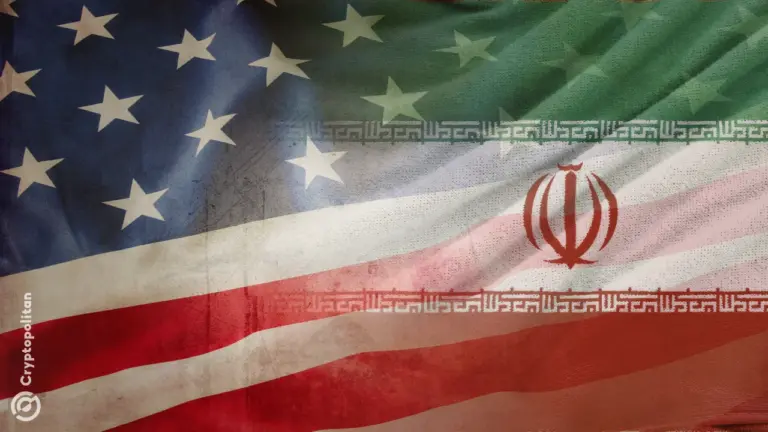
- Payments to Iran or the Islamic Revolutionary Guard Corps are not authorized and can trigger sanctions.
- The rule applies globally, exposing even non-US firms to penalties.
- The Office of Foreign Assets Control (OFAC) stated that Tehran may request payments via cash, crypto, or disguised donations, and all are still sanctionable.
The US Treasury Department’s Office of Foreign Assets Control (OFAC) has issued an alert to shipping companies, both US- and non-US-owned, that they risk facing sanctions from Washington should they pay Iran for safe passage through the Strait of Hormuz.
This was made known on Friday, May 1, and is the latest in Washington’s escalating economic pressure campaign against Tehran amid an ongoing standoff over control of the critical waterway.
OFAC promises sanctions on all payments to Iran
On April 28, OFAC published an answer under its FAQ section to the question, “Are ‘toll’ payments to Iran for safe passage through the Strait of Hormuz authorized?”
The alert states that payments, whether directly or indirectly to the Iranian government or to the Islamic Revolutionary Guard Corps (IRGC), “would not be authorized for U.S. persons, including U.S. financial institutions, or for U.S.-owned or -controlled foreign entities.”
The warning extends well beyond American companies. Non-US persons also face “significant sanctions exposure” for engaging in transactions involving designated or blocked persons, including the Iranian government and the IRGC, which is designated as a Foreign Terrorist Organization under multiple US authorities.
In its latest alert, OFAC stated that it is aware of Iran’s threats and demands for tolls for guarantees of safe passage in the strait.
OFAC stated that Iran might demand payments in various forms, including fiat, digital assets, informal swaps, or offsets. It also pointed out that some of these payments may be “nominally charitable donations made to the Iranian Red Crescent Society, Bonyad Mostazafan, or Iranian embassy accounts.”
However, it reiterated its position that those who make these payments, regardless of the method or seek guarantees from the Iranian government, stand the risk of sanctions from the US.
In a related FAQ published May 1, OFAC confirmed that Iranian digital asset exchanges qualify as Iranian financial institutions under existing sanctions regulations. That means their property and interests held by US persons or within US jurisdiction are blocked under Executive Order 13599.
Strait of Hormuz and nuclear program are top priorities
The Strait of Hormuz is a narrow waterway between Iran and Oman, and it also happens to be the world’s most important oil chokepoint, with around 20% of global petroleum passing through it. Over the years, Tehran had threatened to restrict traffic through the strait as leverage in its disputes with Western governments, usually linked to its nuclear program.
Iran then closed the strait after the US and Israel conducted military operations against it. So far, the negotiations between the involved parties seem to have stalled.
The OFAC pointed to Executive Order 13902, which authorizes sanctions against persons who “knowingly engaged in certain significant transactions involving determined sectors of the Iranian economy,” including the financial and petroleum sectors.
So, foreign financial institutions that facilitate such transactions risk losing access to US correspondent banking accounts, a penalty that effectively cuts them off from dollar-denominated trade.
Shipping companies now face tough choices
Shipping companies and their financial intermediaries now either have to refuse Iranian toll demands and risk operational disruption in one of the world’s busiest shipping lanes or pay and risk US sanctions enforcement.
As Cryptopolitan reported, citing the UK Navy, “Hormuz traffic has collapsed by 90% since conflict began, with fewer than 10 ships a day now transiting the strait.” The British outfit also estimated 20,000 sailors stranded on vessels in the Gulf.
The guidance does not offer a general license or safe harbor for toll payments, leaving little room for compliance workarounds.
The standoff adds a financial dimension to what has been primarily a military and diplomatic confrontation. Companies that operate tankers, insurers that underwrite Gulf transits, and banks that process maritime payments will need to update their sanctions screening to account for the new guidance.
The smartest crypto minds already read our newsletter. Want in? Join them.
FAQs
Can non-US companies be sanctioned for paying Iran's Strait of Hormuz tolls?
Yes. OFAC's guidance states that non-US persons, including foreign financial institutions, face "significant sanctions exposure" for transactions involving the Iranian government or the IRGC, and risk losing access to US correspondent banking accounts.
Does the sanctions warning cover payments made in cryptocurrency?
The Treasury Department indicated that Iran may demand payment in digital assets, and a separate OFAC FAQ published the same day confirmed that Iranian digital asset exchanges are blocked as Iranian financial institutions under Executive Order 13599.
When was the OFAC guidance on Strait of Hormuz tolls published?
OFAC posted the FAQ (number 1249) on April 28, 2026, and the Treasury Department publicized it via social media on May 1, 2026.
Disclaimer. The information provided is not trading advice. Cryptopolitan.com holds no liability for any investments made based on the information provided on this page. We strongly recommend independent research and/or consultation with a qualified professional before making any investment decisions.

Hannah Collymore
Hannah is a writer and editor with nearly a decade of blog writing and event reporting experience in the crypto space. At Cryptopolitan, Hannah contributes to the news page, reporting and analyzing the latest developments in DeFi, RWA, crypto regulation, AI and frontier tech industries. She graduated from Arcadia university with a degree in Business Administration.









