





- US scraps TSMC’s waiver to send chip supplies freely to China.
- Taiwan’s Ministry of Economic Affairs says the waiver could have little impact on its chip industry.
- Samsung and SK Hynix’s licenses were also revoked.
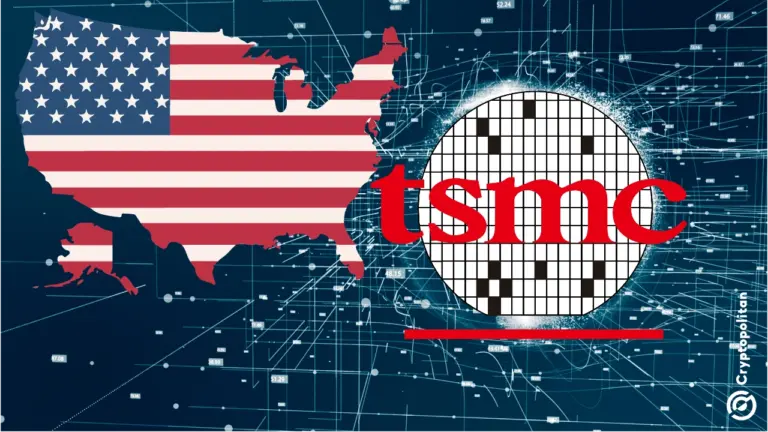
Washington has pulled back Taiwan Semiconductor Manufacturing Co. (TSMC)’s clearance to freely send key equipment to its biggest chipmaking hub in China, raising the risk of disruptions at the facility. The US has decided to strip the chipmaker of its validated end user (VEU) privileges for its Nanjing facility, a step in line with earlier rollbacks of Samsung and SK Hynix’s China operations. The exemptions will phase out over the next four months.
The company stated, “TSMC has received notification from the US government that our VEU authorization for TSMC Nanjing will be revoked effective Dec. 31, 2025.”
The company said it is still assessing the situation and engaging with US authorities, though it remains committed to running its Nanjing plant without disruption.
Taiwan’s Ministry of Economic Affairs stated the waiver loss could stir uncertainty on Nanjing’s production
Without VEU privileges, TSMC’s vendors must seek individual licenses for each shipment of US-controlled semiconductor tools to Nanjing, rather than relying on automatic authorization. US regulators have assured companies that they will give the necessary approvals to keep operations going. However, companies now face doubt over how quickly permits can be obtained. License requests are already piling up, and officials are reportedly trying to find fixes to simplify the approval process.
Taiwan’s Ministry of Economic Affairs has even argued that scrapping the US waiver would create uncertainty around the Nanjing factory’s output. Even so, the Nanjing plant makes up about 3% of TSMC’s total production capacity, and thus, the ministry expects little impact on Taiwan’s overall chip competitiveness. Still, TSMC’s US-listed American depositary receipts fell as much as 2.3% on Tuesday.
Currently, per Bloomberg’s data, Applied Materials, ASML, Tokyo Electron, and KLA are TSMC’s biggest suppliers. Though their stocks slid on Tuesday, Applied Materials and KLA in New York trading and ASML and Tokyo Electron through their ADRs posted steeper losses than the market overall. The companies were already operating under US curbs on China shipments, and the loss of the waiver could introduce further complications for their work with TSMC.
The BIS revoked Samsung and SK Hynix VEU licenses
Last week, US regulators stripped Samsung and SK Hynix of their validated end-user designations, saying the change was aimed at plugging “export control loopholes” that exposed US companies to unfair competition. The federal register was updated to reflect the removals and Intel’s former status for its Dalian factory, which SK Hynix later bought. Officials said the action would add roughly 1,000 new license reviews annually.
The Department of Commerce’s Bureau of Industry and Security indicated that it does not intend to grant licenses to expand capacity or upgrade technology at fabs in China. Samsung and SK Hynix have several memory plants in Korea, while Beijing also accounts for a major slice of Korean companies’ global output.
Samsung manufactures nearly 40% of its total NAND flash memory chips at its production plant in Xi’an, Shaanxi. SK Hynix also produces 20% of its NAND flash chips in Dalian, Liaoning, and roughly 40% of its DRAM in Wuxi, Jiangsu.
TSMC’s VEU status was never published in the Federal Register, leaving BIS nothing to amend formally. However, the practical impact doesn’t differ—suppliers to the chipmakers’ Chinese facilities will soon need US approval for restricted tool shipments.
The US has rolled out broad export restrictions to keep China from securing American chipmaking tools that could be used for advanced semiconductors and AI. Those curbs affect not only Chinese companies but also facilities owned by Samsung, SK Hynix, and TSMC in the country.
Biden’s team allowed TSMC, Samsung, and SK Hynix to continue shipping gear to their China facilities under an indefinite waiver, provided they adhered to security conditions and transparency requirements. The VEU designation, made public through US announcements for the Korean firms and in TSMC’s filings, was considered a key safeguard for their governments, since fabs depend on frequent imports.
The smartest crypto minds already read our newsletter. Want in? Join them.
Disclaimer. The information provided is not trading advice. Cryptopolitan.com holds no liability for any investments made based on the information provided on this page. We strongly recommend independent research and/or consultation with a qualified professional before making any investment decisions.

Nellius Irene
Nellius is a Business Management and IT graduate with five years of experience in the cryptocurrency industry. She is also a graduate of Bitcoin Dada. Nellius has contributed to leading media publications, including BanklessTimes, Cryptobasic, and Riseup Media.









