


- Consumer sentiment jumped 15.9% in early June as fears over Trump’s tariffs eased.
- The University of Michigan’s survey showed inflation expectations fell to their lowest since 1981.
- A 90-day US-China negotiation window calmed households after April’s tariff spike.
Americans are feeling less miserable about the economy this June, as new findings from the University of Michigan show a sharp jump in how people view both current conditions and the near future.
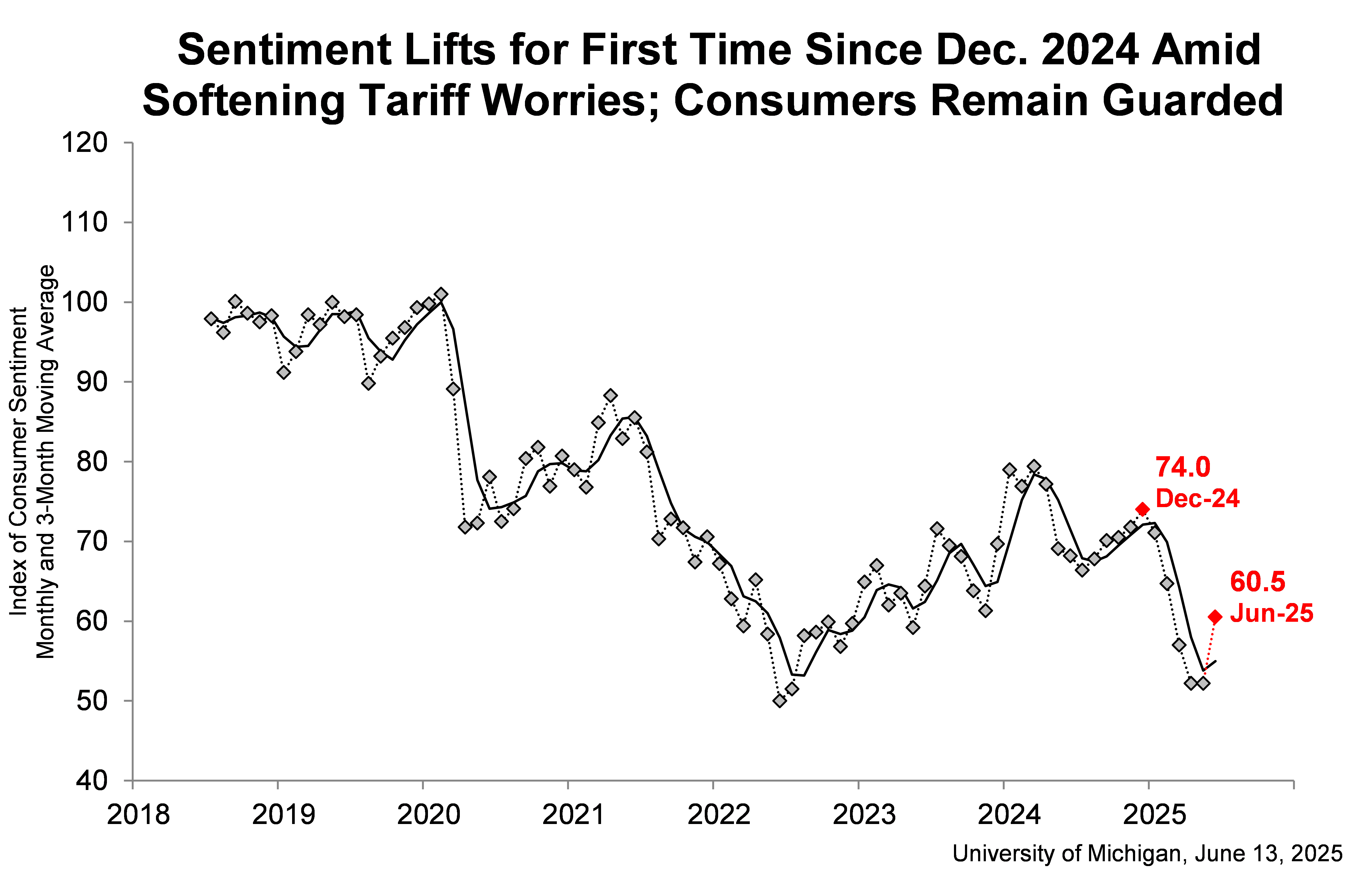
The change comes as tensions around Donald Trump’s tariff war calm down. According to the University’s June survey, the entire consumer sentiment index bounced hard across the board, reversing the negative slide seen earlier this year.
The headline consumer sentiment index jumped to 60.5, beating expectations by a wide margin. Economists surveyed by Dow Jones had projected a far lower figure of 54. This is a 15.9% rise from the previous month.
The jump isn’t just isolated to one part of the data. The reading on current economic conditions climbed 8.1%, and the index that reflects future expectations soared by 21.9%. The University credited the rebound to what many households see as progress in the U.S.–China trade situation.
Trump pulls back after April tariff surge
Donald Trump, after escalating threats in April and calling it “liberation day,” pulled back slightly by early June. The White House introduced a 90-day negotiation window with China, which many Americans saw as a possible turning point. While there’s no deal yet, the pause in aggressive rhetoric seems to have cooled fears for now. That change in tone, more than any actual resolution, appears to have shaped public mood.
Joanne Hsu, the director of the University of Michigan’s survey program, said the reaction wasn’t just emotional—it came straight from people recalculating risks. “Consumers appear to have settled somewhat from the shock of the extremely high tariffs announced in April and the policy volatility seen in the weeks that followed,” Joanne said. But she also added, “However, consumers still perceive wide-ranging downside risks to the economy.” This means that people may be calmer, but they’re far from relaxed.
Even with the rebound, sentiment levels remain below where they were this time last year. People haven’t forgotten how sudden policy moves from Washington can wreck plans and push prices up. The fear isn’t gone—it’s just less urgent. Trade war anxiety is still very much alive in the background.
One area where there’s been a big drop is inflation expectations. The one-year inflation outlook collapsed to 5.1%, falling 1.5 percentage points and hitting its lowest point since 1981. That’s not nothing. The five-year forecast barely moved, ticking down from 4.2% to 4.1%, but it still shows a slight pullback in longer-term concerns.
Inflation cools as Fed stays quiet
Joanne explained it like this: “Consumers’ fears about the potential impact of tariffs on future inflation have softened somewhat in June. Still, inflation expectations remain above readings seen throughout the second half of 2024, reflecting widespread beliefs that trade policy may still contribute to an increase in inflation in the year ahead.” Translation: optimism is rising, but people are still watching closely.
It’s worth noting that the Michigan results have been more alarmist than other reports. The University’s inflation concerns haven’t matched what others have shown recently. Just this week, the Federal Reserve Bank of New York published its own outlook, showing that one-year inflation expectations fell to 3.2% in May, a 0.4 percentage point drop from April.
Also this week, the Bureau of Labor Statistics reported minimal increases in both consumer and producer prices. Each category ticked up just 0.1% month over month, signaling weak upward pressure despite the tariff drama. That hasn’t stopped economists from warning that price hikes tied to tariffs might still appear later this year. Most agree the effects are just delayed.
With inflation cooling and consumer worries slightly fading, the Trump administration is on the Federal Reserve’s neck. Trump and his advisors are openly asking the Fed to cut rates again. But the central bank isn’t rushing. Officials are meeting next week, and as of now, all signs point to no rate cut until at least September.
If you're reading this, you’re already ahead. Stay there with our newsletter.
Disclaimer. The information provided is not trading advice. Cryptopolitan.com holds no liability for any investments made based on the information provided on this page. We strongly recommend independent research and/or consultation with a qualified professional before making any investment decisions.

Jai Hamid
Jai Hamid has been covering crypto, stock markets, technology, the global economy, and the geopolitical events that affect markets for the past 6 years. She has worked with blockchain-focused publications including AMB Crypto, Coin Edition, and CryptoTale on market analyses, major companies, regulation, and macroeconomic trends. She has attended London School of Journalism and thrice shared crypto market insights on one of Africa’s top TV networks.