

Ukraine turns to Google’s Gemma framework to develop national AI system

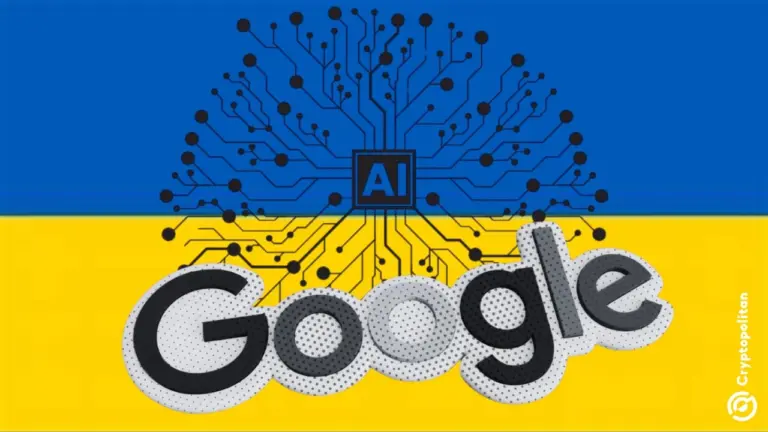
- Ukraine is building its own national AI system using Google’s open-source Gemma framework.
- The arrangement could help avoid paying millions to foreign companies and maintain control over sensitive data used by 23 million citizens.
- The system will be equipped to handle Ukrainian dialects and minority languages like Crimean Tatar that current AI models struggle with.
Ukraine is building its own large language model (LLM) using Google’s technology. The large language model will be trained to properly understand Ukrainian context, dialects and minority languages.
Training will be done first with Google infrastructure before moving to local servers. Officials are expecting cyberattacks upon launch and are preparing defenses against threats like prompt injection.
Ukraine has launched a national AI project
Ukraine is developing a large language model using Google’s open-source Gemma framework. The country aims to create a fully independent artificial intelligence system for both military and civilian use.
Ukraine’s digital ministry and mobile operator Kyivstar announced the project on Monday. It will use Google’s computing infrastructure for initial training before shifting entirely to local infrastructure, ensuring Ukraine retains full control over what AI systems can be accessed by its 23 million citizens daily.
Google was selected for the project after extensive evaluation. Meta’s Llama and France’s Mistral AI models were also among the options considered, according to sources familiar with the decision, per a Reuters report.
Chinese language models, including DeepSeek and Qwen were also rejected for the project.
The Ukrainian military already uses AI tools for aerial and satellite reconnaissance, drone operations, and battlefield analysis.
Oleksandr Bornyakov, the deputy minister of digital transformation of Ukraine, explained that avoiding reliance on systems like OpenAI’s ChatGPT was intentional, as Ukraine’s armed forces plan to integrate AI into battlefield management systems for troop coordination and enemy monitoring.
Addressing the language gap
The project stems partly from communication gaps affecting current AI systems. Bornyakov noticed how the existing AI systems struggle to process the dialect of people from his hometown of Bolhrad in Odesa Oblast, where a blend of Ukrainian, Russian, and Bulgarian is used.
Misha Nestor, Kyivstar’s chief product officer, who is overseeing the project, highlighted problems like mistranslations in legal documents and AI-generated errors. Four advisory committees will be in charge of the technical, legal, cultural, historical and linguistic aspects of the new model, ensuring it handles Ukrainian and minority languages such as Crimean Tatar, as well as Russian.
Data is being collected from over 90 government institutions, including court registries, educational publishers, regional archives and records of Russian actions during the ongoing war. This comprehensive dataset will allow the AI to understand Ukrainian context and terminology far better than general-purpose global models.
The Ministry of Digital Transformation experts say that Gemma is one of the most efficient open models by size and quality, providing a stable balance between performance and resource use. The model’s multilingual support includes Ukrainian already within its capabilities, and its extended tokenizer supports up to 128,000 tokens with multimodal processing of both text and images.
Training will occur on secure graphics processing units outside Ukraine, provided by Google, before the finished models are deployed on local data centers. This is the country’s solution to the ongoing threat of Russian strikes on Ukrainian infrastructure.
Bornyakov stated that officials expect the system to be attacked immediately after release. The team is developing protections against various cyber threats, including prompt injection attacks where malicious instructions are embedded in tasks given to the AI.
Kyivstar has installed more than 3,500 backup generators to stabilize operations as Russia continues to strike Ukraine’s energy infrastructure. The telecommunications company serves more than 22.5 million mobile customers and over 1.2 million fixed-line internet customers as of September.
If you're reading this, you’re already ahead. Stay there with our newsletter.

Hannah Collymore
Hannah is a writer and editor with nearly a decade of blog writing and event reporting experience in the crypto space. At Cryptopolitan, Hannah contributes to the news page, reporting and analyzing the latest developments in DeFi, RWA, crypto regulation, AI and frontier tech industries. She graduated from Arcadia university with a degree in Business Administration.