






Trump’s tariffs will stay in place as US Supreme Court rejects expedited review

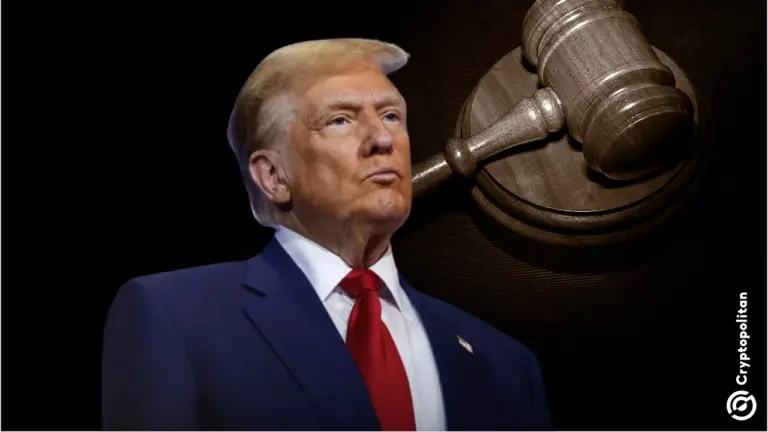
- The U.S. Supreme Court rejected a fast-track challenge to Trump’s tariffs by two toy companies.
- Trump’s administration now has 30 days to respond to the lawsuit over the IEEPA-based tariffs.
- Inflation hasn’t spiked as predicted, despite a tariff rate increase to 14.1% in 2025.
Trump’s tariffs are not going anywhere anytime soon. On Friday, the US Supreme Court rejected a request from two toy manufacturers who tried to speed up their lawsuit challenging the legality of the trade penalties.
That decision means the administration now has a full 30 days to respond, not a day less, as the normal appeal timeline remains intact. The request came from Learning Resources and hand2mind, two family-owned businesses that wanted to bypass the lower courts.
Both companies said Trump had no legal right to impose the tariffs under the International Emergency Economic Powers Act (IEEPA). The law, passed in 1977, lets the president act during emergencies—but they argued it doesn’t let him slap blanket duties on imports just because he feels like it.
They claimed the tariffs are wrecking business operations across the country and that dragging things out in court was not an option.

Toy companies say tariffs are hurting businesses
The companies told the court in their filing, “In light of the tariffs’ massive impact on virtually every business and consumer across the nation, and the unremitting whiplash caused by the unfettered tariffing power the president claims, challenges to the IEEPA tariffs cannot await the normal appellate process.”
Rick Woldenberg, the chairman and CEO of Learning Resources and hand2mind, said in an interview with CNBC that the court’s refusal to fast-track the case “was a disappointment but honestly just another twist in the road.” Rick said, “You want to win every motion, but sometimes you don’t,” and made it clear that the legal battle isn’t over. “Ultimately this showdown will be at the Supreme Court.”
For now, the fight continues in the lower courts. Last month, the US Court of International Trade temporarily blocked the tariffs, saying the IEEPA doesn’t give any president the power to slap tariffs on everything across the board. That decision gave some hope to companies like Rick’s. But earlier this month, a federal appeals court reversed that block and allowed the tariffs to stay while they consider arguments. The next hearing in that case is expected by the end of next month.
The tariffs were first announced just weeks after Trump started his second term. Economists immediately warned that prices would skyrocket, stoking a new inflation storm just as Americans were hoping for relief. But that never happened. Not yet, anyway.
Inflation hasn’t matched the predictions
Consumer prices in May only went up 2.4% compared to a year ago, based on numbers from the Bureau of Labor Statistics. That was even lower than what many economists had expected. In April, prices rose just 2.3%, the lowest pace since early 2021. The core inflation rate, tracked by the Personal Consumption Expenditures price index, dropped to 2.5% in April—also the slowest since March 2021.
This didn’t line up with the nightmare projections. Goldman Sachs predicted 6.3% core goods inflation this year. JPMorgan thought core inflation would nearly double before 2026. Back in May, American consumers surveyed by the University of Michigan expected prices to rise 6.6% by the end of the year. That dropped to 5.1% in June, but fears are still high.
So far, businesses haven’t passed those tariff costs onto customers like experts said they would. Fitch Ratings said the effective tariff rate jumped to 14.1% this year—up from just 2.3% last year. That’s an increase of nearly 12 percentage points under Trump’s 2025 trade actions. The numbers alone made analysts sure inflation would spike. But prices haven’t followed that script. Not yet.
Some economists haven’t given up on their predictions. They say this is just a delay. The US economy is massive, and things don’t move overnight. Trump’s trade policy has also been unpredictable, starting and stopping in ways that complicate forecasts.
Still, inflation right now is lower than it was when Trump walked back into the White House.
Federal Reserve Chair Jerome Powell said Wednesday that the price spikes are limited so far. “Just a few items are growing in price as a result of tariffs,” Powell said. He pointed to Chinese electronics, especially PCs and audio-visual equipment. Those have gotten more expensive. But most items haven’t changed yet.
Why not? Powell explained that stores are still selling inventory that arrived before the tariffs were active. He said, “Goods being sold at retailers today may have been imported several months ago, before tariffs were imposed.”
If you're reading this, you’re already ahead. Stay there with our newsletter.
Disclaimer. The information provided is not trading advice. Cryptopolitan.com holds no liability for any investments made based on the information provided on this page. We strongly recommend independent research and/or consultation with a qualified professional before making any investment decisions.

Jai Hamid
Jai Hamid has been covering crypto, stock markets, technology, the global economy, and the geopolitical events that affect markets for the past 6 years. She has worked with blockchain-focused publications including AMB Crypto, Coin Edition, and CryptoTale on market analyses, major companies, regulation, and macroeconomic trends. She has attended London School of Journalism and thrice shared crypto market insights on one of Africa’s top TV networks.









