
Trump says his people will meet with Chinese officials on June 9 to discuss trade deal


- Trump confirmed his officials will meet Chinese counterparts in London on June 9 to discuss a trade deal.
- Scott Bessent, Howard Lutnick, and Jamieson Greer will represent the US in the talks.
- The meeting follows a Trump-Xi phone call and comes after renewed trade tensions.
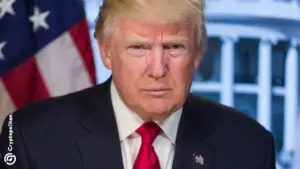
President Donald Trump confirmed on Friday that three of his top officials will meet with Chinese government representatives in London on June 9 to continue discussions on a possible trade deal.
The update came in a short post from the president on Truth Social, where he wrote, “The meeting should go very well. Thank you for your attention to this matter!”
The meeting will include Treasury Secretary Scott Bessent, Commerce Secretary Howard Lutnick, and US Trade Representative Jamieson Greer, all of whom were appointed by Trump to handle the ongoing trade conflict with Beijing.
The talks were arranged following a phone conversation between Trump and Chinese President Xi Jinping on Thursday. That call led to a decision from both sides to move ahead with fresh negotiations, after months of rising tension over tariffs, semiconductors, and rare earth exports. The Chinese Embassy in Washington didn’t offer any response when contacted about the announcement.
US delegation heads to London amid friction
Scott, who has led the White House’s trade team since Trump returned to the Oval Office, will be taking point at the June 9 London meeting. He’ll be joined by Howard and Jamieson, both involved in the earlier Geneva negotiations last month that temporarily paused tariffs between the US and China.
That pause didn’t last. Since then, things have gone sideways again. China has publicly accused the US of backing away from parts of the deal agreed to in Geneva.
Tensions escalated after the US Commerce Department warned American chipmakers to avoid working with Chinese semiconductor firms. In another blow to relations, Trump’s administration also announced it would revoke visas for some Chinese students studying in the US, drawing sharp criticism from Beijing.
On top of that, Washington claimed China was stalling on a commitment made during the Geneva meeting to approve more exports of rare earth minerals, which are vital for US manufacturing and defense.
Trump wrote after the call with Xi, “There should no longer be any questions respecting the complexity of Rare Earth products,” without giving any further explanation. No clarification followed, leaving questions hanging as the US team prepares for the London meeting.
Pressure builds from Asia to Washington
The current trade standoff comes at a time when China’s economy is facing serious internal problems. With high tariffs in place, fewer Chinese goods are entering the US. Meanwhile, demand at home is weak.
Producer prices in China have stayed in deflation for more than two years, and consumer inflation is close to zero. Instead of slowing production, China has turned up the volume, pushing more goods out of its factories and into foreign markets.
This surge is already being felt across Asia. Chinese exports to the ASEAN bloc grew 11.5% year-on-year in the first four months of 2025. In April alone, exports jumped 20.8% compared to the same period last year. By contrast, China’s exports to the US dropped 2.5%, and the April year-on-year numbers showed a 21% plunge.
Those goods aren’t just arriving in larger volumes — they’re cheaper too. Goldman Sachs economists estimate that in the last two years, Chinese products imported into Japan have become roughly 15% cheaper than items from other countries. That’s adding more fuel to trade tensions, especially in Asia, where countries have already imposed anti-dumping duties to protect local manufacturers.
This situation isn’t new. In the late 1990s and early 2000s, what many call the “China shock” rocked global markets when cheap Chinese imports flooded the world. Prices fell, but millions of manufacturing jobs disappeared across the globe. Economists say a repeat may be underway now, as China once again leans on exports to make up for its slowing domestic economy.
Don’t just read crypto news. Understand it. Subscribe to our newsletter. It's free.
Disclaimer. The information provided is not trading advice. Cryptopolitan.com holds no liability for any investments made based on the information provided on this page. We strongly recommend independent research and/or consultation with a qualified professional before making any investment decisions.

Jai Hamid
Jai Hamid has been covering crypto, stock markets, technology, the global economy, and the geopolitical events that affect markets for the past 6 years. She has worked with blockchain-focused publications including AMB Crypto, Coin Edition, and CryptoTale on market analyses, major companies, regulation, and macroeconomic trends. She has attended London School of Journalism and thrice shared crypto market insights on one of Africa’s top TV networks.