





Ton Network jumps on agentic AI bandwagon to fuel post-gaming era recovery

- TON just launched its open self-custodial wallet standard that gives AI agents their own dedicated on-chain wallets.
- This announcement signifies TON’s attempt to bounce back from its failed tap-to-earn era.
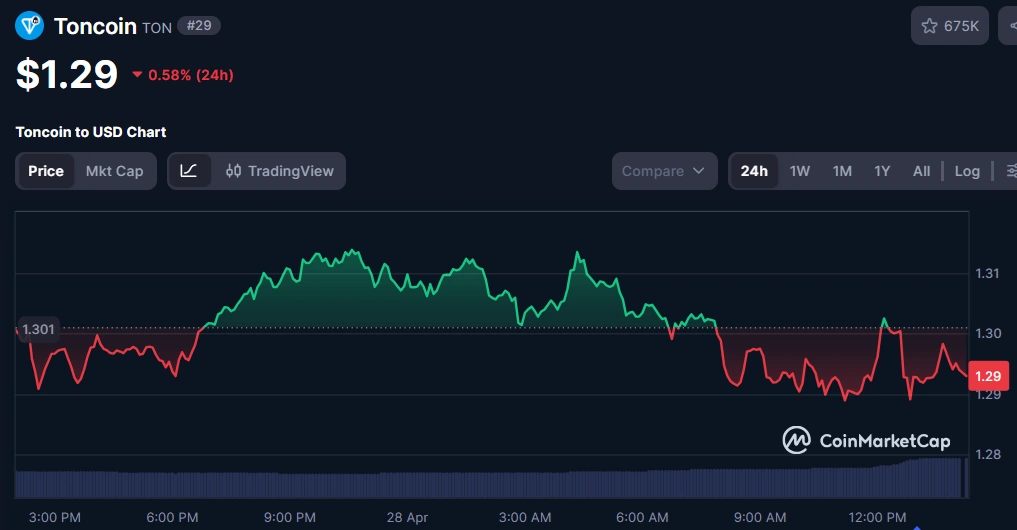
- The token currently trades at $1.29 after falling from its all-time high of $8.24 it hit in June 2024.
After riding the tap-to-earn wave and crashing dramatically, TON is making a strategic comeback. The network is placing itself in the race to become the go-to platform for autonomous AI agents by introducing a new open, self-custodial wallet standard, which grants each agent a personal on-chain wallet.
Released today, April 28, 2026, the new standard introduced by the TON Tech team is pivotal to the network’s rise after its failed attempt at infiltrating the gaming era. With TON currently trading at $1.29, the pressure is on the network to find the next credible growth engine.
What is the agent wallet standard?
TON’S new agentic wallet standard was created to give AI agents their own on-chain financial identity. Each wallet is made up of a smart contract that consists of two separate keys: one for the user and the other for the agent, allowing the agent to approve and carry out transactions using only its own operator key.
This means the agent can make swaps, pay fees, and interact with decentralized apps on its own without needing access to the user’s main wallet or exposing user credentials.
Additionally, the system is also designed to ensure users keep full control, as any fund placed in the agent’s control is limited to the amount the user chooses. Furthermore, the user can change the agent’s key, remove its access, or withdraw funds whenever they wish through a dedicated dashboard at agents.ton.org.
Lastly, there’s no cap on how many agents a user can deploy, so users who wish to have multiple agents can do so, with each agent having access to its own independent wallet and balance.
An earlier Cryptopolitan report cited McKinsey analyst projections that AI agents could be running anywhere from $3 trillion to $5 trillion of global consumer commerce by 2030.
TON joins the agentic payment wave
The agentic AI trend is growing immensely throughout the ecosystem, with TON’s edge in this race being its integration with Telegram, which grants developers direct access to over a billion daily users, an added benefit most chains can’t provide.
While the future looks bright, it’s worth noting that the agentic wallet contracts have not yet passed a formal security audit. TON’s own documentation described the current version as a developer preview, hinting that the product needs further testing before being widely adopted.
What TON has made clear, however, is that it is no longer counting on casual games to carry the network. However, given what happened with Hamster Kombat and its evident crash, the crypto market is going to need more than a promising architecture before rewarding TON with a sustained recovery.
Can TON avoid a repeat of the tap-to-earn era downturn?
In 2024, the TON blockchain introduced one of the fastest-growing digital products in history called Hamster Kombat. The project ended up pulling in over 300 million users and was publicly praised as a breakthrough moment in Web3 adoption.
After the launch of its native token HMSTR in September 2024, Hamster Kombat lost over 260 million active players, thus shedding 86% of its users within three months. The token itself dropped more than 76% from its launch price, eventually taking a toll on other projects, including Catizen, Tapswap, and other tap-to-earn games.
With the lessons from the collapse now in the history books, the question now is whether the TON blockchain can return to those highs. And if it does, how will it avoid returning to its current lows?
The smartest crypto minds already read our newsletter. Want in? Join them.
Disclaimer. The information provided is not trading advice. Cryptopolitan.com holds no liability for any investments made based on the information provided on this page. We strongly recommend independent research and/or consultation with a qualified professional before making any investment decisions.

Hannah Collymore
Hannah is a writer and editor with nearly a decade of blog writing and event reporting experience in the crypto space. At Cryptopolitan, Hannah contributes to the news page, reporting and analyzing the latest developments in DeFi, RWA, crypto regulation, AI and frontier tech industries. She graduated from Arcadia university with a degree in Business Administration.









