




Connecticut Senator Blumenthal plays spoiler as Trump touts Hormuz standoff win

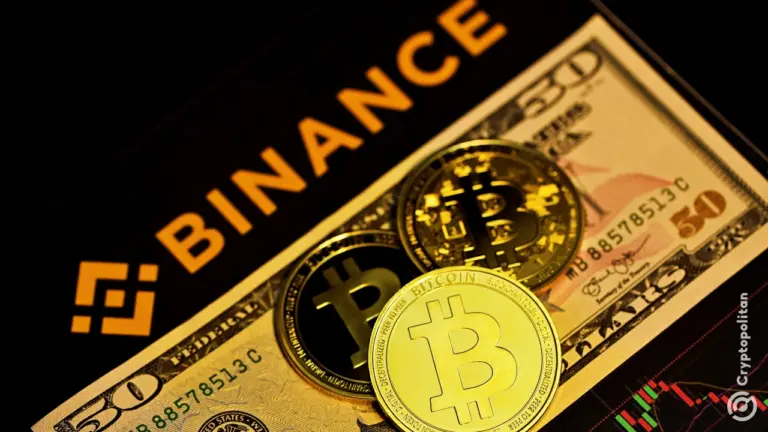
- Senator Blumenthal is investigating whether Binance’s court-ordered federal monitors are still functional.
- Senate Democrats are investigating the DOJ’s decision to drop charges against Turkish bank Halkbank despite a $20 billion money laundering scheme for Iran.
- The settlement with Halkbank provides no compensation for American victims of Iranian terrorism.
The Trump administration is being aggressively questioned by Democratic senators on seemingly lax oversight of Binance regarding some funds that ended up in the wrong hands in Iran, pouring cold water on President Trump’s parade as Iran relented on its Strait of Hormuz blockade in a peace deal that looked elusive until it was announced.
Adding to the controversy is the lenient settlement with a Turkish bank accused of laundering billions for Iran, which not only lets the bank off but also deprives American victims of Iranian-linked terrorism of necessary funds.
Senators question lax oversight of Binance
On Friday, Senator Richard Blumenthal (D-Conn.) sent urgent letters to the Department of Justice (DOJ) and the Treasury Department’s Financial Crimes Enforcement Network (FinCEN) demanding answers regarding the status of two independent monitors assigned to Binance.
A day before sending these letters, Blumenthal joined Senate Democratic Leader Chuck Schumer and Senator Adam Schiff in investigating the DOJ’s decision to drop criminal charges against Turkiye Halk Bankasi (Halkbank) without imposing a single dollar in fines.
The federal oversight of Binance in question was part of a 2023 settlement where the company paid a $4.3 billion fine for failing to maintain proper anti-money laundering (AML) controls. Alongside that, the government installed two monitors to watch the exchange’s every move. Frances McLeod reports to the DOJ, while Sharon Cohen Levin reports to FinCEN.
However, in the Senator’s letters sent Friday and seen by Fortune, he mentions “mounting allegations of dangerously lax anti-money laundering prevention” and recent reports that over $1.7 billion in crypto flowed through Binance to Iran-linked wallets.
Reports have also surfaced that the DOJ paused corporate monitorships for companies like Glencore and Boeing back in 2025.
Blumenthal stated that Binance allegedly took two months to respond to law enforcement about terrorist financing and five months to remove a suspicious vendor named “Blessed Trust.”
In a separate letter sent April 1 to Binance’s Co-CEO Richard Teng, he said, “Binance’s failure to provide the Subcommittee with the full material requested in its inquiry, in addition to details in its response in relation to subsequent reporting, raises further alarms about its candor.”
The Senator is also demanding internal data on whether Binance has weakened its compliance policies since 2025, specifically regarding the labeling of accounts tied to Iran. In some cases, internal warnings reportedly labeled risky accounts with “Don’t block. Internal accounts.”
What happened to the fine imposed on Halkbank?
The DOJ recently agreed to a deferred prosecution agreement with Halkbank, a Turkish state-owned bank accused of helping Iran evade sanctions.
People dissatisfied with the details of the settlement claim it is incredibly lax despite allegations that Halkbank helped Iran access a $20 billion slush fund. The bank will pay $0 in fines, admit no wrongdoing, and provide no compensation to US victims of Iranian terrorism.
Blumenthal and his colleagues, Schiff and Schumer, are demanding answers. “The timing of this agreement, coinciding with President Trump’s initiation of a war against Iran that he justified in part by citing Iran’s history of terrorist attacks against U.S. citizens, makes the Department’s decision even more incomprehensible,” the Senators wrote in their letter to Acting Attorney General Todd Blanche.
The Senators are specifically asking if President Trump pressured the DOJ to protect the bank.
They pointed out reports that following a September 2025 White House visit by Turkish President Recep Tayyip Erdogan, Erdogan reportedly assured his circle that “the Halkbank problem is over for us.”
Senator Ron Wyden also wrote to Treasury Secretary Scott Bessent, stating that abandoning the prosecution while fighting a war with Iran is “nothing short of rank incompetence.”
The smartest crypto minds already read our newsletter. Want in? Join them.
Disclaimer. The information provided is not trading advice. Cryptopolitan.com holds no liability for any investments made based on the information provided on this page. We strongly recommend independent research and/or consultation with a qualified professional before making any investment decisions.

Hannah Collymore
Hannah is a writer and editor with nearly a decade of blog writing and event reporting experience in the crypto space. At Cryptopolitan, Hannah contributes to the news page, reporting and analyzing the latest developments in DeFi, RWA, crypto regulation, AI and frontier tech industries. She graduated from Arcadia university with a degree in Business Administration.









