






- Scott Bessent said the U.S. and China are close to a trade deal, but it’s not finalized yet.
- Trump has not approved the agreement and insists on personally signing off.
- A federal court is reviewing whether Trump had the legal power to impose broad tariffs.
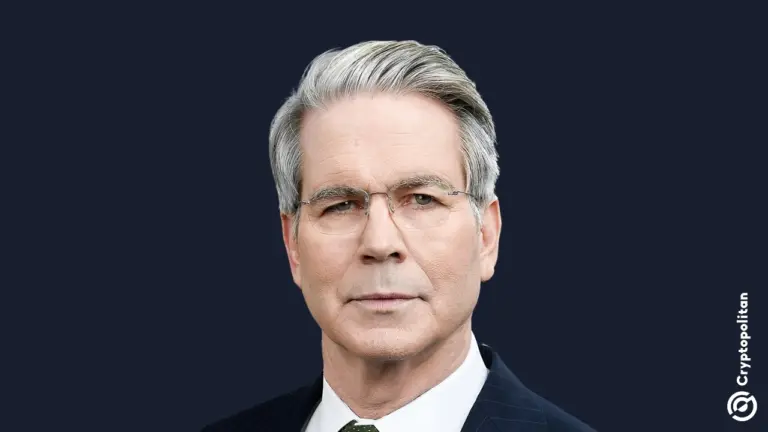
Scott Bessent, the Treasury Secretary under President Donald Trump, said Thursday morning that the U.S. and China are close to reaching a trade agreement, with just under two weeks left before tariffs snap back into full force.
Speaking on CNBC’s Squawk Box, Scott said:
“I believe that we have the makings of a deal. There’s still a few technical details to be worked out on the Chinese side between us. I’m confident that it will be done, but it’s not 100% done.”
The update comes ahead of the August 12 deadline, when the current tariff truce between the two nations expires. For now, duties remain significantly reduced. The U.S., which originally imposed 145% tariffs on Chinese imports, has dropped that rate down to 30%.
China, in response, cut its own duties from 125% to 10%. Those lowered figures were part of a temporary pause in the escalating trade war that had spiked global tensions over the last year. If no agreement is finalized before the deadline, those previous steep rates could be reinstated immediately.
Talks were ‘tough,’ Trump hasn’t signed off yet
Scott confirmed that he hasn’t yet spoken to Donald about any final deal, noting that the two-day negotiation session in Stockholm was still just one part of the process. Scott described the negotiations as “tough” and said both sides came to the table ready for hard discussions. “The Chinese are tough negotiators. We’re tough, too,” he said.
Trump has already said publicly that any final agreement must be approved by him directly. Until he gives the green light, nothing gets locked in. That’s important because even though Scott is confident, his hands are tied without the president’s sign-off.
While trade talks continue behind the scenes, Washington’s concerns with Beijing extend beyond tariffs. U.S. officials have flagged two other issues: China’s purchase of Iranian oil and its involvement in supplying technology to Russia that may have military applications. These are not officially part of the trade talks, but they’re contributing to a strained atmosphere between both governments.
Trump’s tariff powers are now under legal fire
As negotiations with China inch forward, a separate legal fight is brewing that could upend Trump’s entire trade approach. A federal appeals court is now hearing V.O.S. Selections v. Trump, a case challenging the legal authority behind the president’s use of tariffs. The hearing is taking place at the U.S. Court of Appeals for the Federal Circuit, and the arguments are being livestreamed on YouTube.
On Thursday morning, Trump posted a message on Truth Social, wishing luck to his legal team and calling the case crucial to national policy. “To all of my great lawyers who have fought so hard to save our Country, good luck in America’s big case today,” he wrote.
He followed that up with:
“If our Country was not able to protect itself by using TARIFFS AGAINST TARIFFS, WE WOULD BE ‘DEAD,’ WITH NO CHANCE OF SURVIVAL OR SUCCESS. Thank you for your attention to this matter!”
At the center of the legal debate is whether Trump had the right to use the International Emergency Economic Powers Act to push through his reciprocal tariff plan. That plan included a 10% global baseline tariff and higher rates for specific countries, all justified under emergency powers.
Neal Katyal, a former acting U.S. Solicitor General who is arguing against the administration, said Thursday on MSNBC that Trump’s move goes far beyond historical precedent.
Neal added that the power to create or modify tariffs lies strictly with Congress, not the White House. “Our Constitution was very clear in saying… there’s one branch that has the power to levy tariffs, and it isn’t the president, and it isn’t the courts. It’s the Congress of the United States.”
The smartest crypto minds already read our newsletter. Want in? Join them.
Disclaimer. The information provided is not trading advice. Cryptopolitan.com holds no liability for any investments made based on the information provided on this page. We strongly recommend independent research and/or consultation with a qualified professional before making any investment decisions.

Jai Hamid
Jai Hamid has been covering crypto, stock markets, technology, the global economy, and the geopolitical events that affect markets for the past 6 years. She has worked with blockchain-focused publications including AMB Crypto, Coin Edition, and CryptoTale on market analyses, major companies, regulation, and macroeconomic trends. She has attended London School of Journalism and thrice shared crypto market insights on one of Africa’s top TV networks.









