






Scandium shortages hit U.S. 5G chip production amid Trump’s trade truce with China

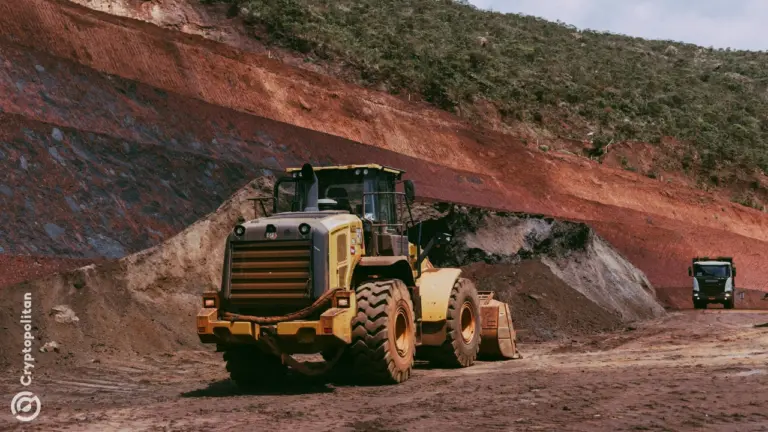
- Scandium supply is tight, and U.S. 5G chip parts are at risk.
- China’s export controls cut yttrium flow to the U.S. to 17 tons from 333 tons.
- Yttrium prices are up about 60% and sit near 69x last year’s level.
Scandium is getting harder to source, and U.S. chip and aerospace supply chains are feeling it right now.
Some suppliers have started turning away customers as inventories tighten ahead of a planned March summit in Beijing between President Donald Trump and President Xi Jinping.
The shortfall also hits yttrium and other rare earths, a small set inside the 17-element rare earth family.
China produces almost all of these niche materials, and that gives Beijing real leverage over defense tech, aerospace, and semiconductors. Scandium and yttrium do not show up in big headlines like oil or copper, but the numbers around supply are ugly.
Exports stay stuck as Washington and Beijing talk truce
China imposed export restrictions in April, then later allowed many rare earth exports to restart. But Chinese customs data shows shipments of these materials still rarely reach the United States, even after an October detente between Washington and Beijing.
That October easing was linked to China pausing critical mineral export restrictions, and that promise is expected to come up again when Donald and Xi meet in Beijing in March.
The key pressure point in aerospace is yttrium, used in coatings that keep engines and turbines from melting at high heat. Without regular coating application, those engines cannot be used.
Since a November report first flagged the yttrium shortage, prices jumped about 60% and are now roughly 69 times higher than a year earlier. Some coatings manufacturers have started rationing material, based on what company executives and traders said.
Executives at two North American firms that buy yttrium for coatings said they had to temporarily pause production because they could not get enough supply. One of those firms is now turning away smaller and offshore customers to conserve material for bigger clients, including certain engine makers.
A separate company in the coating supply chain recently ran out of material and stopped selling products that contain yttrium oxide, based on a source with direct knowledge of the situation.
A U.S. government official said shortages of yttrium and Scandium have not yet weighed on jet engine or chip output, but some U.S. manufacturers now face “shortages” of certain rare earths from China.
The export math shows why buyers are tense. China exported 17 tons of yttrium products to the United States in the eight months after controls were introduced last April, versus 333 tons in the eight months before those measures.
A White House official said the administration is committed to access for critical minerals for U.S. businesses and added: “This includes negotiating with China and monitoring compliance with President Trump’s agreement with President Xi, as well as developing alternative supply chains as warranted.”
One industry note that made the rounds was a plug for the Reuters Sustainable Switch newsletter, which tracks ESG trends affecting companies and governments.
Coating lines pause as engine demand stays hot
Aerospace supply chain specialist Kevin Michaels of AeroDynamic Advisory said low yttrium supply has not yet stopped engine production, but manufacturers are still worried. Kevin called it “a watch item” and “a tangible example of how China is flexing its rare earth muscle.”
That concern lands on top of the existing strain. Engine makers are already struggling to meet airline demand for spare parts, while planemakers Boeing and Airbus push for higher production.
Roughly 440 kilograms of rare earth materials are needed to manufacture a single F-35 stealth fighter jet for military defense. A submarine may require about 4,400 kilograms.
The same element family also sits inside neodymium magnets used in electric vehicle motors, smartphone components, wind turbines, and sensors used in precision-guided missiles.
China controls roughly 90% of the global rare earth processing supply chain. In April 2025, China tightened its export licensing regime, and that was followed by a reported 76% drop in South Korea’s rare earth imports.
License delays squeeze 5G chip parts and packaging
Chip supply chains have their own problem list, and Scandium is now on it. Dylan Patel, founder and CEO of SemiAnalysis, said U.S. semiconductor makers are running low on Scandium, putting next-generation 5G chip production at risk.
Global production is only several tens of tons a year, and that tiny supply has to cover multiple industries. Scandium is used in fuel cells, specialty aluminum aerospace alloys, and advanced chip processing, including processing steps tied to packaging.
Dylan said major U.S. semiconductor manufacturers rely on Scandium for making chip components that “go into essentially every 5G smartphone and base station.”
Another U.S. official said many firms had been getting Scandium from third-country suppliers, but China requires license applicants to declare their end users. That official said: “Our thesis is that it is precisely the semi industry being targeted.”
One possible non-China angle sits in South Korea’s Korea Zinc, which is a leading zinc smelter, but its core strength is advanced hydrometallurgical refining. In conventional smelting, slag is treated as waste.
Korea Zinc has technology to recover iron, nickel, copper, cobalt, and rare earth elements from slag at 99.99% purity. The company’s process reportedly reduces pollution by 60% to 70% compared with traditional methods.
Don’t just read crypto news. Understand it. Subscribe to our newsletter. It's free.

Jai Hamid
Jai Hamid has been covering crypto, stock markets, technology, the global economy, and the geopolitical events that affect markets for the past 6 years. She has worked with blockchain-focused publications including AMB Crypto, Coin Edition, and CryptoTale on market analyses, major companies, regulation, and macroeconomic trends. She has attended London School of Journalism and thrice shared crypto market insights on one of Africa’s top TV networks.









