




South Korea risks ’97-style financial crisis if U.S. trade demands are accepted

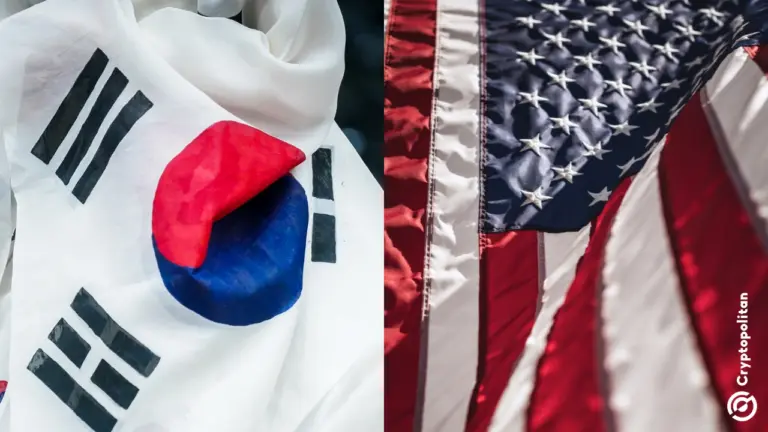
- Lee Jae Myung warned that South Korea could face a 1997-style financial crisis if it accepts the U.S. trade deal without safeguards.
- The $350B investment deal is stalled due to disputes over control and a lack of a currency swap.
- Trump’s administration detained 300 Korean workers, sparking backlash but not breaking the alliance.
South Korea could collapse into another financial disaster if it agrees to the United States’ latest trade terms without protection. That’s what President Lee Jae Myung told Reuters on Friday in a sharp warning that compares the risks to the country’s 1997 crash.
The deal on the table is huge, $350 billion in investment from South Korea in return for lower U.S. tariffs on Korean exports, but Lee says the way the U.S. wants to structure it would rip a hole in the Korean economy if there’s no currency swap deal first.
The agreement was discussed verbally between Seoul and Washington in July. But it’s still not official. Talks have frozen because both sides can’t agree on who controls the investments and how they’ll be used.
“Without a currency swap, if we were to withdraw $350 billion in the manner that the U.S. is demanding and to invest this all in cash in the U.S., South Korea would face a situation as it had in the 1997 financial crisis,” Lee said. His comments came just days before his trip to New York, where he’ll speak at the United Nations and chair a Security Council meeting.
Lee confronts trade fight, immigration raid, and defense split
Lee came into power in June after his conservative predecessor, Yoon Suk Yeol, was kicked out and jailed for imposing martial law. Since then, Lee’s been trying to cool tensions in the country and its economy.
He told Reuters he’s using his visit to the U.S. to show that “democratic Korea is back.” He met Donald Trump in August for the first time as president, though the two didn’t issue a joint statement or formal announcement.
Things got worse this month when Trump’s administration ordered a federal raid on a Hyundai battery plant in Georgia. U.S. agents detained over 300 South Korean workers for immigration issues and published photos of them in shackles.
Lee said people in South Korea were angry about how the workers were treated and warned that it could make companies second-guess investing in America. Still, he said the relationship between both countries would hold.
“I do not believe this was intentional, and the U.S. has apologised for this incident, and we have agreed to seek reasonable measures in this regard and we are working on them,” Lee said. He added that Trump personally offered to let the workers stay in the country.
There’s no scheduled meeting between Trump and Lee during the New York visit, and trade talks aren’t even on the agenda. Commerce Secretary Howard Lutnick told South Korea to follow the path Japan took. Japan accepted a deal with the U.S. earlier this year, and Lutnick warned that Seoul either needs to do the same or keep paying tariffs.
Trump’s team insists foreign governments pay those levies, even though they’re technically paid by U.S. importers. Asked if he’d walk away from the deal, Lee said, “I believe that between blood allies, we will be able to maintain the minimum amount of rationality.”
South Korea offered to set up a foreign exchange swap line to reduce damage to its currency, but Lee didn’t say whether the U.S. would go for it. He stressed that Seoul can’t be treated the same as Tokyo. Japan has more than double South Korea’s $410 billion in foreign reserves, a globally used currency in the yen, and its own U.S. swap deal. South Korea has none of that.
Trump demands full control over South Korean investments
Lee said both countries already agree that any investments must be commercially viable. But that’s where the agreement ends. Trump says he will personally pick the projects and that the U.S. will control where the money goes.
Lee’s adviser, Kim Yong-beom, said back in July that South Korea added safeguards to reduce risk, like only backing projects that make business sense.
But Lee told Reuters that the actual proposals being discussed don’t offer enough certainty. “Reaching detailed agreements that guarantee commercial reasonableness is now the central task, yet it also remains the biggest obstacle,” he said.
Lee then described a growing divide between countries like South Korea, Japan, and the U.S., and a bloc of China, North Korea, and Russia. He said South Korea’s geography puts it right in the middle of the danger.
“This is a very dangerous situation for Korea, and we must find an exit ramp out of the escalating military tensions,” Lee said. “We must find a way for peaceful coexistence.”
The smartest crypto minds already read our newsletter. Want in? Join them.
Disclaimer. The information provided is not trading advice. Cryptopolitan.com holds no liability for any investments made based on the information provided on this page. We strongly recommend independent research and/or consultation with a qualified professional before making any investment decisions.

Jai Hamid
Jai Hamid has been covering crypto, stock markets, technology, the global economy, and the geopolitical events that affect markets for the past 6 years. She has worked with blockchain-focused publications including AMB Crypto, Coin Edition, and CryptoTale on market analyses, major companies, regulation, and macroeconomic trends. She has attended London School of Journalism and thrice shared crypto market insights on one of Africa’s top TV networks.









