







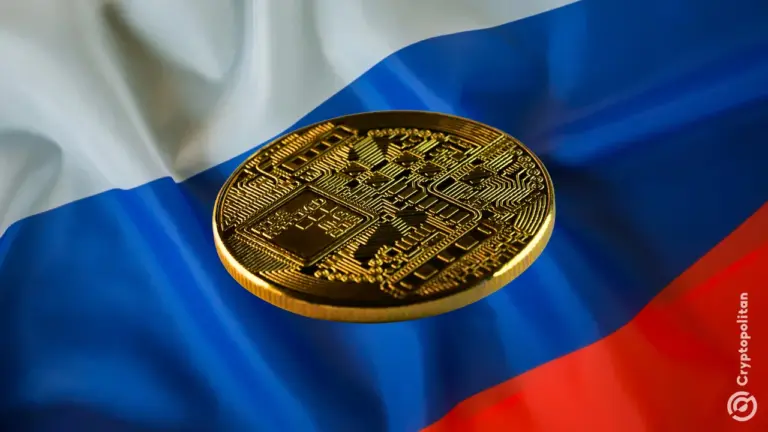
- Russian ruble-backed stablecoin A7A5 has processed over $100 billion in transactions within its first year.
- The EU’s 19th sanctions package in October 2025 marked the first time cryptocurrency was explicitly targeted.
- The token was developed by A7 LLC, owned by fugitive Moldovan banker Ilan Shor and Russian state bank Promsvyazbank, to help Russian businesses bypass Western sanctions.
A7A5, digital currency backed by the Russian ruble has processed more than $100 billion worth of transactions in under 12 months, even as European authorities move to shut down its operations through new restrictions.
A7A5 operates on Ethereum and Tron. Data from blockchain research company Elliptic shows the currency has handled $17.3 billion in trading activity. Users have made close to 250,000 separate transactions using 41,300 different accounts since the token started operating.
However, recent figures suggest interest in the currency may be dropping off. Daily transaction amounts have fallen significantly from their highest point of more than $1.5 billion down to roughly $500 million. The company behind the token has not released any significant new batches of the currency since July, according to Elliptic’s research.
The slowdown appears connected to new European Union restrictions targeting A7A5 that went into effect in November 2025. These measures are part of the bloc’s wider response to Russia’s military operations in Ukraine. Under the new rules, any business or person based in EU countries cannot participate in transactions involving this token, either directly or through intermediaries.
Liquidity challenges mount
A representative from Elliptic explained the currency faces serious operational problems. “A7A5 faces the challenge that there is very little liquidity when it comes to exchanging it for other cryptoassets,” the spokesperson told Bloomberg. The company believes developers will try to convince more cryptocurrency trading platforms to allow A7A5 trading, but noted this will be difficult because those platforms would then face legal risks from the sanctions.
The token was built by A7, a company that handles cross-border payments. A7 has two main owners. Ilan Shor, a banker from Moldova who is currently a fugitive, and Promsvyazbank, a bank owned by the Russian government. Reports from last year showed that Shor’s company and its related businesses help Russian companies complete international payments that would normally be blocked by American sanctions. They do this partly by working with organizations like Garantex, a Russian cryptocurrency exchange.
The European Union took its strongest action yet against digital currencies when it passed its 19th package of sanctions on October 23, 2025. This marked the first time the EU specifically named cryptocurrency in its sanctions measures.
Other than completely banning any transactions involving A7A5 the package also placed sanctions on three key players in the token’s ecosystem and those were the company that developed it, the issuer based in Kyrgyzstan, and the business that runs the trading platform.
October sanctions went beyond just cryptocurrency
European authorities added five more Russian banks to their list of institutions facing transaction prohibitions. The newly restricted banks are Istina, Zemsky Bank, Absolut Bank, MTS Bank, and Alfa-Bank.
The 19th package also took aim at Russia’s energy sector by targeting imports of liquefied natural gas from the country. Additionally, European officials expanded their so-called shadow fleet sanctions, adding 117 more vessels to the restricted list. These ships are suspected of helping Russia move oil and other goods while avoiding existing sanctions.
The measures show how European authorities are expanding their approach to limiting Russia’s financial operations, now including digital currencies that were designed specifically to work around traditional banking restrictions. The sanctions create legal barriers for any European individual or company that might consider using or trading the Russian-backed token.
If you're reading this, you’re already ahead. Stay there with our newsletter.
Disclaimer. The information provided is not trading advice. Cryptopolitan.com holds no liability for any investments made based on the information provided on this page. We strongly recommend independent research and/or consultation with a qualified professional before making any investment decisions.

Noor Bazmi
Noor Bazmi contributes to Cryptopolitan news team equipped with a Media Studies degree. Noor covers news on blockchain, cryptocurrency, artificial intelligence, Big Tech, EV markets, global economics, and government policy shifts. She is taking studies in marketing to connect with global audiences.









