






- Russia is expected to drop in the crypto mining rankings this year.
- The country may lose its second place among hashrate leaders to China.
- Russian miners are facing a plethora of problems, including expensive power and the ruble.
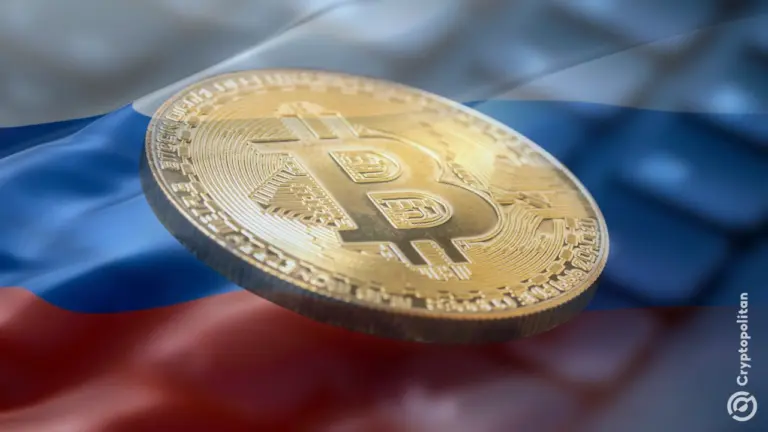
Russia is on its way to losing its spot as the world’s second-largest Bitcoin mining destination, after the United States, to China, which currently occupies third position.
Cheaper cryptocurrency, a stronger ruble and constantly growing energy costs are the main factors, industry watchers say, as many Russian miners are now looking to relocate.
Russia still holding hashrate share but China is catching up
The Russian Federation is still second in terms of share of the Bitcoin hashrate, but it’s expected to drop in the rankings this year, according to experts in the field.
Its lead ahead of the People’s Republic is already shrinking, and the trend is likely to continue due to unfavorable economic conditions for crypto mining, the local press unveiled.
Among them, the lower price of the leading cryptocurrency, the strengthening Russian ruble and rising electricity rates in the country, Kommersant highlighted in an article on Tuesday.
Russia’s stake in the global mining market stood at around 15.5% at the end of 2025, representatives of the industrial mining operator Promminer recalled in conversation with the business daily.
The country managed to maintain its second place after the U.S., the undisputed leader, but the difference between its share and China’s approximately 14% is getting smaller.
According to its Industrial Mining Association, Russia remains second, as of early 2026, controlling between 13% and 17% of the Bitcoin hashrate, depending on the methodology used for assessment.
The analysts at Promminer view these stats as an indication that Russia’s computing power has effectively stopped growing, allowing other nations to expand their own.
Miners face growing costs and diminishing returns
Moscow regulated mining in 2024, making it Russia’s first fully legal crypto activity, in order to reap the benefits of competitive advantages such as cool climate and abundant energy.
However, it has since taken a series of measures to limit its expansion, concentrated in areas offering low-cost, often subsidized electricity rates, including regional bans and higher tariffs.
Energy supply issues play a major role in the current situation, Promminer emphasized, adding that mining efficiency depends on production costs.
While the average global price of 1 kWh of electricity used in mining is in the range 2.5 – 3 rubles ($0.03 – $0.04), electricity sourced from the grid in Russia exceeded 5 rubles ($0.06).
This is causing migration of computing power to jurisdictions providing more favorable operating conditions, the company remarked, elaborating:
“We are already seeing a decline in the number of small and medium-sized investors in the industry due to the declining efficiency of mining equipment, resulting from factors beyond their control.”
“Electricity is the largest expense in mining – approximately 80% of the budget,” Nikita Navrotsky, technical director of mining at GBIG Mining, recently told RIA Novosti.
“At 6-7 rubles per kWh, it’s only profitable if the BTC price is over $80,000. Above 7 rubles per kWh, the farm becomes unprofitable,” he estimated, also quoted by Prime.
With an installed capacity of 2.3 – 2.7 GW, mining currently accounts for around 1.5% of the country’s total electricity consumption, according to the Ministry of Energy in Moscow.
Plethora of problems dogging Russia’s mining sector
While energy prices are rising amid a stagnant global hashrate, some analysts believe the stagnation in Russia’s mining space is more the outcome of a strong ruble than the industry’s declining attractiveness.
Mining expenses, including electricity bills and also rent, are paid in rubles, while the revenue is generated in BTC and converted into Russian fiat at its currently high exchange rate.
And even if Bitcoin’s value increases again and the U.S. dollar strengthens, the planned introduction of a “take-or-pay” payment scheme for electricity supplied to miners will still hurt long-term investments.
Then there’s the hardware aspect, as pointed out by Interhash CEO Alexander Lozben, a key factor for Russian miners who are not used to buying the newest equipment.
They are now stuck with outdated rigs that are hardly profitable, and are considering whether to move to other regions rather than expanding their coin minting sites in Russia.
The smartest crypto minds already read our newsletter. Want in? Join them.
Disclaimer. The information provided is not trading advice. Cryptopolitan.com holds no liability for any investments made based on the information provided on this page. We strongly recommend independent research and/or consultation with a qualified professional before making any investment decisions.










