







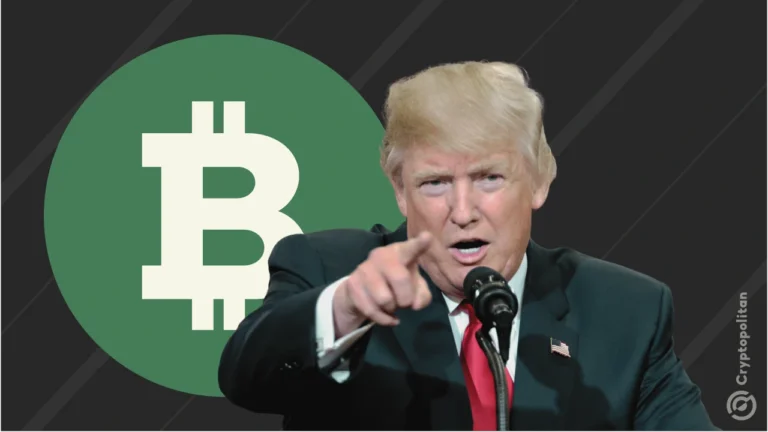
- Ripple’s CEO says the “Trump bull market” is fueling huge crypto momentum and new U.S. deals.
- Ripple is hiring mostly in the U.S. now after years of focusing outside the country.
- The new Congress is the most pro-crypto ever, with big plans for the industry.
Brad Garlinghouse, Ripple’s CEO, has declared that: “2025 is here, and the Trump bull market is real.” The company, battered by years of regulatory setbacks under Gary Gensler’s SEC, is roaring back into the U.S. market, seizing opportunities created by a massive political change.
Seventy-five percent of Ripple’s open positions are now U.S.-based, a significant reversal from the past four years, when most of its hiring was abroad. According to Brad, the company signed more U.S. deals in the last six weeks of 2024—after Trump’s election win—than in the previous six months.
He also credited key figures in Trump’s circle, like Scott Bessent, David Sacks, and Paul Atkins, for kickstarting innovation and job growth in crypto even before the new administration officially takes office.
Ripple capitalizes on a crypto-friendly Congress
Brad has also called the 119th Congress the “most pro-crypto Congress in history.” He believes that the legislative energy around crypto is unprecedented, with lawmakers seemingly ready to tackle industry challenges head-on.
The arrival of this Congress coincides with $135 million in campaign contributions from crypto elites to Trump and other key congressional races. Their demands are straightforward: eliminate the SEC’s lawsuits against the industry, open access to global banking, and launch a U.S. Bitcoin reserve.
Meanwhile, as the U.S. prepares for a more crypto-friendly era, the world’s financial systems are splitting into Western and Eastern blocs. Countries like Thailand, Hong Kong, and the UAE have joined China’s mBridge initiative, a platform designed to settle cross-border claims using central bank digital currencies (CBDCs).
This effort plans to reduce reliance on the U.S. dollar and SWIFT, effectively bypassing American financial oversight. Saudi Arabia joined mBridge in mid-2024.
Global dynamics in finance are changing
The Bank for International Settlements’ withdrawal from mBridge showed growing tensions over the weaponization of the U.S. dollar. Russian President Vladimir Putin sees the technology as a way to sidestep sanctions.
Countries like India and Southeast Asia are also developing their payment networks for seamless cross-border transactions. For instance, tourists from Hong Kong can now pay for services in Thailand by scanning QR codes linked to their bank accounts back home.
The tokenization of financial and real-world assets is also becoming the next major frontier, with Citigroup estimating a $4 trillion market by 2030. In Asia, countries like Hong Kong and Singapore are leading the charge. Hong Kong is exploring digital green bonds, while Singapore is using smart contracts to automate fund management and private banking.
A recent survey found that only 13% of central banks viewed CBDCs as the best solution for cross-border transfers, down from 31% in 2023. China’s digital yuan, which once seemed set to dominate global digital payments, has struggled to gain widespread adoption.
Other countries have slowed their CBDC development, opting instead to explore alternatives like tokenized deposits. Deposit tokens, unlike CBDCs, rely on deposit insurance rather than 1:1 reserve backing, making them a more flexible option for financial institutions.
If you're reading this, you’re already ahead. Stay there with our newsletter.
Disclaimer. The information provided is not trading advice. Cryptopolitan.com holds no liability for any investments made based on the information provided on this page. We strongly recommend independent research and/or consultation with a qualified professional before making any investment decisions.

Jai Hamid
Jai Hamid has been covering crypto, stock markets, technology, the global economy, and the geopolitical events that affect markets for the past 6 years. She has worked with blockchain-focused publications including AMB Crypto, Coin Edition, and CryptoTale on market analyses, major companies, regulation, and macroeconomic trends. She has attended London School of Journalism and thrice shared crypto market insights on one of Africa’s top TV networks.









