




Musk faces lawsuits over ‘misleading’ Tesla customers, voters during support for Trump

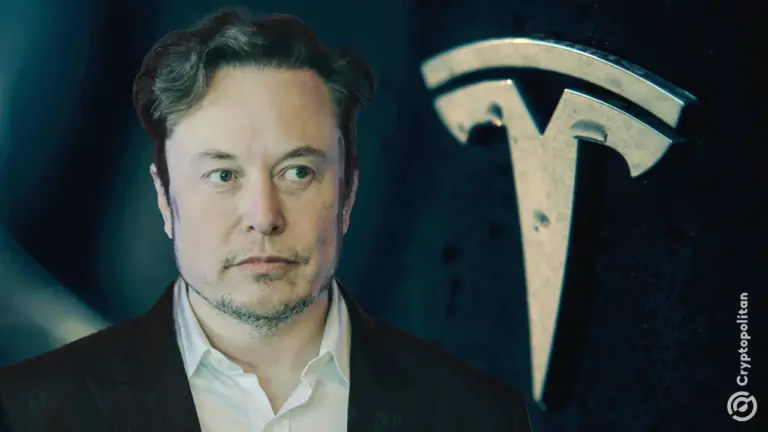
- California regulators and a Miami jury are challenging Elon Musk’s claims about Tesla’s self-driving capabilities in a new class action lawsuit against the company.
- A federal judge also ordered Musk to face a lawsuit filed by voters who claim he defrauded them into signing a petition during the U.S. Presidential elections.
- The plaintiffs argue that Musk’s actions misled them and exploited their support for a constitutional cause.
Elon Musk is often accused of overpromising and underdelivering in terms of his companies. However, those accusations have escalated class action lawsuits linked to his claims about Tesla’s self-driving capability as well as his efforts to support President Donald Trump during the 2024 elections.
Musk has propagated his assertive claim for years that Teslas can drive themselves, even though evidence suggests that the vehicles still require human oversight, contradicting his statements.
That embellishment, which is now commonly regarded as a selling point for Tesla products, is now being challenged openly by its own users, affecting company stock and dampening investor confidence.
How one of Musk’s famous lies has become a festering wound
A federal judge in San Francisco has now greenlit a class action lawsuit filed by Tesla owners to sue the carmaker for Musk’s exaggerated claims about the self-driving capability of its electric vehicles.
He first floated the idea about nine years ago but has not been able to achieve a fully autonomous vehicle. This in itself would not be a bad thing if other companies like Waymo hadn’t already achieved the milestone.
“Right now, there are real robotaxis carrying real people on real roads,” said Bryant Walker Smith, an AV researcher and professor at the University of South Carolina. “None of them is a Tesla.”
The class-action suit comes after a separate federal case in Miami this month in which a jury ordered the company to pay $243 million in damages after determining that Tesla shares some responsibility for a fatal 2019 crash that occurred while its Autopilot feature was engaged.
The company could temporarily lose its ability to sell cars in California, its top U.S. market, if a judge in a case brought by the state’s Department of Motor Vehicles rules that it misled consumers by exaggerating the self-driving ability of its vehicles.
Musk’s companies have been able to avoid expensive liability lawsuits and legal repercussions linked to his boastful statements until now.
Musk faces another lawsuit from people who claim he lied to them
While Tesla gets ready to face a class action lawsuit linked to Musk’s exaggerations, the billionaire himself has been ordered by a federal judge to face a lawsuit filed by voters who claim he tricked them into signing a petition to support the U.S. Constitution while dangling a $1 million-a-day reward before them.
According to U.S. District Judge Robert Pitman in Austin, Texas, Jacqueline McAferty plausibly alleged in her proposed class action that Musk and his political action committee America PAC wrongly induced her to provide personal identifying information as part of the giveaway.
McAferty, an Arizona resident, claims that Musk promised participants they would be chosen randomly, as in a lottery, to receive $1 million, though the voters had no real chance to collect.
Musk has sought a dismissal, listing several “red flags” as proof that it was not an illegal lottery. According to him, these included statements like how the $1 million recipients were “selected to earn” the money and expected to become America PAC spokespeople, which defeats the idea that the payment was a “prize.”
The judge was not convinced and has cited other statements that suggested the defendants were “awarding” the $1 million, and the money could be “won.”
“It is plausible that plaintiff justifiably relied on those statements to believe that defendants were objectively offering her the chance to enter a random lottery—even if that is not what they subjectively intended to do,” Pitman, who was appointed to the bench by President Barack Obama in 2014, wrote.
Don’t just read crypto news. Understand it. Subscribe to our newsletter. It's free.

Hannah Collymore
Hannah is a writer and editor with nearly a decade of blog writing and event reporting experience in the crypto space. At Cryptopolitan, Hannah contributes to the news page, reporting and analyzing the latest developments in DeFi, RWA, crypto regulation, AI and frontier tech industries. She graduated from Arcadia university with a degree in Business Administration.









