







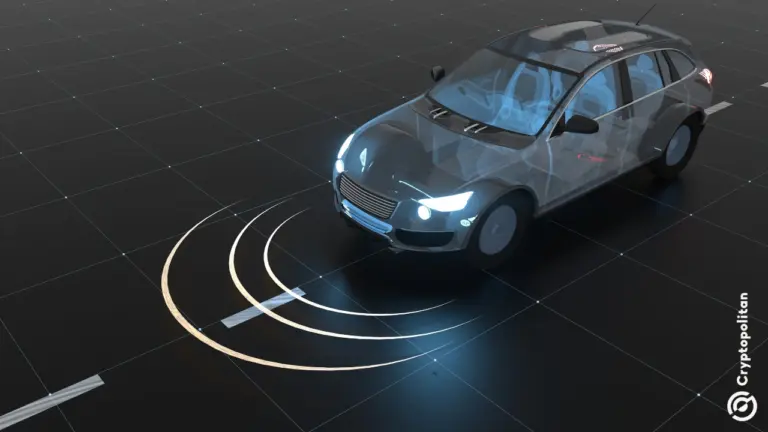
- London will be the first city where US (Waymo) and Chinese (Baidu) robotaxis compete directly, both launching in 2026.
- Waymo delivers nearly 1 million weekly rides; Baidu’s Apollo Go has completed 17 million total rides across 22 cities.
- Experts raise security concerns about self-driving cars as “mobile AI super computers” while London’s streets pose unique testing challenges.
Two of the world’s leading self-driving car companies are racing to bring driverless taxis to London’s streets by 2026, making the British capital the first city where American and Chinese robotaxi services will go head-to-head.
Waymo, owned by Google’s parent company Alphabet and based in Silicon Valley, started testing specially modified Jaguar vehicles on London roads last December. Meanwhile, Baidu, headquartered in Beijing, plans to roll out its RT6 models in the city within months after forming partnerships with American ride-hailing platforms Lyft and Uber.
Both companies moved faster with their British launches after the UK government said it would permit commercial testing of self-driving cars this spring. This timing positions London as a unique testing ground where American and Chinese autonomous vehicle technologies will compete directly for the first time.
Jack Stilgoe, who teaches technology policy at University College London, sees this development as a chance for Britain. The UK aims to become “the place that slowly writes the rules for this technology that isn’t the Wild West of Silicon Valley or the wild east of Beijing,” he explained.
Market leaders eye international growth
Waymo and Baidu have pulled ahead as leaders in the autonomous vehicle market, though companies like Elon Musk’s Tesla and London-based Wayve are expected to challenge them eventually. Waymo’s driverless taxis now provide close to 1 million completely autonomous rides each week. Customers in American cities such as San Francisco, Los Angeles and Phoenix have taken nearly 20 million total rides so far. Baidu’s Apollo Go service is gaining ground, reaching 17 million total rides by November.
For both companies, London represents a crucial part of their plans to expand internationally. Chinese carmakers and technology firms face broad restrictions that prevent them from running driverless vehicles in the United States, rules that were put in place during the final days of the Biden administration. Chinese autonomous vehicle companies have turned their attention to Europe and the Middle East instead for testing their systems.
Despite continuing friction between Washington and Beijing over large language models, the artificial intelligence systems behind Google’s Gemini and OpenAI’s ChatGPT, American companies working with Chinese driverless car firms have faced less political opposition so far. Both Uber and Lyft are collaborating with multiple Chinese autonomous vehicle companies, including Baidu, Pony.ai and WeRide, in markets outside the United States.
Alex Ferrara, a technology investor with Bessemer Venture Partners based in London, said “self-driving cars will bring a lot of benefits to society mainly in the form of safety, but we need to recognise that China is already well ahead of us [in the US and Europe].”
London’s streets pose unique challenges
Still, nobody knows for certain how well Waymo and Baidu will perform on London’s complicated and crowded streets. Stilgoe highlighted zebra crossings for pedestrians as one specific challenge, noting these are widespread across the UK but uncommon in America. He also pointed out that many people remain doubtful about safety claims made by autonomous vehicle companies.
Ferrara raised concerns about security issues connected to self-driving vehicles. “These cars are essentially mobile AI supercomputers,” he noted. “Under the control of an adversarial government, they could be used for sensitive information gathering—perhaps recording your conversations while in the car, blocking roads and traffic, or could even be used for a kinetic attack.”
Jeremy Bird, who serves as executive vice-president for global growth at Lyft, defended Baidu’s qualifications. The company’s “extensive track record” would deliver “safety, reliability and privacy to millions of Europeans,” he said. “We’ll make sure data processing and sharing between Lyft and Baidu complies with applicable laws to ensure we create an AV future that thrives in the UK,” Bird added.
Waymo responded to privacy worries by stating that information gathered by its sensors “is used solely to develop and validate our safety-critical autonomous driving technology.”
In London, companies wanting to test driverless technology must work with the mayor, individual boroughs and Transport for London. They need an additional license to run a commercial passenger service, and all testing must follow UK regulations protecting data and privacy. Transport for London said “safety is our top priority, and we are interested in learning more about technologies that could potentially help deliver safety benefits for all road users.”
Don’t just read crypto news. Understand it. Subscribe to our newsletter. It's free.

Hania Humayun
Hania joined Cryptopolitan with a long history of analyzing finance, economic trends, and prediction markets. She covered topics in emerging technology, AI, and fintech. Hania’s experiences as a licensed architect have added verve and precision to newswriting. She graduated from the National College of Arts in Lahore with an Architecture degree,









