






JPMorgan flags Tricolor and First Brands bankruptcies as credit stress spreads

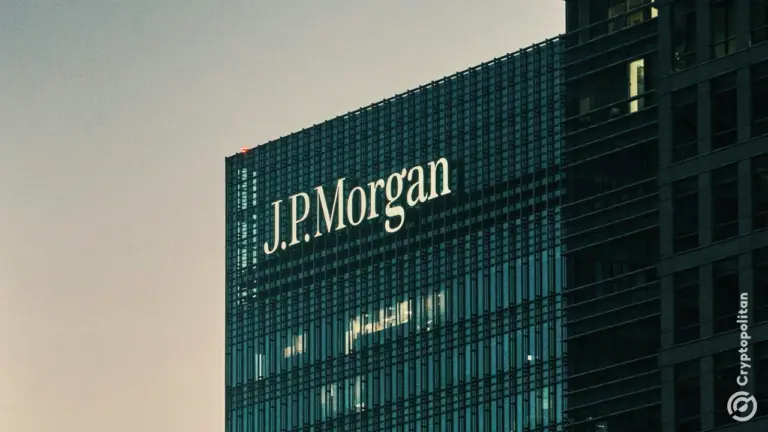
Photo by Precious Madubuike on Unsplash.
- JPMorgan warned that the bankruptcies of First Brands and Tricolor have increased credit stress and pushed up banks’ funding costs.
- The bank said investors are demanding higher returns due to poor disclosure of loans to non‑depository financial institutions (NDFIs).
- Regulators, including the IMF, estimate U.S. and European banks have about $4.5 trillion in NDFI exposure.
JPMorgan analysts warned Monday that the bankruptcies of First Brands Group and Tricolor Holdings have ignited a new wave of credit anxiety, driving up banks’ funding costs and shaking confidence in the financial system’s hidden ties to private equity firms and hedge funds.
The Jamie Dimon-led bank said on Monday that these failures are driving up banks’ funding costs, forcing investors to demand higher returns for holding financial stocks amid growing unease about opaque ties between lenders and non-depository financial institutions (NDFIs).
The warning followed last week’s intense sell-off in US bank stocks after two regional lenders disclosed exposure to alleged borrower fraud, as Cryptopolitan reported.
Banks raise funding costs as investors react to NDFI exposure
In a note to clients titled “NDFI exposure analysis: lack of disclosure drives higher implied cost of equity,” JPMorgan said the global bank sell-off was the result of poor risk management and weak disclosure practices.
“The recent global banks sell-off was triggered by poor risk management, in our view, as shown by First Brands supply-chain exposures, but more importantly, very poor disclosure in relation to NDFIs globally across the banking system,” JPMorgan wrote.
They explained that the lack of transparency in bank reporting has made investors demand higher implied costs of equity, pushing up funding expenses. The warning comes as regulators, including the International Monetary Fund, are voicing deeper concerns about how tightly banks and non-bank financial institutions are connected.
Earlier this month, the IMF said that the sector needs stronger oversight, estimating that U.S. and European banks have roughly $4.5 trillion of exposure to non-bank financial entities, which is about 9% of their combined loan books.
First Brands, a major U.S. car parts maker, borrowed heavily through private debt markets and relied on invoice-linked financing from the asset management arms of Jefferies and UBS.
When it went under, those investment arms were left holding significant losses. The case revealed how banks can face indirect exposure to collapsing companies even when lending occurs outside traditional bank balance sheets.
Tricolor collapse worsens fears of hidden risks
Meanwhile, Tricolor funded its lending through the asset-backed securities market but also used credit lines from JPMorgan, Fifth Third Bank, and Barclays to bundle car loans into bonds. And when Tricolor defaulted, all three banks took impairments.
In their Monday note, JPMorgan said that U.S. bank disclosures “lack granularity” and fail to provide a clear picture of total exposure. They added that European banks are even less transparent, grouping NDFI lending under broad labels such as “financial and insurance activities” without detailed breakdowns.
The report cited Credit Suisse as a case study, noting how the bank booked risk tied to the collapse of Archegos Capital Management in its U.K. division.
This, JPMorgan said, shows how European lenders can shift NDFI-related risks across borders, making it harder for investors to gauge real exposure. JPMorgan said this opacity has widened the valuation gap between European and American lenders, with investors assigning lower valuations to institutions they can’t properly assess.
JPMorgan expects European banks to provide more detailed disclosures during the upcoming third-quarter earnings season, as they attempt to narrow that gap. Even so, JPMorgan estimated that the figure would decline from its current level of approximately 11.5% to 10% over time because of solid fundamentals, and could fall further in the long term.
The smartest crypto minds already read our newsletter. Want in? Join them.

Jai Hamid
Jai Hamid has been covering crypto, stock markets, technology, the global economy, and the geopolitical events that affect markets for the past 6 years. She has worked with blockchain-focused publications including AMB Crypto, Coin Edition, and CryptoTale on market analyses, major companies, regulation, and macroeconomic trends. She has attended London School of Journalism and thrice shared crypto market insights on one of Africa’s top TV networks.









