







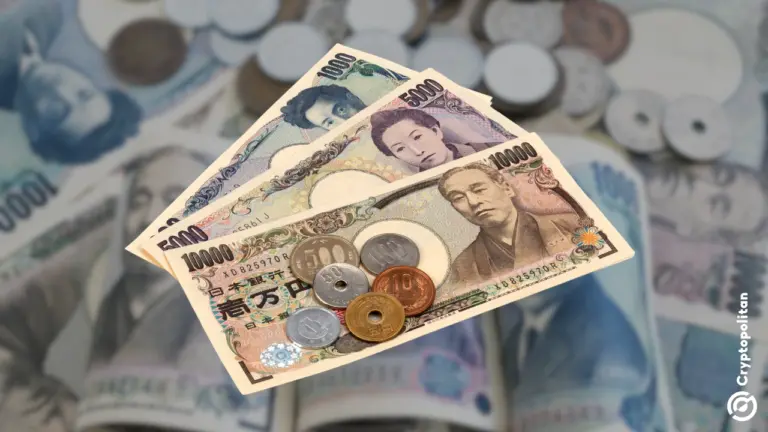
- Japan’s top three banks—Mitsubishi UFJ, Mizuho, and Sumitomo Mitsui—will jointly issue yen- and dollar-pegged stablecoins for corporate clients.
- Fintech startup JPYC got regulatory approval to launch the first yen-backed stablecoin using MUFG’s Progmat platform.
- Monex Group is considering launching its own yen stablecoin to improve international payments and settlements.
Japan’s three largest banks (Mitsubishi UFJ, Sumitomo Mitsui, and Mizuho) are joining forces to launch stablecoins backed by both the yen and the U.S. dollar, according to Nikkei.
These digital currencies will be pegged 1:1 to fiat, aimed at helping corporate clients handle payments and settlements faster, using a shared framework between the banks.
The yen-pegged stablecoin will be issued first. The dollar version might come later, depending on how the early rollout goes. The banks plan to build an infrastructure that allows their business clients to move funds between each other smoothly and under uniform standards.
No fluff. Just cleaner transactions, fewer delays, and more digitization across the banking system in Japan.
JPYC gets approval and sets big targets
While the big banks coordinate their tech and standards, one startup’s already ahead in getting regulatory greenlights. JPYC, a fintech company based in Tokyo, became the first firm in Japan officially approved to issue yen-backed stablecoins.
CEO Noritaka Okabe said during a press briefing that JPYC’s coin will be “fully convertible into yen” and backed by local savings and Japanese government bonds.
JPYC plans to issue 1 trillion yen worth of the stablecoin, about $6.81 billion, within three years. The coin will be launched this fall and is expected to attract large investors like hedge funds and family offices.
The use cases are everything from carry trades to international remittances to corporate payments. The coin will use Mitsubishi UFJ Trust Bank’s Progmat Coin platform and follow a trust-based model for security and compliance.
Monex, Startale, and regulators move in
Elsewhere in Tokyo, Monex Group is watching the space closely. The company hasn’t committed to launching a coin yet, but chairman Osa Matsumoto told the media that stablecoins could make yen-based international remittances and corporate transactions more efficient.
Matsumoto said, “Issuing stablecoins requires significant infrastructure and capital, but if we don’t address them, we will be left behind.” Monex hasn’t pulled the trigger, but they’ve made it clear they don’t want to miss the boat.
Takashi Tezuka, country manager at Web3 firm Startale Group, said the stablecoin gap between the US and Japan shows broader differences in how each country sees digital assets. He referenced the US GENIUS Act, which has triggered both “relief and curiosity” among American firms, while noting that Japan was the first to create a legal framework for stablecoins, but still didn’t have a yen-backed blockchain asset until now.
That’s finally changing. After years of watching from the sidelines, Japan is moving from caution to full-blown action.
But not everything is moving smoothly. The Financial Services Agency (FSA) and its enforcement arm, the Securities and Exchange Surveillance Commission (SESC), are working to close a huge gap: insider trading in digital assets.
Under current laws like the Financial Instruments and Exchange Act (FIEA), only traditional financial instruments like stocks and bonds are covered. Digital assets? Not yet.
Under the old system, insider trading rules only apply to events like mergers, share swaps, or changes in major shareholders. Any listed company is supposed to release this “inside information” to the public, and insiders can’t trade on it until it’s public.
But the crypto world doesn’t play by the same rules. Pseudo-anonymous structures, decentralized ownership, and lack of clear issuers make it nearly impossible to tell who’s “inside.”
That’s why the SESC wants to fine offenders based on how much they made through illegal crypto trades. According to Nikkei, under new regulations being finalized by the FSA, the watchdog will be given the legal right to investigate, recommend fines, and even make criminal referrals in crypto-related insider trading cases.
Right now, Japan depends on crypto exchanges and the Japan Virtual and Crypto Assets Exchange Association to self-police.
Don’t just read crypto news. Understand it. Subscribe to our newsletter. It's free.

Jai Hamid
Jai Hamid has been covering crypto, stock markets, technology, the global economy, and the geopolitical events that affect markets for the past 6 years. She has worked with blockchain-focused publications including AMB Crypto, Coin Edition, and CryptoTale on market analyses, major companies, regulation, and macroeconomic trends. She has attended London School of Journalism and thrice shared crypto market insights on one of Africa’s top TV networks.









