







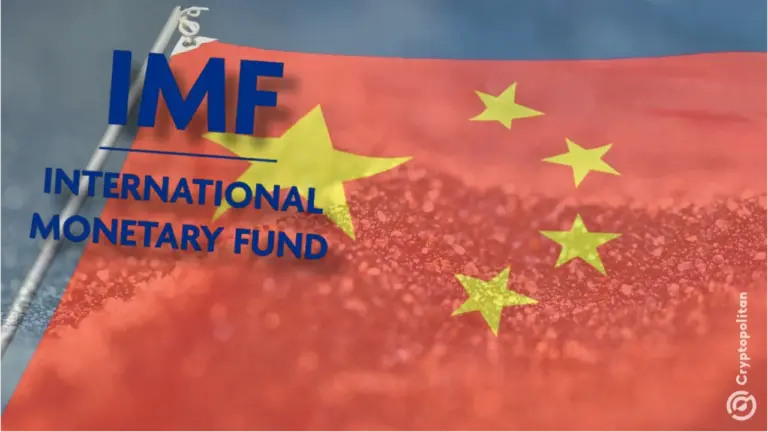
- The IMF urged China to shift its focus from exports to boosting domestic spending as global demand weakens.
- China’s recovery is fragile due to a property crisis, low consumer confidence, and rising financial risks.
- The IMF warned that heavy state investment and weak demand could fuel trade tensions and fiscal pressure.
The International Monetary Fund (IMF) has called on Beijing to rebalance its economic growth by reducing its dependence on exports and instead promoting domestic spending by China’s consumers.
China’s model of export-led growth is running out of steam as demand from abroad cools and prices for manufactured goods collapse, the International Monetary Fund said in its latest World Economic Outlook released on Tuesday. The IMF warned that the second-largest economy in the world should rebalance its focus to prioritize domestic demand, or it would stagnate in the long term.
China is still producing a large volume of goods for export, but weak global demand has depressed prices, said Pierre-Olivier Gourinchas, Chief Economist at the IMF.
The renewed calls come as Western policymakers increasingly urge the IMF to take a tougher stance on China’s economic policies. The IMF message is not new, but the timing matters. The Chinese economy’s recovery remains fragile after years of pandemic disruptions, turmoil in the real estate industry, and consumer confidence that has yet to recover.
Sluggish domestic demand hampers recovery
The IMF described China’s prospects as “worrisome,” citing mounting financial stability risks and tepid consumer spending. The economy is hovering on the edge of a debt-deflation trap, Gourinchas said, with property values falling, anemic credit demand, and corporate borrowing constraints dragging the rebound.
The property crisis in China — once a giant source of urban wealth — still looms large. Many developers are struggling to complete housing projects, banks are saddled with bad loans, and households are holding back from spending or investing. The uncertainty that resulted has dragged down confidence among consumers and businesses alike.
The IMF also noted that, although Beijing’s heavy spending on strategic industries, including electric vehicles and renewable energy, has been lucrative in some sectors, it could be misallocating resources and contributing to fiscal pressures. Subsidies and state-directed investment, the Fund said, can distort competition and block out small private firms.
The IMF suggested that China embark on a so-called “transitional fiscal expansion and permanent fiscal recomposition”, which it said would entail temporarily raising government spending to lift private household consumption before transitioning long-term fiscal priorities toward social safety nets and income support.
China’s export growth, too, has started to sputter. While overall exports in September rose from the period a year earlier, shipments to the United States plummeted more than 27% from a year ago, according to data provided by China’s customs authority. Analysts say one reason, apart from geopolitical factors, is lower overall global demand.
At the same time, concern has been rising in both the European Union and the United States about an influx of low-cost Chinese goods — primarily electric vehicles and solar panels — that are undercutting domestic industries. Such an outcome, the IMF warned, could exacerbate trade frictions unless China’s domestic market creates enough demand to soak up more of its output.
Beijing faces tough policy choices
China’s leaders have recognized the challenge. Premier Li Qiang recently told officials that expanding domestic demand is crucial for maintaining sustainable growth and promised targeted fiscal support for households and small businesses.
However, economists argue that much deeper structural reforms are necessary in 2020 to make this a reality. These measures could be increasing household income, reforming social security to lower precautionary savings, and providing greater flexibility to the private sector, which would play a role in both innovation and employment.
The IMF’s Managing Director, Kristalina Georgieva, expressed a similar sentiment this year when she said that the Fund has been very vocal about China needing to change its economic model. She emphasized that measures to boost consumer confidence and increase transparency in the financial industry were also crucial for sustainable growth.
Yet Beijing must make painful political and social choices. Slowing growth in the short term may also require reducing state-led industrial investment. However, without reform, the IMF argues, China could remain stuck in a cycle of low demand, low prices, and rising debts.
Don’t just read crypto news. Understand it. Subscribe to our newsletter. It's free.

Nellius Irene
Nellius is a Business Management and IT graduate with five years of experience in the cryptocurrency industry. She is also a graduate of Bitcoin Dada. Nellius has contributed to leading media publications, including BanklessTimes, Cryptobasic, and Riseup Media.









