






Illegal BTC mining duo share 14-year sentence as mining difficulty hovers near all-time high


- Chinese courts have sentenced two men convicted of stealing electricity to power their Bitcoin miners to a total of 14 years in prison.
- The sentencing comes months after a major Xinjiang polysilicon producer was punished for illegally supplying electricity to miners.
- Bitcoin mining difficulty remains high, causing some miners to pivot while others seek cheaper power alternatives to stay in the game.
China has been sparing no effort in dealing with users involved in illegal Bitcoin mining activities. It recently hit two men in the Heilongjiang Province with heavy prison sentences, a few weeks after a prominent industrial operator was hit with millions in liability.
Amid all that drama, BTC mining difficulty has stayed around all-time high levels, and the industry has responded with sharp pivots, while corner-cutting stunts are being punished harshly by authorities in China and areas under embargo in Russia.
Heilongjiang Province sentences duo to 14 years
China’s officials have been cracking down hard on underground Bitcoin miners in the region, handing out more than a decade of prison time for two men in the Heilongjiang Province for stealing electricity.
According to reports, the ringleader Zhang and another named Zhao illegally tapped into an oilfield’s power grid in September 2024. They used that power to run 24 Bitcoin mining machines in an abandoned pigsty to reroute large amounts of electricity without paying.
Chinese courts found them guilty of illegal electricity theft and other offenses linked to illegal crypto mining. Between them, the duo faces what amounts to a shared 14-year term, with Zhang getting the lion’s share of the prison sentence as the main perpetrator.
The sentence tracks with China’s zero tolerance for such cases and is expected to serve as a deterrent to others doing the same thing in the country.
Crackdown in China increases as BTC mining becomes more competitive
The case involving the Heilongjiang duo is not an isolated event. China has actively been ramping up activity against illegal mining. In March, Chinese authorities imposed approximately $14.5 million in liabilities on a major polysilicon producer in Xinjiang for illegally supplying electricity to miners.
When it was found out during a raid that went down in December, the industrial giant paid the price in hefty fines, but the authorities did not stop there. They also confiscated the illegal gains that came from the endeavor.
As a result of that exposure, between 400,000 to over 1 million mining machines were reportedly shut down, an event that triggered noticeable dips in the global Bitcoin hashrate.
Amid all that, the Bitcoin network continues to become more competitive. Mining difficulty is known to adjust roughly every two weeks to maintain consistent block times has remained near all-time high levels even in the face of recent volatility.
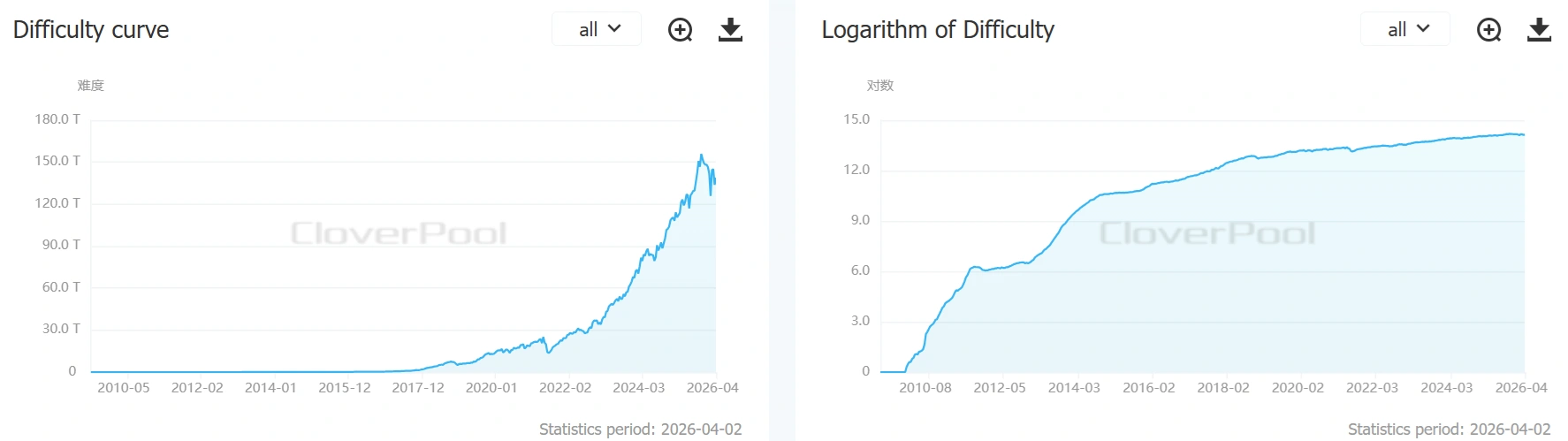
Current levels sit around 139 trillion, with the global hash rate at 981.59 EH/s according to Cloverpool data. The sustained difficulty rate means that profitable mining now requires the best energy-efficient hardware as well as access to cheap power, something miners are hard-pressed to find in China.
If you're reading this, you’re already ahead. Stay there with our newsletter.
Disclaimer. The information provided is not trading advice. Cryptopolitan.com holds no liability for any investments made based on the information provided on this page. We strongly recommend independent research and/or consultation with a qualified professional before making any investment decisions.

Hannah Collymore
Hannah is a writer and editor with nearly a decade of blog writing and event reporting experience in the crypto space. At Cryptopolitan, Hannah contributes to the news page, reporting and analyzing the latest developments in DeFi, RWA, crypto regulation, AI and frontier tech industries. She graduated from Arcadia university with a degree in Business Administration.









