


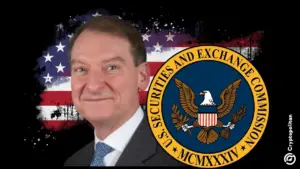





- House Republicans introduced the Digital Asset Market Clarity Act to create a clear regulatory framework for cryptocurrencies in the U.S.
- The bill gives the CFTC primary oversight over digital commodity spot markets like Bitcoin.
- The bill allows provisional registration for crypto firms while agencies finalize regulatory rules.
House Republicans, led by Financial Services Committee Chairman French Hill (R-AR), have introduced the bipartisan Digital Asset Market Clarity (CLARITY) Act.
Co-sponsored by eight other members of Congress—five Republicans and three Democrats—the legislation aims to establish a clear regulatory framework for digital assets in the United States.
The CLARITY Act establishes how the United States should treat cryptocurrencies and digital assets.
For years, the crypto industry has thrived in a legal gray zone. The absence of clear rules has confused and stifled innovation. This bill is meant to change that.
It is a follow-up to last year’s Financial Innovation and Technology for the 21st Century Act (FIT21), but it further lays out oversight duties.
Representative Dusty Johnson said that America was poised to lead the world in the digital assets market but emphasized that this could not happen without a clear regulatory framework.
The bill is long and is expected to be the focus of extensive negotiations among the two parties and chambers. In the meantime, it is a strong step forward for crypto legislation in Congress.
Key provisions target market oversight
The Clarity Act assigns most of the responsibility for supervising crypto trading markets to the Commodity Futures Trading Commission (CFTC). The bill confers “exclusive regulatory jurisdiction” on the CFTC for digital commodity spot markets — the areas where commonly used assets such as Bitcoin trade.
Meanwhile, the SEC will continue to oversee digital assets classified as securities—those you invest in with the expectation of profiting from the efforts of others. According to this structure, crypto firms would be free to register with the CFTC or the SEC, depending on the digital assets they work with.
The bill tenures provisional registration for crypto firms to begin operating while agencies work out the regulations. It also requires platforms to follow anti-money laundering rules outlined in the Bank Secrecy Act. For example, decentralized finance (DeFi) protocols and wallet providers will be excluded from SEC oversight in some cases.
The Clarity Act, if implemented, would allow regulators only 12 months to promulgate rules. That timeline is relatively short in the arcane realm of financial rule-making, which can frequently drag on for years.
Congress sparks debate with Clarity Act introduction
The Clarity Act comes at a moment of increasing political fascination with crypto and pressure to regulate. Whereas the stablecoin bill is considered further along the track, this latest attempt targets larger market structure issues.
The measure is backed heavily by House Republicans, particularly those on the Financial Services and Agriculture Committees.
But its future is uncertain. Democrats are divided. Some worry the bill is overly friendly to the crypto industry. Others worry about links between crypto firms and Donald Trump, who has recently re-emerged in the political world.
Still, a handful of Democrats have backed clear crypto standards — particularly if they safeguard consumers.
The crypto industry, beyond Congress, is paying close attention. The bill has won praise from the crypto advocacy group Stand with Crypto. They describe it as a “big step forward” when providing companies and developers the legal certainty they need to do business in the U.S.
Some experts suspect the bill and stablecoin legislation could eventually be bundled into a single package. That would produce an even broader crypto law — possibly the first in the United States.
President Trump has urged Congress to pass both bills by August, before the congressional recess. But inside sources say that’s a highly ambitious goal.
There will be hearings on the new bill next week. Members of Congress will also have an opportunity to publicly debate what’s in it, amendments, and the way forward.
Don’t just read crypto news. Understand it. Subscribe to our newsletter. It's free.
Disclaimer. The information provided is not trading advice. Cryptopolitan.com holds no liability for any investments made based on the information provided on this page. We strongly recommend independent research and/or consultation with a qualified professional before making any investment decisions.

Nellius Irene
Nellius is a Business Management and IT graduate with five years of experience in the cryptocurrency industry. She is also a graduate of Bitcoin Dada. Nellius has contributed to leading media publications, including BanklessTimes, Cryptobasic, and Riseup Media.









