





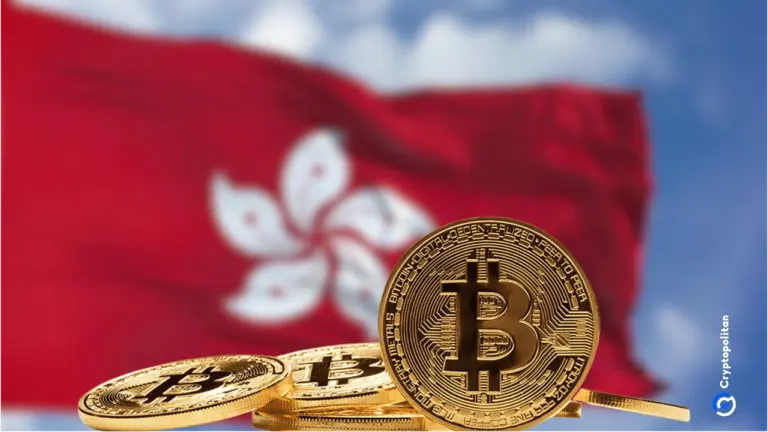
- Hong Kong will relax its rules to facilitate cryptocurrency trading and provide clients with access to liquidity pools.
- Crypto trading volumes in Hong Kong are lower compared to those in the US.
- HKMA also introduced a five-year fintech plan aimed at advancing AI and tokenization.
Hong Kong will relax its rules to help cryptocurrency trading, according to the city’s top market regulator. Julia Leung, CEO of the Hong Kong Securities and Futures Commission, announced on Monday that licensed crypto trading platforms will soon be able to offer local clients access to their global trading pools, adding that a regulatory circular will be published later today.
The reform lifts the restriction that required VATPs to maintain Hong Kong-only order books, opening the door to international liquidity. It is part of Hong Kong’s efforts to compete with fintech powerhouses such as Singapore and the US, as interest in digital assets continues rising.
This development follows the surge in Hong Kong’s economy in the third quarter, exceeding economists’ forecasts. As earlier reported by Cryptopolitan, the region’s gross domestic product (GDP) surged 3.8% YoY in the quarter. The rise surpassed what economists had forecast and increased from 3.1% in the second quarter.
“Looking ahead, we expect Hong Kong’s economy to continue growing steadily for the rest of 2025,” said the representative, who also mentioned the active financial transactions across borders as a factor in this growth.
Hong Kong to permit locally licensed crypto brokers to tap into global liquidity pools
Hong Kong’s ambition to establish itself as a regional digital asset powerhouse has seen both wins and setbacks. It has introduced licensed operations for crypto platforms, launched ETFs tied to Bitcoin and Ether, and brought digital-asset funds under its regulatory scope. Still, crypto trading volumes are relatively low compared to those in the US.
Leung commented, “You can say we are on the tougher side. Once we are sure that we are able to protect the investors, we do relax, as we did with the global liquidity.”
The securities watchdog is close to completing its licensing framework for crypto trading and custody firms, as the city’s central bank prepares to authorize the first stablecoin issuers next year. Leung said the regulator is also considering a plan to allow Hong Kong–licensed crypto brokers, distinct from exchanges, to connect to global liquidity in a future phase.
The overhaul, if legislated, might allow prominent corporations like Binance and Coinbase to be licensed under a broker facility in Hong Kong, effectively reducing the work required to acquire a complete exchange approval from scratch.
The latest update from the SFC shows that 11 exchanges have been fully licensed, and 49 brokers are authorized to trade virtual assets under an omnibus account arrangement. On Monday, the regulator stated that virtual asset exchanges in Hong Kong are permitted to list new tokens and HKMA-approved stablecoins for professional investors, thereby bypassing the year-long track record and liquidity tests.
HKMA announced a five-year fintech plan
The Hong Kong Monetary Authority (HKMA) stated that the banking industry will be one of the primary beneficiaries of this acceleration in the digitalization effort. According to HKMA Chief Executive Eddie Yue, Hong Kong is making a significant investment in digitalization, projected to be over HK$100 billion per year for at least three years.
The authority also released a 5-year plan for fintech development on Monday, which includes AI and tokenization. It expects to see more than 40 core projects in place, further embedding AI into financial activities, building a basic infrastructure for tokenized financial services, enhancing both data and payment networks, and fortifying industry capacities.
Yue emphasized: “Ten years ago, the term fintech was far removed from the general public, but now fintech is a part of everyday life. The emphasis of fintech 2.0 was on the practical use of fintech for payments and transactions, while fintech 3.0 is more about resilience and charting the future of fintech.”
If you're reading this, you’re already ahead. Stay there with our newsletter.
Disclaimer. The information provided is not trading advice. Cryptopolitan.com holds no liability for any investments made based on the information provided on this page. We strongly recommend independent research and/or consultation with a qualified professional before making any investment decisions.

Nellius Irene
Nellius is a Business Management and IT graduate with five years of experience in the cryptocurrency industry. She is also a graduate of Bitcoin Dada. Nellius has contributed to leading media publications, including BanklessTimes, Cryptobasic, and Riseup Media.









