





Google brings the heat with custom silicon AI chip built to rival Nvidia’s best

- Google is releasing its TPU v5p Ironwood chip publicly to compete directly with Nvidia’s AI hardware.
- Each Ironwood pod connects 9,216 chips to run massive AI models without data bottlenecks.
- Anthropic plans to use up to 1 million Ironwood TPUs to power its Claude chatbot.
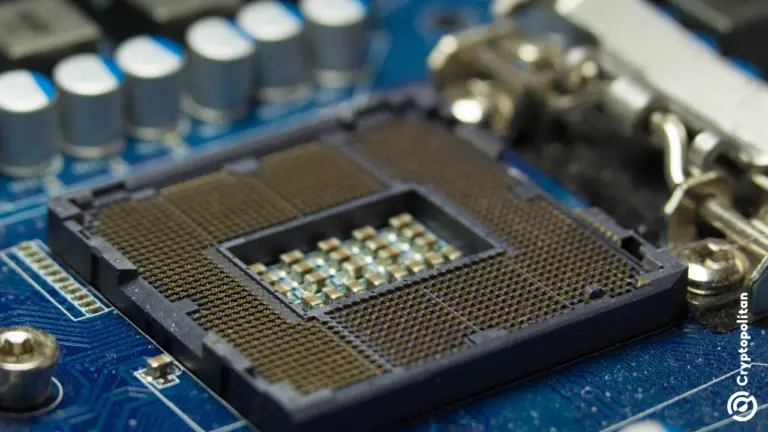
Google is taking direct aim at Nvidia with the release of its most powerful chip to date, the TPU v5p Ironwood, which will be available to the public in the next few weeks.
The announcement was made on Thursday, and it’s part of a much bigger push by Google to claw its way into the top tier of AI infrastructure providers, according to reporting from CNBC.
The chip was originally launched in April for testing and private deployments, but now it’s going live, and the stakes couldn’t be higher.
Built entirely in-house, Ironwood is designed to power everything from training massive AI models to running real-time chatbots and agents.
Google says each pod can connect up to 9,216 TPUs, removing what it calls “data bottlenecks for the most demanding models.” The company claims Ironwood gives customers “the ability to run and scale the largest, most data-intensive models in existence.”
Google upgrades cloud tech to go after Amazon and Microsoft
This launch isn’t happening in a vacuum. Google is locked in a three-way slugfest with Amazon, Microsoft, and Meta for control of the AI hardware space.
Nvidia’s GPUs have powered most large language models so far, but Google’s TPUs fall under custom silicon, which the company says brings better pricing, better performance, and better energy efficiency.
Ironwood is the latest product of a ten-year investment in TPU development. Google says it’s four times faster than the last TPU version, and customers are already jumping in. AI startup Anthropic plans to use up to 1 million of the new TPUs to run its Claude model, putting serious weight behind Google’s tech.
At the same time, Google is overhauling its cloud platform to stay competitive. It’s rolling out updates that aim to make its cloud services cheaper, faster, and more adaptable, especially as it continues to lag behind Amazon Web Services and Microsoft Azure.
While Google’s latest earnings report showed $15.15 billion in Q3 cloud revenue, up 34% from a year ago, Azure jumped 40% and AWS came in with 20% growth.
Google said it has already signed more billion-dollar cloud contracts in 2025 than it did in the last two years combined.
To keep up with the rising demand for AI infrastructure, Google increased its capital
spending target for the year from $85 billion to $93 billion.
CEO Sundar Pichai said during the company’s earnings call, “We are seeing substantial demand for our AI infrastructure products, including TPU-based and GPU-based solutions. It is one of the key drivers of our growth over the past year, and I think on a going-forward basis, we continue to see very strong demand, and we are investing to meet that.”
Nvidia CEO backs off after warning on U.S. AI position
As Google moves in, Nvidia’s Jensen Huang finds himself under pressure. On Wednesday, Jensen told the Financial Times that “China is going to win the AI race,” blaming lower energy costs and weaker regulations in the country.
He made the comments at the Future of AI Summit, sounding an alarm that the U.S. could lose its lead in AI tech.
But hours after that quote made headlines, Nvidia posted a new statement from Jensen on his official X account. “As I have long said, China is nanoseconds behind America in AI. It’s vital that America wins by racing ahead and winning developers worldwide,” he wrote.
Jensen has stuck with the argument that the U.S. can only stay ahead in the AI race if developers stay tied to Nvidia’s chips. That same logic has shaped how he talks to U.S. officials about keeping exports open, especially to China.
Nvidia’s position in the market depends on developers staying dependent on its silicon, and Google’s Ironwood is now threatening that grip.
The smartest crypto minds already read our newsletter. Want in? Join them.

Jai Hamid
Jai Hamid has been covering crypto, stock markets, technology, the global economy, and the geopolitical events that affect markets for the past 6 years. She has worked with blockchain-focused publications including AMB Crypto, Coin Edition, and CryptoTale on market analyses, major companies, regulation, and macroeconomic trends. She has attended London School of Journalism and thrice shared crypto market insights on one of Africa’s top TV networks.









