







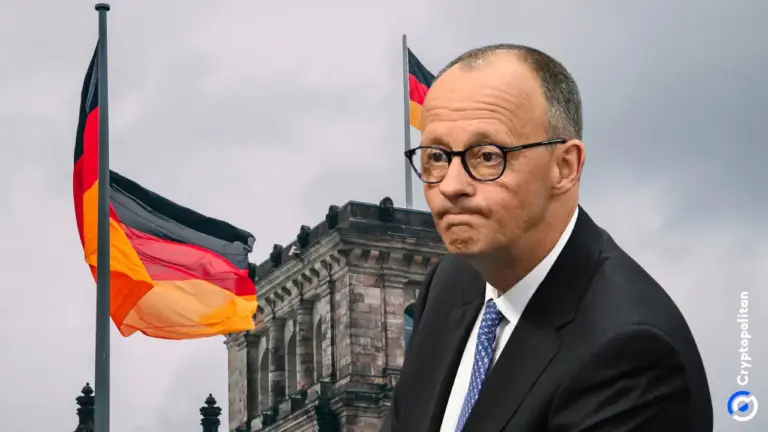
- German Chancellor Friedrich Merz urged the EU to allow technology-neutral CO₂ rules that could keep combustion engines alive beyond the 2035 ban.
- Merz’s appeal comes as Germany’s auto industry faces a deep crisis, shedding over 51,000 jobs amid weak EV demand and rising Chinese competition.
- European carmakers warn that a 2035 ban risks market disruption, with executives from Mercedes and Volkswagen calling full electrification by then unrealistic.
German Chancellor Friedrich Merz has called for technology-neutral regulations that may permit combustion-engine vehicles beyond the 2035 deadline in a letter sent to European Commission President Ursula von der Leyen.
The chancellor reportedly stated that CO₂ regulations should consider emissions from the entire passenger car fleet rather than focusing solely on new registrations.
“Our goal should be a technology-neutral, flexible, and realistic CO₂ regulation that meets the EU’s climate protection targets without jeopardizing innovation and industrial value creation,” Merz wrote in the letter.
Germany has sought to balance its push for regulatory flexibility with measures supporting domestic EV adoption, including the introduction of subsidies of up to €5,000 for electric or hybrid vehicles with German-made components.
Industry crisis persists
Merz, who campaigned on reviving Germany’s economy, proposed increasing blending quotas for synthetic and advanced biofuels, stating that “There is also potential for reducing emissions in the existing fleet.”
The chancellor’s position aligns with warnings issued by industry leaders for some time. One of them is Mercedes-Benz Chairman and CEO Ola Källenius, who told reporters in August that Europe needed a reality check or risked heading at full speed against a wall, as he believes the European automobile market could collapse if the 2035 ban is implemented.
The German automotive industry, an integral part of the nation’s economy, has shed over 51,000 jobs this year alone. Volkswagen, Mercedes-Benz, and other manufacturers are confronting factory closures amid weak electric vehicle demand, Chinese competition, and the threat of US tariffs.
Källenius, who is the current president of the European Automobile Manufacturers’ Association (ACEA), reportedly said that consumers might even rush to buy petrol and diesel models ahead of the ban, which will in turn disrupt the market and undermine the proposed emissions objectives.
Volkswagen CEO Oliver Blume shared similar sentiments as the Mercedes executive and German chancellor in pointing out that the 100% expectation for electric vehicles by 2035 is unrealistic.
A clash of climate ambition with industrial reality
While Germany seeks flexibility, France and Spain want the Commission to maintain the 2035 targets.
Although France later added that it supports flexibility in terms of technological neutrality, while it still pursues vehicle electrification. In 2022, Italy, Portugal, Slovakia, Bulgaria, and Romania requested a delay of five more years for the ban on petrol and diesel-powered vehicles.
Environmental groups are against the bloc making any adjustments to the target, as they say that it would impact its carbon emission targets.
They are not alone in their push, as some carmakers, such as Volvo, which have made significant investments in electric vehicles (EVs) and battery factories, are against changing the set date for the ban.
The Commission’s vice-president, Stéphane Séjourné, recently indicated that they are open to showing flexibility in achieving phase-out goals. The Commission is expected to make announcements concerning the industry and the target on December 10.
Chinese EV competition on the rise
Chinese EV manufacturers led by BYD are reportedly doubling their dealer network in the bloc, and their EVs are priced lower than their European competitors.
The EU automotive industry provides over 13 million jobs and accounts for around 7% of the bloc’s employment numbers. The industry leaders have pointed out that there would be job cuts on a large scale should the 2035 plan proceed.
If you're reading this, you’re already ahead. Stay there with our newsletter.
Disclaimer. The information provided is not trading advice. Cryptopolitan.com holds no liability for any investments made based on the information provided on this page. We strongly recommend independent research and/or consultation with a qualified professional before making any investment decisions.

Hannah Collymore
Hannah is a writer and editor with nearly a decade of blog writing and event reporting experience in the crypto space. At Cryptopolitan, Hannah contributes to the news page, reporting and analyzing the latest developments in DeFi, RWA, crypto regulation, AI and frontier tech industries. She graduated from Arcadia university with a degree in Business Administration.









