




Frax and IQ unveil first Korean won stablecoin KRWQ on Coinbase’s Base network

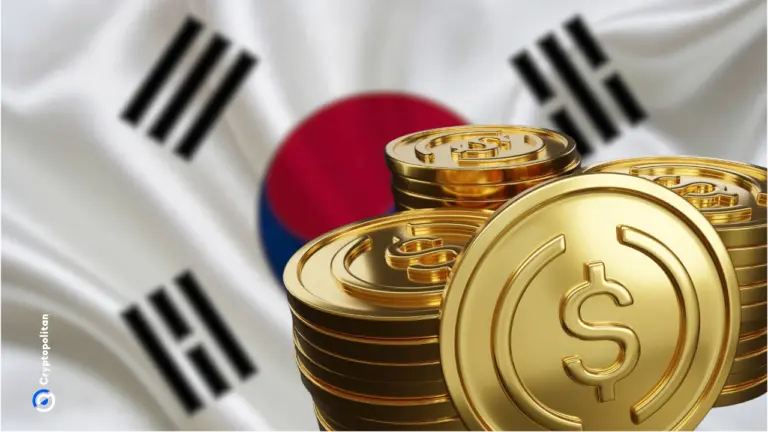
- IQ and Frax launch KRWQ, the first Korean won-pegged stablecoin on Coinbase’s Base network, marking a milestone in Asia’s digital asset growth.
- KRWQ uses LayerZero’s Omnichain Fungible Token standard to enable cross-chain transfers and is designed for institutional compliance.
- The launch comes as South Korea prepares legislation to regulate stablecoins under the Foreign Exchange Transactions Act amid rising scrutiny of digital asset flows.
IQ, in collaboration with decentralized finance protocol Frax, has launched a stablecoin pegged to the South Korean won (KRW) named KRWQ. The token is the first won-denominated stablecoin on Coinbase’s Ethereum Layer 2 network, Base.
Published on Thursday in a joint news release, KRWQ is the first Korean won-backed multichain stablecoin that leverages the Stargate bridge and LayerZero’s Omnichain Fungible Token (OFT) standard to facilitate transfers between several blockchains. The inaugural trading pair for the coin was KRWQ/USDC on the decentralized exchange Aerodrome.
IQ said it collaborated with Frax to incorporate compliance and institutional safeguards modeled on Frax’s frxUSD system to draw institutional interest.
“While USD-backed stablecoins dominate today, no credible won-denominated stablecoin has ever launched at scale. KRWQ fills a critical gap in the market,” said Chief Brain of IQ Navin Vethanayagam.
The launch comes in a week after Japan introduced a fully globally tradable and redeemable digital yen backed by domestic deposits and Japanese government bonds (JGBs), Cryptopolitan reported.
Won stablecoin yet to be offered to South Koreans
KRWQ is available on Base and other supported blockchains, but it is not yet marketed or offered to South Korean residents since there is no regulatory law governing the assets locally. IQ and Frax said minting and redemption are currently limited to eligible counterparties such as exchanges, market makers, and institutional partners.
“KRWQ is designed to be the first fully regulatory-compliant stablecoin in Korea, developed in anticipation of forthcoming legislation currently under review in the National Assembly,” IQ noted in its announcement.
Last month, South Korean digital asset custody provider BDACS launched KRW1, another won-pegged stablecoin launched on Avalanche. However, BDACS coined KRW1 a “proof-of-concept” due to unclear regulatory guidance in the country.
Since the election of President Lee Jae Myung in June, South Korea has expedited its plans to build a local currency-pegged stablecoin market. The initiative is part of a broader strategy to strengthen the country’s monetary sovereignty in tandem with upcoming laws to add stablecoins to its digital economy.
Korea’s stablecoin legislation not established
South Korea is preparing to introduce its first law covering stablecoins under the Foreign Exchange Transactions Act. According to National Assembly officials, the proposed amendment could classify stablecoins as legal “means of payment,” placing them in the same category as government-issued notes and bank currency.
Representative Park Sung-hoon of the main opposition People Power Party, who proposed the bill, said stablecoins are outside existing legal definitions despite their popularity in the Asian jurisdiction.
Financial Supervisory Service (FSS) data shows coin flows between Huione Guarantee, a virtual asset platform linked to Cambodia-based Huione Group, and five South Korean exchanges, including Upbit and Bithumb, reached 12.8 billion won ($8.9 million) last year.
The tally is a 1,400-fold increase from 9.22 million won in 2023, with 99.9% of transactions conducted using US dollar pegged stablecoin Tether (USDT).
South Korean authorities have stalled passing laws because they have mostly been worried about the use of stablecoins in illicit financial activities. The US and UK governments sanctioned Huione Group for alleged fraud and laundering of stolen funds, with Huione Guarantee now designated as a high-risk platform for fund transfers.
US dollar dominance breeds need for other fiat-backed digital currencies
America’s foothold in the stablecoin market has reportedly made it urgent for the South Korean government’s legislative response, alongside other countries like Japan. As reported by the Korean Times last week, Financial Services Commission (FSC) Chairman Lee Eog-weon said the forthcoming bill on stablecoins is in its final stages of coordination with relevant ministries.
Tether CEO Paolo Ardoino said in a recent interview with the local news publication that only a few countries are well-positioned to issue national stablecoins at scale, including Korea.
“I think the Korean won is going to be one of the most important currencies for settling transactions and tech-related commodity trades, as well as international agreements for access to new technology,” he surmised.
Don’t just read crypto news. Understand it. Subscribe to our newsletter. It's free.
Disclaimer. The information provided is not trading advice. Cryptopolitan.com holds no liability for any investments made based on the information provided on this page. We strongly recommend independent research and/or consultation with a qualified professional before making any investment decisions.

Florence Muchai
Florence has been covering for the past 6 years crypto, gaming, tech, and AI news. Her Computer Studies at Meru University of Science and Technology and Disaster Management and International Diplomacy at MMUST amply equip her with language, observation and technical skills. Florence has worked at VAP Group and as an editor for several crypto media houses.









