






Former China central bank chief rejects Beijing’s stablecoin exploration

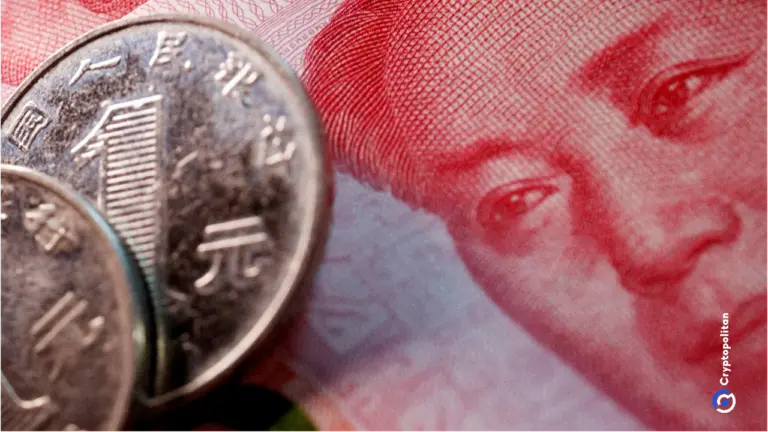
- Former PBOC governor Zhou Xiaochuan has warned against stablecoin adoption, arguing that they could undermine financial stability.
- Zhou highlighted risks of speculation and fraud, noting that global regulatory frameworks still leave gaps that fail to safeguard markets fully.
- Beijing remains cautious toward stablecoins, recently directing brokers and institutions to stop promoting them over concerns about financial order.
China’s former central bank governor has warned against the recent growing wave of support for stablecoin adoption in the country.
Zhou Xiaochuan has expressed his skepticism over the advantages that stablecoins might bring to China’s financial system, stating instead that these fiat-pegged tokens could disrupt the existing efficiency and control of the sector.
Former chief of China’s central bank pushes back on stablecoin expansion
In comments delivered in mid-July during a closed-door session and published on Wednesday by the Beijing-based think tank China Finance 40 Forum (CF40), former People’s Bank of China governor Zhou Xiaochuan has issued a strong warning about stablecoins.
Zhou, who led the People’s Bank of China (PBOC) from 2002 to 2018, argued that these fiat-linked digital currencies do not provide enough benefits to be given serious consideration relative to their potential to undermine the financial stability of the country’s existing payment systems.
According to the CF40 post, Zhou expressed skepticism about the advantages stablecoins might bring, particularly in the context of China’s already highly developed financial infrastructure.
He stated that the country’s retail payment ecosystem, which already includes third-party platforms, the central bank’s own digital yuan project, various wallets, and clearing mechanisms, has become “highly efficient and low-cost.”
In his view, this leaves “very limited room for new entrants to achieve further cost savings or profit in this space.”
While acknowledging that new technologies such as tokenization and decentralization have gained attention globally, Zhou said China’s payment and clearing infrastructure has not embraced these concepts. Instead, the focus has been on ensuring security, efficiency, and control, which stablecoins might disrupt.
Risks of speculation and instability
Zhou’s main concern lies in the potential for stablecoins to become speculative tools. He highlighted the danger of excessive use in asset trading, which could heighten risks of fraud and market manipulation.
“We must be vigilant about the risk of stablecoins being excessively used for speculative asset trading,” he said.
Stablecoins are designed to maintain a fixed value by being backed by liquid assets, but Zhou pointed out that regulatory frameworks in the U.S., Hong Kong, and Singapore still leave gaps that may not adequately prevent instability.
Without strong safeguards, he argued that stablecoins could threaten both financial markets and broader economic stability.
Chinese regulators have consistently regarded digital tokens as potential threats to capital controls and financial order. Over the years, authorities have imposed strict restrictions on cryptocurrency mining, trading, and fundraising.
Stablecoins, although technically different from cryptocurrencies such as Bitcoin that are more volatile, remain under suspicion.
Earlier this month, Chinese regulators instructed local brokers and institutions to halt the publication of research or the hosting of seminars that promote stablecoins due to concerns that they could be exploited for fraudulent activities or undermine the central bank’s control of the financial system.
The smartest crypto minds already read our newsletter. Want in? Join them.
Disclaimer. The information provided is not trading advice. Cryptopolitan.com holds no liability for any investments made based on the information provided on this page. We strongly recommend independent research and/or consultation with a qualified professional before making any investment decisions.

Hannah Collymore
Hannah is a writer and editor with nearly a decade of blog writing and event reporting experience in the crypto space. At Cryptopolitan, Hannah contributes to the news page, reporting and analyzing the latest developments in DeFi, RWA, crypto regulation, AI and frontier tech industries. She graduated from Arcadia university with a degree in Business Administration.









