


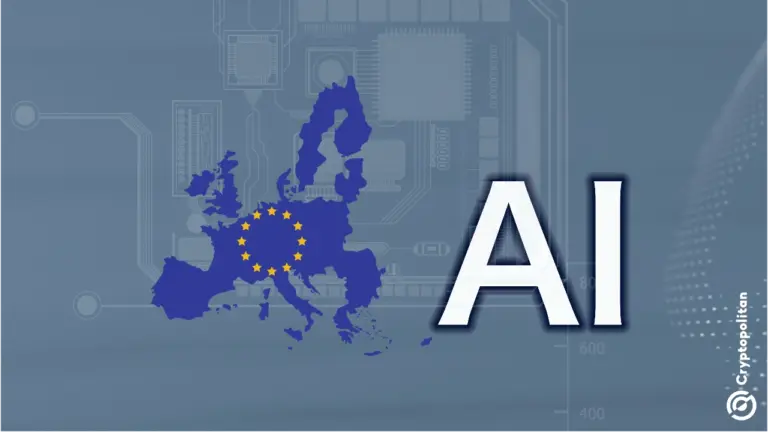
- The EU is launching the Democracy Shield to fight disinformation and respond faster to harmful online content.
- Tech companies and digital creators will be required to detect and prevent the dissemination of manipulated content, promoting accurate information instead.
- Telecom operators are seeking more 6GHz spectrum to help the EU lead in next-generation 6G networks.
Europe is turning to social media platforms and digital creators to help counteract false information and support democratic values, according to a strategy unveiled by the European Commission. The EU remains concerned about foreign interference in online news content.
Since 2022, the EU’s Digital Services Act has required tech giants, including Google, Microsoft, Meta, TikTok, and Elon Musk’s X, to intensify their efforts to curb illegal and harmful online content.
To that effect, and pursuant to the European Democracy Shield action plan, the EU Commission will establish a DSA incident and crisis protocol to enhance cooperation with authorities and react more quickly in cases of major disinformation incidents.
European Centre for Democratic Resilience to coordinate member states’ resources
Tech firms like Google, Microsoft, Meta, and TikTok, which have signed the voluntary Code of Conduct on disinformation, might be required to do more to detect and mark AI-driven or doctored content.
Speaking at a press briefing, EU Justice Commissioner Michael McGrath said the Democracy Shield aims to ensure Europe’s institutions and tools work in sync to defend its common values, stressing that the task ahead is critical.
The Commission also acknowledged the influence of content creators in online politics and stated that it would establish a voluntary network to enhance understanding of EU regulations. A new body, the European Centre for Democratic Resilience, will work to coordinate member states’ resources and foster better collaboration and data exchange.
EU considers giving Europe’s telecom operators more spectrum frequencies
Sources also reported on Wednesday that an advisory body to the European Commission has endorsed a plan allocating a significant portion of important spectrum frequencies to Europe’s telecom operators.
European companies, including Deutsche Telekom, Orange, TIM, and Vodafone, are urging regulators to allocate more spectrum for mobile use, cautioning that without the upper 6 GHz band, Europe could fall behind the U.S. in 6G development. U.S. firms active in the EU say they also require more spectrum to support their Wi-Fi operations.
Both camps are competing for exclusive control of the 6 GHz spectrum. The Radio Spectrum Policy Group recommends allocating 540 MHz of the 6 GHz spectrum to mobile operators, and the 160 MHz of spectrum that could be assigned to Wi-Fi companies will remain on hold until the 2027 World Radiocommunication Conference, at which the ITU will set the roadmap for future mobile bands.
Experts anticipate 6G will be commercially launched in the 2030s, with the 6 GHz band already partially allocated for Wi-Fi in the U.S., Canada, South Korea, and other countries.
The European Commission reportedly aims to reach decisions on spectrum allocation before the 2027 ITU conference and deploy the Democracy Shield across its member states by 2026. Policymakers are hoping these efforts will not only strengthen the EU’s defenses against disinformation but also position it at the forefront of next-generation mobile connectivity.
Combining regulatory oversight, industry coordination, and public outreach, the EU is seeking to secure not only its digital democracy but also a technology future, with an overall approach it says is essential against increasingly fierce global competition in digital realms.
The smartest crypto minds already read our newsletter. Want in? Join them.

Nellius Irene
Nellius is a Business Management and IT graduate with five years of experience in the cryptocurrency industry. She is also a graduate of Bitcoin Dada. Nellius has contributed to leading media publications, including BanklessTimes, Cryptobasic, and Riseup Media.