






Elon Musk puts TikTok, Meta on notice in X challenge of EU DSA $140M ruling

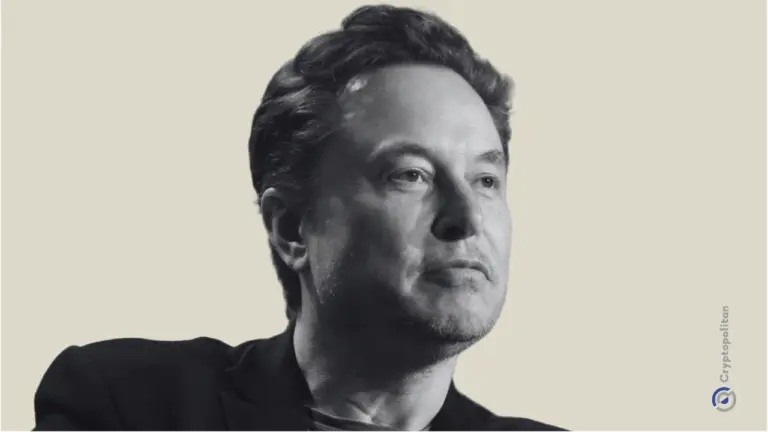
- X is the first company to legally fight a fine under the EU’s 2022 Digital Services Act.
- A major part of the €120 million ($140 million) fine stems from Article 40, which requires platforms to provide free data access to researchers to study “systemic risks.”
- X is facing increasing pressure globally, including a potential ban in Spain.
Elon Musk’s X is challenging the $140 million fine imposed on the platform under the Digital Services Act by the European Union.
The legal challenge targets the European Commission’s concentrated power, claiming that it doesn’t allow for “meaningful checks and balances.”
The case, titled X v. the European Commission, is of interest to other tech giants like Meta, TikTok, and Google. The DSA governs “Very Large Online Platforms” (VLOPs), so the court’s decision will set a precedent for them.
What fine is X fighting in court?
The social media platform X (formerly Twitter) has officially filed a legal challenge against the European Union. It is the first company to legally contest a fine imposed under the Digital Services Act (DSA).
The appeal was filed at the General Court of the European Union in Luxembourg and seeks to overturn a €120 million fine issued by the European Commission in December 2025.
X and its owner, Elon Musk, argue that the European Commission has shown prosecutorial bias. According to the legal filing, X claims the Commission ignored basic due process.
Under the DSA, the European Commission has the power to write the rules, investigate potential breaches, and then decide the punishment. X argues that this concentration of power leaves no room for “meaningful checks and balances.”
The Alliance Defending Freedom (ADF) International also argues that the EU is using the DSA as a “censorship law” to target platforms that support broad free speech.
In December 2025, the Commission ruled that X had failed to meet transparency and procedural obligations. X denied these claims and instead suggested that the Commission was punishing the platform for refusing to implement content moderation.
X has been involved in a number of scandals regarding its “free speech” policy. A government minister in Spain has publicly discussed the possibility of a countrywide ban on X if the platform does not comply with local “hate speech” regulations.
Multiple investigations are ongoing regarding X’s role in distributing what authorities call illegal content in the United Kingdom.
How does Article 40 change online research and privacy?
Roughly €40 million of X’s €120 million fine is tied to Article 40 of the DSA. This article requires platforms to give independent researchers access to data in order to allow experts to study how platforms might contribute to systemic risks, such as those affecting elections or public security.
The Commission’s investigation found that X created several barriers for researchers, including directing them to a “Pro” API tier that cost $5,000 per month, rather than providing free access.
The company rejected researchers who were not based in the EU, even though the law does not require researchers to live within the Union. X’s terms of service also prohibited researchers from using automated tools to gather publicly available data.
The Commission has now clarified that publicly accessible data must be provided to qualified researchers without undue delay and at no cost. This includes allowing researchers to scrape data, provided they are capable of following data security rules.
The Commission also rejected X’s narrow definition of systemic risk. The company had argued that research must be directly and exclusively about risks within the EU. The Commission ruled that studying global trends, such as election interference in other countries, is relevant to understanding risks within the Union.
X must submit a new plan by mid-April 2026 detailing how X will remove the barriers affecting researchers.
The U.S. House Judiciary Committee recently released a 160-page report criticizing the EU’s actions. They claim that the DSA is being used to pressure American companies into changing their global moderation rules to fit European standards.
Alongside the current case, X is under further investigation for allegedly failing to combat false information. This separate investigation could lead to additional fines of up to 6% of the company’s global annual turnover.
Don’t just read crypto news. Understand it. Subscribe to our newsletter. It's free.

Hannah Collymore
Hannah is a writer and editor with nearly a decade of blog writing and event reporting experience in the crypto space. At Cryptopolitan, Hannah contributes to the news page, reporting and analyzing the latest developments in DeFi, RWA, crypto regulation, AI and frontier tech industries. She graduated from Arcadia university with a degree in Business Administration.









