






Dollar falls against every major currency as US stocks post worst global underperformance since 1993

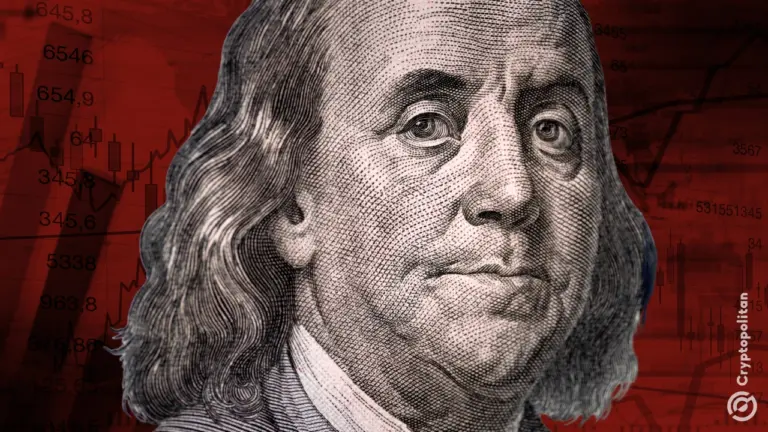
- The dollar has dropped against every major currency as global investors retreat from US assets.
- US stocks are underperforming globally, with the S&P 500 trailing the MSCI World Index by over 13%.
- Tariffs, weak spending, stalled job growth, and Trump’s immigration policies are slowing the economy.
The dollar just got steamrolled. It’s now lower against every single major currency, and US stocks are trailing the rest of the world by the widest margin since 1993.
It’s been four months since the “Sell America” trade began dumping US stocks, bonds, and the dollar in one coordinated hit. Now things have calmed down, but the damage is locked in.
And despite equities rebounding to all-time highs, America’s markets are still getting outperformed globally.
Donald Trump’s chaotic trade decisions, erratic immigration stunts, constant brawls with the Federal Reserve, and attacks on economic reporting have shredded market confidence. But despite all of it, foreign funds haven’t totally ditched American markets; they’re too big to quit cold turkey.
Foreign stocks fly while US tech, dollar try to plug the hole
The S&P 500 is up 9.6% this year, which might sound fine until you look around. The MSCI World Index, minus the US, is up 23.4%. Global banks, manufacturers, and communication firms are leading the charge. The last time the US looked this weak compared to the world was thirty-two years ago.
And it’d be even uglier if tech didn’t exist. The only US sector actually doing better than its global peers is information technology, thanks to the country’s grip on AI. Everything else is fading.
Beyond that, the performance problems are coming from inside the house. Sure, earnings beat the doomsday predictions, but only tech and communication services are moving. Consumer spending isn’t growing, and job gains are stalling. Personal consumption expenditures, adjusted for inflation, haven’t gone anywhere.
Then there’s Trump’s “Liberation Day” tariffs. They might not be as bad as what he first rolled out back in April, but they’re still on track to become the highest tariffs in 100 years. That has corporate leaders scrambling.
A joint survey from Duke University and the Richmond Fed found that 40% of CFOs say trade and tariff policy is their top problem. With businesses frozen in place, consumer confidence is sinking. And companies are stuck choosing between smaller profits or passing higher prices to customers.
That’s not the only hit to the workforce. Trump’s immigration clampdown is slamming labor supply. Sectors like agriculture, construction, and healthcare are running short on workers. The IMF now projects US GDP will grow 1.9% in 2025, a drop from 2.8% last year.
Meanwhile, the global economy is expected to expand by around 3%. That would make this the weakest US performance since 2022, and before that, 2017.
Fed holds tight as Trump stokes chaos, futures slip and yields tick higher
Over at the Federal Reserve, it’s gridlock. Policymakers are frozen by fears that Trump’s tariffs will keep inflation sticky. They’re not hiking rates, but they’re not cutting either. That means borrowing costs are staying high, and the housing market is still frozen. Trump hasn’t helped. He’s attacking the Fed publicly, pressuring it to forget inflation and just cut rates.
And in a move that rattled Washington, Trump fired the head of the Bureau of Labor Statistics after a weak July payrolls report, calling it “rigged” with no evidence. That’s kicked off fresh concerns that economic data could get politicized.
The question now is whether the numbers investors rely on will stay trustworthy. Because if that trust collapses, the market doesn’t follow the Fed—it follows reality.
On Thursday morning, stock futures barely moved. It followed a brutal four-day losing streak for the S&P 500, with tech stocks weighing everything down again. Amazon, Apple, and Alphabet all fell more than 1% on Wednesday. Broadcom dropped 1.3%, Intel plunged 7%, and Nvidia, which was down over 3% at one point, closed just 0.1% lower.
As for the bond market, Treasury yields rose slightly ahead of Fed Chair Jerome Powell’s upcoming speech at the central bank’s annual symposium. At 4:01 a.m. ET, the 10-year yield edged up 1 basis point to 4.308%, while the 2-year yield also nudged up 1 basis point to 3.758%. Just to be clear, 1 basis point equals 0.01%, and when yields climb, prices fall.
The smartest crypto minds already read our newsletter. Want in? Join them.
Disclaimer. The information provided is not trading advice. Cryptopolitan.com holds no liability for any investments made based on the information provided on this page. We strongly recommend independent research and/or consultation with a qualified professional before making any investment decisions.

Jai Hamid
Jai Hamid has been covering crypto, stock markets, technology, the global economy, and the geopolitical events that affect markets for the past 6 years. She has worked with blockchain-focused publications including AMB Crypto, Coin Edition, and CryptoTale on market analyses, major companies, regulation, and macroeconomic trends. She has attended London School of Journalism and thrice shared crypto market insights on one of Africa’s top TV networks.









