




- Chinese AI startup DeepSeek raised over $7 billion in its first funding round, valuing the company at over $50 billion.
- Founder Liang Wenfeng retained control through a special investment structure, with investors receiving limited governance rights.
- The funding marks a shift from DeepSeek’s self-funded model as rising AI computing demands and chip restrictions increase costs.
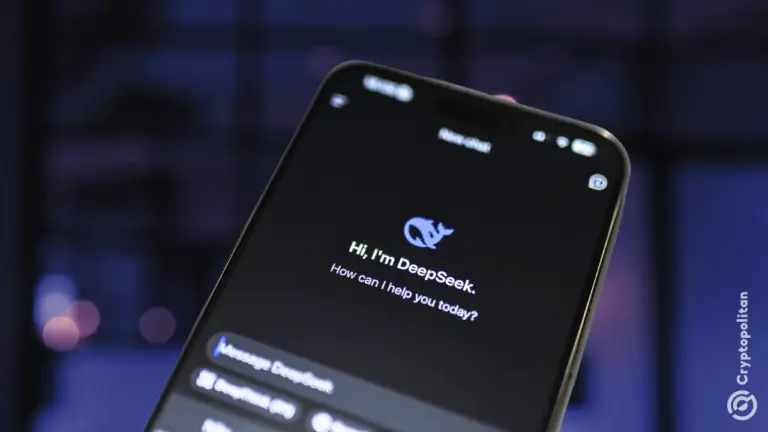
Chinese AI startup DeepSeek raised more than $7 billion during its first-ever fundraising round, valuing the firm at over $50 billion and showing that the race for AI supremacy has a well-funded new player in China apart from America.
This deal is important for the AI industry as a whole since three of the world’s top private AI firms have already raised a total of more than $190 billion in 2026, with the other two being OpenAI, which has raised $122 billion, and Anthropic, which has raised $65 billion. DeepSeek’s round, while smaller, confirms that investor appetite for frontier AI extends well beyond Silicon Valley.
An unusual structure to preserve founder control
The fundraising made use of a unique method that makes it different from regular venture funding operations. The external investors did not purchase any shares of DeepSeek directly. They only invested their funds in a limited partnership entity run by Liang Wenfeng, who is both the founder and the CEO of the company, The Information reports. With this structure, Liang is able to make all the decisions regarding the company’s operations.
Liang invested 20 billion yuan ($3 billion) of his own money, which accounts for nearly 40 percent of the entire investment. Other investors include Tencent (10 billion yuan), battery manufacturing company CATL (5 billion yuan), JD.com, NetEase, and IDG Capital (3 billion yuan each), as per Reuters.
Outside investors did not have any voting power and were restricted from selling their stake for five years due to the lock-up provisions. The only company that received both voting rights and no such lock-up provision was China’s National Artificial Intelligence Industry Investment Fund, which invested 1 billion yuan in DeepSeek.
Why DeepSeek reversed course on outside capital
DeepSeek has been funded exclusively by Liang’s quantitative hedge fund, High-Flyer since its inception in 2023. This system of financing helped the organization avoid being subjected to any commercial pressures and provided the ability to conduct open-weight research, which allowed DeepSeek to develop models comparable to the US frontier labs but with substantially lower costs of training.
A shift to external financing is determined by new challenges facing DeepSeek. According to reports, AI technology has evolved to the point where the low-cost, open-source chatbots that made DeepSeek famous no longer have any competitive advantage. Now, AI agents able to do complex work with minimal human supervision require much more computing resources.
Export restrictions applied to advanced Nvidia processors from the West pose additional challenges for DeepSeek. “Western export bans mean DeepSeek cannot access frontier American silicon,” explained Alfredo Montufar-Helu, managing director of Ankura China Advisors based in Beijing. External financing will give the organization an opportunity to develop other sources of computing capabilities and domestic chip supply chains.
What this means for the global AI market
The funding round for DeepSeek positions it alongside other privately held AI firms like OpenAI and Anthropic in a select group that is worth over $50 billion. The funding sources include many Chinese tech corporations and government-backed funds, highlighting the Chinese government’s effort to establish a self-reliant AI ecosystem comprising models, computational capacity, and energy infrastructure.
Tencent, which has struggled to create a presence with its AI project Hunyuan against ByteDance’s Doubao, is able to keep up with Alibaba’s backing of its proprietary Qwen model through its investment in DeepSeek.
CATL’s involvement, on the other hand, is how AI investment is pulling in players far beyond traditional tech. The company, which recently ventured into building power systems for AI data centers and energy storage, has positioned itself as a supplier of infrastructure that large-scale AI workloads require.
The closed funding round comes amid preparations for the IPOs by OpenAI and Anthropic. For DeepSeek to be valued at over $50 billion using an investor structure that gives little governance control to outside investors provides a benchmark that public market investors will consider during the IPO process.
Don’t just read crypto news. Understand it. Subscribe to our newsletter. It's free.
FAQs
How much did DeepSeek raise and at what valuation?
DeepSeek raised more than $7 billion (approximately 50 billion yuan) in its first outside funding round, valuing the company at between $50 billion and $59 billion, according to Reuters and The Information.
Who are DeepSeek's largest investors?
Founder Liang Wenfeng contributed roughly 20 billion yuan personally, Tencent invested 10 billion yuan, CATL put in 5 billion yuan, and JD.com, NetEase, and IDG Capital each invested 3 billion yuan, according to Reuters, WEEX, and BlockBeats
Why did DeepSeek decide to raise outside funding now?
The AI industry's shift toward compute-intensive AI agents and US export controls on advanced chips created funding and infrastructure needs that exceeded what DeepSeek's internal capital from founder Liang Wenfeng's hedge fund could cover, according to Reuters.
Disclaimer. The information provided is not trading advice. Cryptopolitan.com holds no liability for any investments made based on the information provided on this page. We strongly recommend independent research and/or consultation with a qualified professional before making any investment decisions.

Ashish Kumar
Ashish Kumar is a crypto and financial journalist with eight years of newsroom experience. He covers what’s happening with crypto markets, regulation, DeFi, and exchange ecosystems. He has worked with Coingape, Todayq, and Newsroompost. Ashish holds a PGDP in English Journalism from the IIMC. He has also interviewed industry figures including Arthur Hayes, Yat Siu, Austin Federa, and more.









