





Congress prepares to challenge Chair Kevin Warsh as uncertainty over Fed policy grows

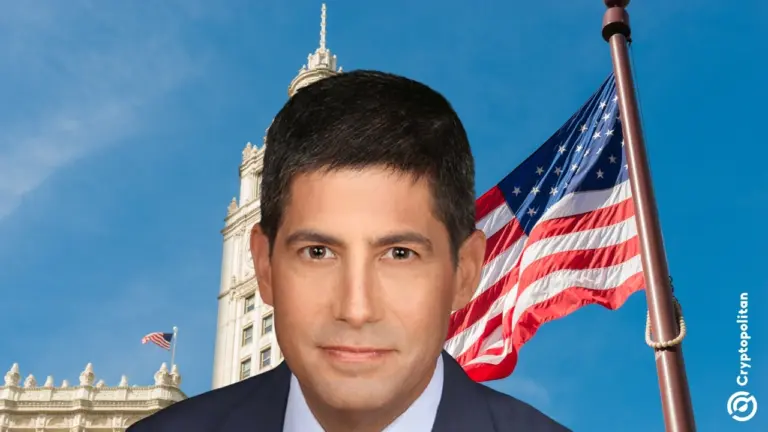
- Kevin Warsh faces Congress for the first time as Federal Reserve chair.
- Markets see a 70% chance of a rate increase by September.
- June inflation is expected to slow, but price pressure remains high.
Kevin Warsh will face Congress for the first time as Federal Reserve chair while lawmakers press him on rates, prices, and central bank independence. His first month in the job has been quiet. Kevin has said little about the economy.
The House Financial Services Committee will question Kevin at 10 a.m. in Washington on Tuesday, after the Bureau of Labor Statistics publishes June consumer inflation figures. On Wednesday, he will appear before a Senate panel after the agency releases producer price data during both scheduled appearances this week.
Lawmakers press Kevin for answers as rate expectations climb
The Atlanta Fed Market Probability Tracker puts the chance of a rate increase by September at 70%. Treasury yields have risen since January, while traders have priced in higher borrowing costs.
Kevin has refused to give the usual clues. Earlier this month, he said, “I said I’m not going to give forward guidance because we’re meeting in six weeks, but I have an update for you, we’re meeting in four weeks.”
He said debate inside the Fed would stay behind closed doors. “I want us to have a good family fight … When we get into that room and shut the door, we’re going to have a good debate, but I don’t have much more for you than that.”
Friday’s Fed report said inflation is still too high. Higher energy costs linked to the Middle East conflict remain part of the problem. Tariffs have raised prices for household goods. Strong demand for chips and other parts used in data centers has added more pressure.
Service prices have gone up too, though officials said they do not expect that rise to last.
One Fed policy formula points to a federal funds rate above the current 3.5% to 3.75% range because inflation has climbed. Officials warned against reading it literally.
“However, the prescriptions shown here ignore that the economy would have evolved differently if the policy rate had followed one of the paths prescribed by the rules, and, hence, these prescriptions should be interpreted with care,” the report said.
Congress questions Kevin on inflation, AI, and Fed independence
The June Consumer Price Index is expected to show annual inflation at 3.8%, down from 4.2% in May. Lower oil prices are expected to help. Those prices fell after Trump reached an agreement with Iran, though that deal now appears to have lost much of its value.
Core inflation, which removes food and energy, is expected at 2.8%, compared with 2.9% a month earlier. Kevin will almost certainly be asked what those figures mean for rates. His recent style suggests he may keep the answer narrow.
Minutes from the Fed’s June meeting showed two possible paths for the rest of the year. If inflation cools, officials could keep rates where they are or cut them. If price pressure stays stubborn, they could raise rates again.
Kevin can be more relaxed talking about the five task forces that he set up. One will evaluate the communication strategy of the Federal Reserve with the public. The other one will look into the balance sheet policy. The other three will evaluate data quality, inflation forecasting, and the impact of artificial intelligence on employment and productivity.
Lawmakers are expected to test Kevin on whether the White House can influence the central bank. Trump has pushed for lower rates, while the Fed is trying to control inflation.
Kevin addressed that issue last week. “We’ve been an independent central bank for a very long time. We’re going to be an independent central bank at this moment, and you’re going to see no changes on that.”
AI will be another topic. Congress may ask whether spending on chips, power, and data centers could add to inflation. Kevin did not give a firm answer last week. He said AI is already showing up in demand and added that he is “confident we’re going to see it in supply at some point.”
If you're reading this, you’re already ahead. Stay there with our newsletter.
Disclaimer. The information provided is not trading advice. Cryptopolitan.com holds no liability for any investments made based on the information provided on this page. We strongly recommend independent research and/or consultation with a qualified professional before making any investment decisions.

Jai Hamid
Jai Hamid has been covering crypto, stock markets, technology, the global economy, and the geopolitical events that affect markets for the past 6 years. She has worked with blockchain-focused publications including AMB Crypto, Coin Edition, and CryptoTale on market analyses, major companies, regulation, and macroeconomic trends. She has attended London School of Journalism and thrice shared crypto market insights on one of Africa’s top TV networks.









