







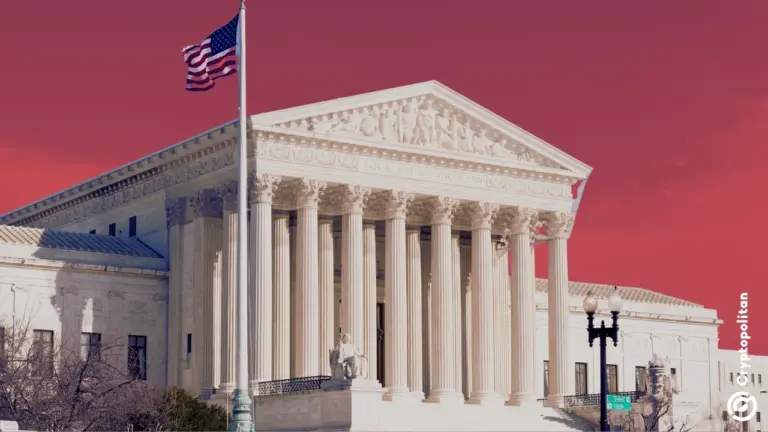
- CLARITY Act is running out of time before the Senate’s Aug. 7 recess, with delays potentially pushing crypto regulation into 2027.
- Large crypto firms are gaining an edge, while smaller companies and DeFi projects remain stuck waiting for regulatory clarity.
- The bill would establish SEC/CFTC oversight, create clearer rules for exchanges, and define how DeFi protocols are regulated.
The time is running out for the CLARITY Act before the Senate takes its recess on August 7, and the impact of this delay is being felt differently in the crypto space. Major firms are managing to raise funds, but smaller companies, DeFi projects, and community banks are still expecting the appropriate regulations, which, it seems, will come up only in 2027.
That disparity became clear this week when Cathie Wood’s ARK Invest increased its stake in Coinbase and Circle Internet, according to Investor’s Business Daily, whereas Senate Majority Leader John Thune said nothing except that he was looking for an initial vote before the week was over. Circle managed to gain federal approval for its national trust bank back in July, according to InvestorIdeas. Various firms that can adapt to the regulatory landscape are getting advantages over others while the new framework is still not finalized.
A four-week runway that never opened
As per Yahoo Finance’s Alex Ioannou, a combined Senate draft was supposed to happen approximately on July 13 and have a floor action on July 20, after which the lawmakers would have about a month until the August recess. However, since the Senate rules require 60 votes to break a filibuster, Republicans will still need Democrats’ votes.
On May 14, the Senate Banking Committee moved forward with its proposal of the bill with support from all Republicans and two Democrats. Later, the Democrats demanded an ethics requirement regarding senior government members, which would prevent them from being involved in the crypto business. Despite this condition, the merged draft has not incorporated this wording yet, while Yahoo Finance claims that the lawmakers are still discussing the extent of authority state attorneys general have in enforcing ethical violations. The White House stayed out of these negotiations.
Which version of the bill, and who it hits
The law has continued to grow with each update made to it. As pointed out by Galaxy Research, the draft put forth in January had increased from 278 pages in length to 309 pages in May. Yahoo Finance added that the merger with the Senate Agriculture Committee text had increased it by more than 70 pages, mainly dealing with matters of consumer protection.
The legislation would establish the jurisdiction of the SEC and CFTC depending on whether a token is classified as a security or a commodity. As previously mentioned by Cryptopolitan, centralized exchanges will have clearer rules for operating, while decentralized finance protocols will achieve clarified terms of operation that include definitions of validators and oracles. The new requirements on disclosures will be imposed on token issuers. Meanwhile, the regulatory requirements will be imposed on intermediaries who will bear federal registration and anti-money-laundering obligations. Those compliance costs are easier for large firms to absorb than for smaller competitors.
Banks push back on stablecoin yield
Rewards associated with stablecoins are still one of the biggest pressure points of the bill.
Anthony Scaramucci of SkyBridge Capital accused the “banking lobby” of trying to make last-minute efforts to obstruct the bill, as per an article in Benzinga that quotes a Wall Street Journal editorial criticizing the bill’s loopholes. Similarly, Jamie Dimon, the CEO of JPMorgan, stated that the bill will allow crypto companies to operate and compete with banks without the same safeguards.
Supporters disagree. Senator Cynthia Lummis labeled the legislation “a consumer-friendly disclosure framework for digital assets.” She also highlighted more than 16 anti-illicit-finance mechanisms that she came up with in response to Senator Elizabeth Warren’s criticism.
Bitcoin shrugs off CLARITY delay
Markets seem to have mostly absorbed the legislative slowdown.
Bitcoin declined from around $65,000 to $62,000 last week, a drop of about 2.8%. According to Bitfire Research, as reported by InvestorIdeas, the decrease was due to several reasons, such as the stagnating legislation, hawkish stance of the Federal Reserve, the transfer of BTC worth about $165 million by Trump Media wallet, and the Coldcard flaw costing the owners roughly 1,367 BTC.
Investor sentiment has changed as well. Spot Bitcoin ETF inflows dipped to around $205 million in July, their lowest monthly amount since their inception. Polymarket says the likelihood of the CLARITY Act passing by 2026 has decreased to only 23%; Galaxy Research said in mid-May that the likelihood ranged between 67% and 75%. Citi has also pointed out regulatory uncertainty as a major factor in its outlook for Bitcoin and Ether.
Even if the Senate approves the bill, lawmakers still need to reconcile it with the House version, which was passed with a 294-134 vote in July 2025, before sending the bill for President Trump’s signature. If Congress fails to meet this week’s deadline, September will be the next right time for passing the legislation. Otherwise, it can defer the bill until the midterm election era, thus increasing the regulatory uncertainty and further benefiting large crypto companies.
The smartest crypto minds already read our newsletter. Want in? Join them.
FAQs
When does the Senate need to act on the CLARITY Act?
The Senate heads into recess on August 7, and if the bill does not clear before then, September becomes the next realistic window, according to Benzinga, with a further failure likely pushing it past the November midterms.
Why are the two swing Democrats withholding support?
The two Democrats who backed the Senate Banking bill on May 14 have tied their final votes to an ethics provision that would bar senior government officials, including the president, from having crypto business ties, Yahoo Finance reported.
What are the odds the bill becomes law in 2026?
Polymarket priced the chance of the bill becoming law in 2026 at 23% as of early August, Benzinga reported, down from the 67% to 75% year-end odds Galaxy Research cited in mid-May.
Why is the CLARITY Act affecting crypto prices?
Investors had hoped the legislation would establish clearer rules for digital asset markets. Delays have prolonged uncertainty over how exchanges, token issuers and other crypto businesses will be regulated.
Why do higher interest rates hurt cryptocurrencies?
Higher interest rates increase the appeal of lower-risk investments such as government bonds, reducing demand for riskier assets like cryptocurrencies.
Why is Trump Media's crypto wallet attracting attention?
The initiative has intensified political scrutiny of digital assets, adding another dimension to ongoing congressional debates over crypto regulation.
What happened with the Coldcard incident?
The reported security issue renewed concerns about hardware wallet security and reminded users of the importance of verifying devices, firmware and supply chains.
Disclaimer. The information provided is not trading advice. Cryptopolitan.com holds no liability for any investments made based on the information provided on this page. We strongly recommend independent research and/or consultation with a qualified professional before making any investment decisions.

Ashish Kumar
Ashish Kumar is a crypto and financial journalist with eight years of newsroom experience. He covers what’s happening with crypto markets, regulation, DeFi, and exchange ecosystems. He has worked with Coingape, Todayq, and Newsroompost. Ashish holds a PGDP in English Journalism from the IIMC. He has also interviewed industry figures including Arthur Hayes, Yat Siu, Austin Federa, and more.









