






- The yuan hit a 9-year high against the U.S. dollar, trading at 7.118 as of Monday.
- It has fallen over 10% vs the euro, 5% vs the pound, and 3% vs the yen this year.
- China is avoiding a rate cut as the Fed prepares to ease, while stocks surge over 43%.
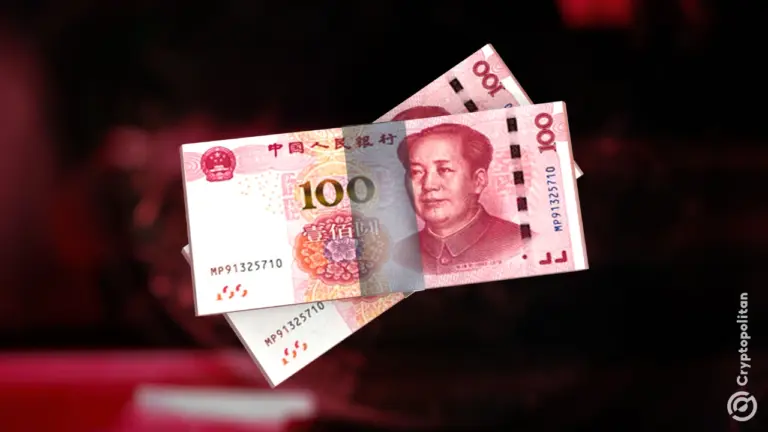
The yuan just climbed to its strongest level against the U.S. dollar in nine years, trading at 7.118 per dollar on Monday, according to data from CNBC.
At the same time, it’s been sinking against every other major currency, setting off alarms from India to Mexico. But oh this isn’t some weird fluke, it’s exactly how Beijing wants it right now, and it’s already pissing off China’s biggest trading partners.
While the offshore yuan has gained 3% against the dollar this year, it’s dropped more than 10% against the euro, 5% against the pound, and 3% against the yen. That divergence has made Chinese exports dirt cheap outside the U.S., just as shipments to America keep shrinking.
China’s own customs data show the U.S. took less than 10% of Chinese exports in August, down from 15% last year. At the same time, exports to Europe, Africa, Latin America, and Southeast Asia are climbing fast.
Beijing holds the line on rate cuts while Fed gets ready to slash
The People’s Bank of China has refused to follow the Federal Reserve’s expected rate cut this week, which traders are pricing at a 94.2% chance, based on CME Group’s FedWatch tool. The Fed is widely expected to lower its key rate by 25 basis points.
That would narrow the yield gap between U.S. and Chinese debt, boosting demand for Chinese assets just as global investors rotate into emerging markets.
But Beijing is stuck. The CSI 300 Index has already surged 43% since September 2024, driven by state-led buying and retail investors ditching low-yield deposits. Any more easing could blow that bubble wide open.
Ting Lu, chief China economist at Nomura, said the central bank is trapped between “fanning the flames” of a stock bubble and “worsening the growth slowdown.” Ting thinks they may go for a tiny 10-basis-point cut in the coming weeks, but only if the market cools down.
Instead of pumping in fresh stimulus, the PBOC is steering the yuan higher by setting the daily fix stronger. On Monday, they pinned the midpoint at 7.1056, the strongest since last November.
Tommy Xie, head of Asia macro research at OCBC Bank, said the yuan is “transitioning from prolonged stability to a carefully steered grind higher.” He expects the offshore yuan to land at 7.08 per dollar by year-end.
That completely flips what most economists expected earlier this year, when they thought China would devalue the yuan to fight off U.S. tariffs.
Even Goldman Sachs admitted the stronger fix could be a “goodwill gesture” to the Trump White House as trade talks grind on. The bank sees the onshore yuan hitting 7.0 by year-end.
Currency drop triggers trade backlash from India and Mexico
While the yuan-dollar rate looks clean, the freefall against other currencies is now drawing fire from trading partners. Tianchen Xu, senior economist at Economist Intelligence, said:
“The divergence of yuan’s appreciation against the dollar and depreciation against others is largely due to a weak dollar that’s unseen for many years.”
Tianchen said the drop will help Chinese exporters as they move away from the U.S. and sell more to non-dollar markets. But not everyone’s happy.
Larry Hu, chief economist at Macquarie, said the yuan’s real effective exchange rate, a measure that adjusts for inflation, is now the weakest since December 2011. That means Chinese goods are cheaper everywhere outside the U.S., and that’s blowing up China’s trade surplus with other countries.
India is already pissed. The country logged a $77.7 billion trade deficit with China in just the first eight months of this year, 16% higher than last year. Now New Delhi wants the BRICS bloc to do something about it.
Over in Mexico, the government is pushing to raise import tariffs on Asian vehicles to 50%, up from 20%, in a move clearly aimed at China. Stephen Jen, who runs Eurizon SLJ Capital, called it “opportunistic devaluation.” He said Beijing used the dollar’s collapse to quietly engineer a yuan devaluation against everyone else.
“A more reasonably priced renminbi and a less predatory exchange rate policy would earn China some goodwill from the rest of the world,” Stephen said. That’s a polite way of saying the global backlash is already building, and Beijing knows it.
The smartest crypto minds already read our newsletter. Want in? Join them.
Disclaimer. The information provided is not trading advice. Cryptopolitan.com holds no liability for any investments made based on the information provided on this page. We strongly recommend independent research and/or consultation with a qualified professional before making any investment decisions.

Jai Hamid
Jai Hamid has been covering crypto, stock markets, technology, the global economy, and the geopolitical events that affect markets for the past 6 years. She has worked with blockchain-focused publications including AMB Crypto, Coin Edition, and CryptoTale on market analyses, major companies, regulation, and macroeconomic trends. She has attended London School of Journalism and thrice shared crypto market insights on one of Africa’s top TV networks.









