






China’s Xiaomi plans 550,000 EV deliveries in 2026 after smashing 2025 targets

-
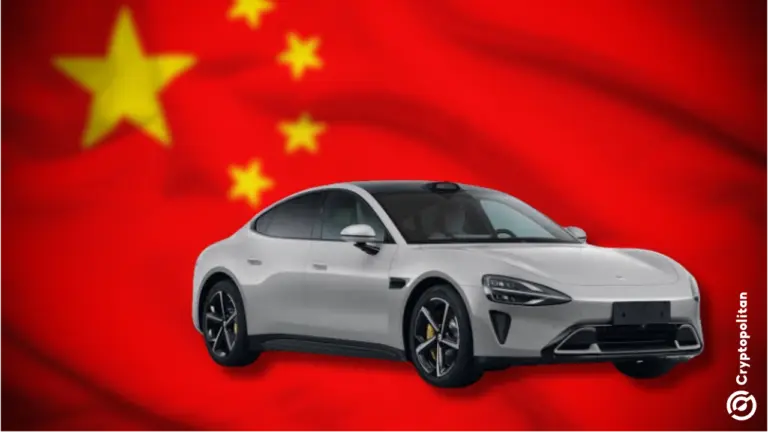
Xiaomi plans to deliver 550,000 electric vehicles in 2026, up from 410,000 in 2025, after its EV unit turned profitable in November.
-
Two SU7 crashes led China to tighten rules around driver assistance systems, door handles, and battery safety, adding pressure to the company.
-
Xiaomi plans four new EV launches or refreshes in 2026, while preparing for global expansion in 2027 and dealing with chip supply risks.
Chinese tech giant Xiaomi plans to deliver 550,000 electric vehicles in 2026, lifting its target after selling 410,000 units in 2025. The figure points to a 34% increase as the company pushes deeper into China’s crowded EV market and lines up overseas expansion.
Billionaire founder Lei Jun announced the goal during a livestream on Saturday, setting expectations for the next phase of the car business.
The EV unit turned profitable in November, around 18 months after the first electric sedan hit the road. That timeline landed faster than Tesla, which took years to reach the same point. The profit news did little to calm markets.
The stock ranked among the worst-performing Chinese tech names last year as concerns grew around overcapacity, soft demand, and tighter conditions across the EV sector, according to Bloomberg.
Xiaomi faces regulation pressure after SU7 crashes
Two serious accidents involving the Xiaomi SU7 triggered calls for tougher oversight.The incidents pushed regulators to act.China released draft rules and new standards covering advanced driver assistance systems, door handle design, and battery safety.
These changes landed as scrutiny rose around software control and physical build choices in new electric models.
Despite that pressure, attention around the vehicles kept spreading beyond China. Karl-Thomas Neumann, former Volkswagen China chief executive, said the SU7 Ultra performance version was a “crying loud warning sign” for Western carmakers.
Tech reviewer Marques Brownlee also weighed in, calling the sedan’s software integration “awesome.” The comments circulated as the company prepared its next steps outside the domestic market.
Xiaomi expands models as EV growth slows worldwide
Xiaomi also plans to widen its lineup by up to four new launches and refreshes, featuring a five-seat model and a seven-seat extended-range SUV.
Xiaomi’s extended-range vehicles reportedly carry a small gasoline engine that recharges the battery once power runs low, without full reliance on charging stations.
Moreover, in May, Lei announced the Xring O1, a 3-nanometer processor designed for devices such as the Tablet 7 Ultra, promised to target performance levels seen in products from Apple and Qualcomm.
At the same time, Xiaomi has warned of the impact of a shortfall in memory chips on its core smartphone business, forecasting a potential supply crunch this year that would raise the price of its mobile devices.
Meanwhile, the global EV market is cooling, with sales expecting to grow by 13% to 24 million vehicles in 2026, down from a 22% rally last year. The slowdown comes as Chinese demand eases, Europe grows at a slower pace, and the United States contracts. Policy changes are playing a role.
President Donald Trump, back in the White House, ended federal EV tax incentives. The European Union also softened its planned 2035 ban on petrol cars, while China’s growth rate continues to decelerate after years of rapid expansion.
In the United States, EV sales are forecast to drop 29% to 1.1 million units after reaching 1.5 million in 2025.Europe is expected to post 4.9 million sales, up 14% from the prior year.
China remains the largest market, with volumes projected at 15.5 million vehicles, including plug-in hybrids, compared with 13.3 million in 2025. Even at that level, growth trails the surge from 2020 through 2025, when sales jumped from about 1.1 million to over 13 million.
Chinese brands continue to dominate pricing pressure. BYD led the charge with lower-cost models across China and Europe and overtook Tesla in 2025 as the world’s biggest electric-car maker after expanding across overseas markets.
The smartest crypto minds already read our newsletter. Want in? Join them.

Jai Hamid
Jai Hamid has been covering crypto, stock markets, technology, the global economy, and the geopolitical events that affect markets for the past 6 years. She has worked with blockchain-focused publications including AMB Crypto, Coin Edition, and CryptoTale on market analyses, major companies, regulation, and macroeconomic trends. She has attended London School of Journalism and thrice shared crypto market insights on one of Africa’s top TV networks.









