







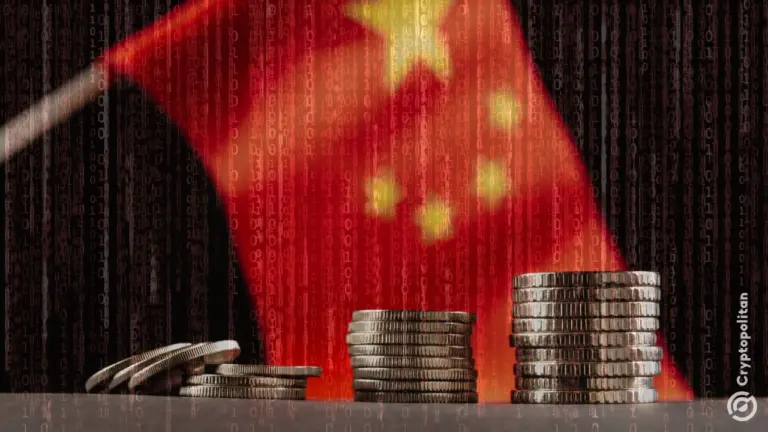
- China will continue cracking down on domestic crypto trading and speculation to protect financial stability.
- The PBOC views stablecoins as a threat to global financial systems and will closely monitor their overseas development.
- Meanwhile, Japan, South Korea, and Hong Kong are advancing regulated stablecoin projects despite China’s cautious stance.
China intends to maintain a tight grip on crypto and stablecoins while continuing to scrutinize overseas digital asset developments, as Asian neighbors launch regulated stablecoins, a representative from the People’s Bank of China said on Monday.
PBC Governor Pan Gongsheng said at a conference in Beijing that the central bank will maintain its crackdown on domestic crypto activity and speculation, emphasizing that “the PBOC’s policies and measures to curb cryptocurrency-related risks remain effective.”
According to Pan, the Central Bank will collaborate with law enforcement to crack down on relevant activities within mainland China, safeguarding economic and financial stability.
China’s plan to closely monitor digital asset developments abroad comes as its Ministry of State Security warns that a foreign company is using crypto as a front to collect sensitive biometric information, including iris scans. It believes their activity will compromise individual privacy and national security.
While the ministry did not name the specific firm, the described tactics are similar to those employed by World, the blockchain project founded by OpenAI’s Sam Altman.
PBOC flags stablecoins as a global financial risk
In its press release, China’s Ministry of State Security affirmed that biometric recognition technology has rapidly evolved, pushed by its effectiveness and convenience. Still, it cautioned that with the rise of biometric scans, there is the added risk of data leaks and misuse.
Stablecoins remain a major concern, according to the governor, who notes that they “can’t meet the basic requirements like customer identification and anti-money laundering.”
Stablecoins are “increasing the vulnerability of the global financial system and undermining the monetary sovereignty of some less developed economies,” Pan said, according to the report.
Pan added that the PBOC will continue to closely monitor and evaluate the progress of stablecoin developments in overseas markets.
Asia pushes ahead with regulated stablecoin launches
The Governor’s comments came on a day when Japanese startup JPYC released what it described as the world’s first yen-backed stablecoin, also named JPYC, with plans to issue up to $66 billion-worth (10 trillion yen) of tokens over three years.
South Korea’s first fully regulated won-backed stablecoin was released last month when digital custodian BDACS and Woori Bank jointly launched KRW1 on the Avalanche blockchain. Bank of China’s Hong Kong shares surged earlier last month on reports that it plans to apply for a license for its own stablecoin, and Standard Chartered has said it is exploring the idea.
Many users are bullish about the growth trajectory of stablecoins, with a significant majority believing that the market cap for stablecoins will exceed $360 billion by February.
Chinese firms are expanding into offshore stablecoin ventures, with Jack Ma’s Ant Group applying for the “ANTCOIN” trademark in Hong Kong, which covers stablecoins, token issuance, and transfers. Meanwhile, JD.com plans to seek overseas licenses to use stablecoins for cross-border B2B payments before extending this to consumers.
“The role of Chinese regulators in shaping global stablecoin regulation has developed against a backdrop of relative financial stability and the absence of sanction-related pressure,” Ray Youssef, CEO of crypto app NoOnes, said
He added that China’s stance on stablecoins, which in many ways mirrors that of the EU, could eventually shift in the opposite direction—similar to Russia, where the government now uses stablecoins and corporations for international payments and foreign trade. He also noted that the restrictions being introduced will not weaken Hong Kong’s position as a global financial hub, as Beijing has always relied on the city as a free economic sandbox that ultimately benefits the mainland Chinese economy.
The smartest crypto minds already read our newsletter. Want in? Join them.
Disclaimer. The information provided is not trading advice. Cryptopolitan.com holds no liability for any investments made based on the information provided on this page. We strongly recommend independent research and/or consultation with a qualified professional before making any investment decisions.

Nellius Irene
Nellius is a Business Management and IT graduate with five years of experience in the cryptocurrency industry. She is also a graduate of Bitcoin Dada. Nellius has contributed to leading media publications, including BanklessTimes, Cryptobasic, and Riseup Media.









