






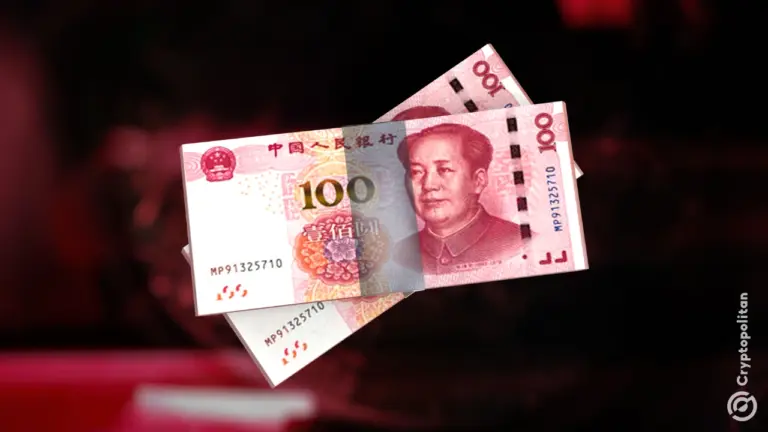
- China strengthened the yuan to 7.0995 per dollar, its firmest level in nearly a year, to stabilize markets during its trade war with the US.
- The People’s Bank of China moved away from past tactics of weakening the currency, favoring fiscal and monetary tools instead.
- Analysts said the move aims to curb volatility and maintain investor confidence ahead of the Communist Party’s October 20–23 meeting.
China stepped in on Wednesday to support the yuan, showing how far Beijing is willing to go to keep its currency stable as the trade war with the United States stretches on.
The People’s Bank of China (PBOC) set the yuan’s reference rate at 7.0995 per dollar, its strongest level in nearly a year, crossing the key 7.1 level that officials had been defending since September.
The stronger fixing pushed the offshore yuan higher and slightly weakened the US dollar, proving that China is not backing off from its defense line.
However, the latest decision breaks from what Beijing did during the last trade confrontation. At that time, it allowed the yuan to weaken to soften the impact of American tariffs.
Now, officials are keeping the yuan steady to limit financial outflows, calm investor nerves, and back their long-running plan to make the currency more international.
According to Bloomberg, analysts said the decision showed clear intent. “A fix below 7.10 sends a strong message of strength,” said Fiona Lim, senior foreign-exchange analyst at Malayan Banking in Singapore. “A strong yuan is symbolic of how China is in a position of strength for any negotiations or tit-for-tat escalations.”
China changes its strategy as tensions rise
The stronger reference rate fits into a clear pattern. Analysts at Goldman Sachs, including Danny Suwanapruti and Xinquan Chen, said China’s latest actions are “markedly different” from its earlier playbook.
Instead of relying on a weaker currency to absorb shocks, policymakers are using monetary and fiscal measures to deal with economic pressure.
“We continue to expect dollar-yuan to grind lower below 7,” Goldman Sachs analysts, including Danny Suwanapruti wrote in a note. “This yuan strengthening reflects a warranted appreciation after very significant real depreciation in recent years.”
Under the current system, the PBOC only allows the yuan to move 2% up or down from the daily reference rate. Wednesday’s stronger fixing was meant to stop any speculation that the currency might slide further as trade tensions flared again.
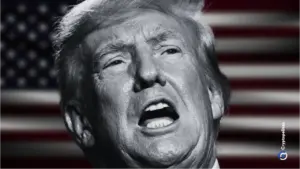
That tension intensified when President Donald Trump targeted cooking oil exports as his latest weapon after Beijing refused to buy US soybeans in response to sanctions placed on the American units of a South Korean shipping company, as Cryptopolitan reported.
Becky Liu, head of China macro strategy at Standard Chartered, said the PBOC’s action was purely about keeping markets calm. Becky added that:
“It will anchor yuan expectations and avoid a substantial rebound in volatility ahead of possibly more US-China headlines. The extremely strong strengthening bias in the recent fixing looks like a precautionary move to prevent a sharp move in markets, not an effort to smooth trade talks.”
Beijing braces for key political meeting and economic headwinds
China’s Communist Party will hold a closed-door meeting from October 20 to 23, where it will review China’s five-year development plan, and officials are known to tighten market controls before such events to prevent instability. The move to defend the yuan fits with that strategy.
Still, the currency’s gains could hit a ceiling. Eddie Cheung, senior emerging markets strategist at Credit Agricole CIB in Hong Kong, said his team expects “a ranged dollar-yuan” because both sides seem focused on avoiding big swings.
Deflation pressure inside China and weaker domestic demand are likely to limit how far the yuan can climb.
Others think the central bank’s changes are too small to make a real difference. Some traders argue that the PBOC’s adjustments aren’t big enough to suggest Beijing wants meaningful appreciation. They point out that ongoing trade tensions, the uncertain path of the US dollar, and China’s lower interest rates compared to the US are still serious obstacles.
Analysts at Bank of America said investors are waiting for weaker inflation numbers and new fiscal stimulus before taking bigger positions in the yuan.
They expect the yuan to end this year at 7.1 per dollar before appreciating to 6.7 in March 2027.
Don’t just read crypto news. Understand it. Subscribe to our newsletter. It's free.
Disclaimer. The information provided is not trading advice. Cryptopolitan.com holds no liability for any investments made based on the information provided on this page. We strongly recommend independent research and/or consultation with a qualified professional before making any investment decisions.

Jai Hamid
Jai Hamid has been covering crypto, stock markets, technology, the global economy, and the geopolitical events that affect markets for the past 6 years. She has worked with blockchain-focused publications including AMB Crypto, Coin Edition, and CryptoTale on market analyses, major companies, regulation, and macroeconomic trends. She has attended London School of Journalism and thrice shared crypto market insights on one of Africa’s top TV networks.









