






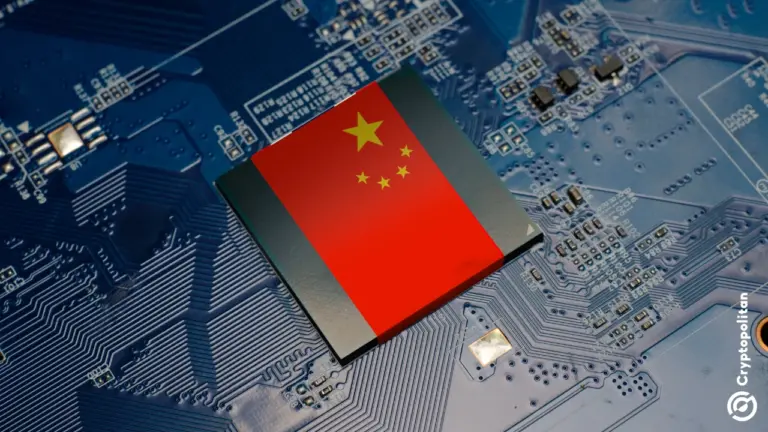
- China’s military deployed a new autonomous combat vehicle using DeepSeek AI while adopting AI across defense operations.
- Chinese forces are developing AI-powered robot dogs that operate in packs and drone swarms that can independently track targets.
- China’s military continues seeking restricted Nvidia chips for AI applications while promoting domestic chips.
China’s defense forces are rapidly adopting artificial intelligence for military purposes, with a new combat vehicle that can operate on its own at speeds up to 50 kilometers per hour.
The state-run defense company Norinco introduced the P60 military vehicle in February. The machine runs on DeepSeek technology, which has become a flagship AI system for China’s technology industry.
Chinese Communist Party leaders highlighted the vehicle’s debut as proof of the country’s plan to utilize AI to maintain its military competitiveness with the United States.
A detailed examination by Reuters of hundreds of research documents, patent applications, and purchasing records reveals how systematically China is working to use AI for military gains.
The review shows that China’s People’s Liberation Army and related organizations continue seeking and using computer chips made by Nvidia, including types that the United States has restricted from export.
The military’s preference for DeepSeek technology shows up clearly in procurement data. Twelve purchasing requests from PLA groups filed this year mentioned DeepSeek models, while only one referenced Qwen, a competing AI system made by the Chinese company Alibaba.
Military purchases involving DeepSeek have grown more frequent throughout 2025, with new defense applications showing up regularly on PLA networks, according to research organization Jamestown.
The military’s heavy use of DeepSeek reflects China’s goal of achieving what Beijing calls “algorithmic sovereignty.” This means reducing reliance on Western technology while gaining more control over important digital systems.
When asked about the PLA’s AI use, the U.S. Department of Defense chose not to comment. However, a State Department representative told Reuters that “DeepSeek has willingly provided, and will likely continue to provide, support to China’s military and intelligence operations.”
The spokesperson added that Washington plans to “pursue a bold, inclusive strategy to American AI technology with trusted foreign countries around the world, while keeping the technology out of the hands of our adversaries.”
Robotic warfare and autonomous systems development
China is exploring AI-powered robotic dogs that work in groups to scout areas, drone fleets that can track targets without human guidance, realistic command centers, and sophisticated war game simulations, the documents show.
In November 2024, the PLA issued a request for proposals for AI-powered robot dogs that would collaborate to detect threats and disarm explosive devices. Reuters was unable to determine whether anyone fulfilled this request. State media images have previously shown China using armed robot dogs made by AI robotics company Unitree during military exercises.
Chinese military groups are investing in battlefield technology that operates more independently, according to the reviewed documents. Two dozen purchasing requests and patents reveal the military’s efforts to integrate AI into drones, enabling them to identify and track targets, as well as work together in formations with minimal human intervention.
Beihang University, which focuses on military aviation research, is utilizing DeepSeek to enhance the targeting capabilities of drones against “low, slow, small” threats. This military term refers to drones and light aircraft, according to a patent filed this year.
Chinese defense officials have publicly promised to keep humans in control of weapons systems. This comes as worries grow that a conflict between Beijing and Washington could lead to uncontrolled use of AI-powered weapons.
The U.S. military, which is also investing in AI, wants to deploy thousands of autonomous drones by the end of 2025. American officials say this effort aims to counter China’s advantage in unmanned aircraft numbers.
Domestic chip production amid international restrictions
Chinese defense contractors, such as Shanxi 100 Trust Information Technology, have been boasting in their marketing about using components made in China, including Huawei’s Ascend chips.
Even though they’re moving toward domestic processors, Nvidia equipment still appears frequently in research by academics affiliated with the military.
Reuters found 35 applications that talked about using Nvidia’s A100 chips. These came from researchers at the PLA’s National University of Defense Technology and at the “Seven Sons” universities. These are Chinese schools that the U.S. has sanctioned, and they have a history of conducting defense research for Beijing.
During the same time, these organizations filed 15 patents for AI applications that mentioned Huawei Ascend hardware. Huawei designed these chips to replace Nvidia chips.
Don’t just read crypto news. Understand it. Subscribe to our newsletter. It's free.

Shummas Humayun
Shummas is a former technical content writer and a researcher.









