

- China has ended its ban on rare earth magnet exports to India during a diplomatic visit to New Delhi.
- Wang Yi and Subrahmanyam Jaishankar met to push cooperation amid rising U.S. tariffs under President Trump.
- Modi confirmed a visit to China and discussed progress in talks following the 2020 border clash.
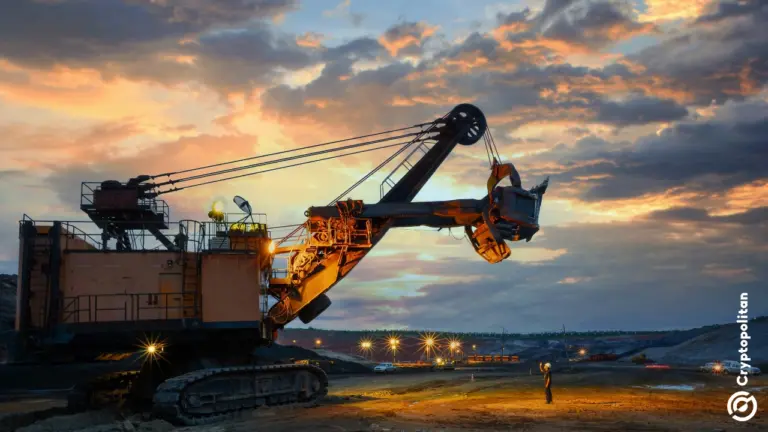
China has removed export restrictions on rare earth magnets bound for India, Indian media reported on Tuesday, in a calculated move timed with a diplomatic visit to New Delhi by Chinese Foreign Minister Wang Yi.
The decision lands as both nations deal with escalating trade pressure from U.S. President Donald Trump, whose administration has slapped steep tariffs on both Asian economies.
The rollback of the curbs appears to be part of a broader effort to stabilize relations between Beijing and New Delhi as the U.S. raises the temperature on global trade.
During his visit, Wang met with his Indian counterpart, Subrahmanyam Jaishankar, on Monday and delivered a pointed message. Without naming Washington directly, Wang said China and India “should find ways to coexist against a backdrop of unilateral bullying.”
He added that the two countries “should view each other as partners and opportunities rather than adversaries or threats,” according to a statement from China’s Foreign Ministry.
Jaishankar responded by saying both sides were trying to move forward after what he called “a difficult period in our relationship.” He added, “Differences must not become disputes, nor competition conflict.”
Modi confirms visit as trade, border talks continue
Wang’s visit continued on Tuesday with a meeting with Indian Prime Minister Narendra Modi, who welcomed the “steady and positive progress” of bilateral ties, according to India’s Foreign Ministry. Modi also confirmed he would travel to China for the upcoming summit of the Shanghai Cooperation Organization, a regional security group that includes Russia. It will be his first trip to China in seven years.
Tensions between the two countries had reached a breaking point in 2020 when a deadly clash at the disputed border in the Himalayas killed 20 Indian soldiers and four Chinese troops. Since then, both sides have built up permanent military infrastructure and deployed tens of thousands of troops near the Line of Actual Control.
High-level military talks failed multiple times to ease the standoff. But a breakthrough came last October, when the two sides finalized a new border patrol agreement, which allowed Modi and China’s President Xi Jinping to meet in Russia. That meeting didn’t resolve everything, but it reopened diplomatic doors that had been shut for years.
Signs of cautious normalization have continued. Indian pilgrims were recently allowed to visit religious sites in Tibet, and India resumed issuing tourist visas for Chinese nationals. Wang also held talks on Tuesday with Indian National Security Adviser Ajit Doval, who said during opening remarks, “Borders have been quiet, there has been peace and tranquility, our bilateral relations have been more substantial.”
Trump tariffs pressure both economies into alignment
The underlying driver of this renewed activity is Trump’s aggressive tariff strategy. In recent weeks, the U.S. imposed a 25% tariff on Indian imports, with Trump threatening to double it to 50% by the end of the month.
That would bring India’s tariff exposure close to the same level the U.S. already applies to many Chinese goods. Analysts say this pressure is forcing both China and India to look to each other as trade partners rather than rivals.
“Mr. Trump and his actions may have given it a greater sense of urgency than before,” said Harsh Pant, head of strategic studies at the Observer Research Foundation in New Delhi. “The Chinese seem to be playing to this idea of, ‘Look, we are the more reliable partner.’”
The India-China trade relationship is valued at around $130 billion, comparable to India’s trade with the U.S., but heavily lopsided in China’s favor. India imports significantly more from China, especially in electronics, where Indian manufacturers rely on Chinese parts. Some Indian officials believe deeper trade engagement with China may be essential to accelerate India’s domestic manufacturing ambitions.
Despite this pivot, Indian officials say they still value the U.S. partnership and want to fix current trade disputes. One official said the current China-India diplomatic meetings were not a response to Trump but had been planned well in advance.
Still, the structural problems between New Delhi and Beijing haven’t vanished. The border is quiet for now, but both sides have hardened their positions. India continues to host the Dalai Lama, the exiled Tibetan spiritual leader, who Beijing views as a separatist.
The smartest crypto minds already read our newsletter. Want in? Join them.
Disclaimer. The information provided is not trading advice. Cryptopolitan.com holds no liability for any investments made based on the information provided on this page. We strongly recommend independent research and/or consultation with a qualified professional before making any investment decisions.

Jai Hamid
Jai Hamid has been covering crypto, stock markets, technology, the global economy, and the geopolitical events that affect markets for the past 6 years. She has worked with blockchain-focused publications including AMB Crypto, Coin Edition, and CryptoTale on market analyses, major companies, regulation, and macroeconomic trends. She has attended London School of Journalism and thrice shared crypto market insights on one of Africa’s top TV networks.