







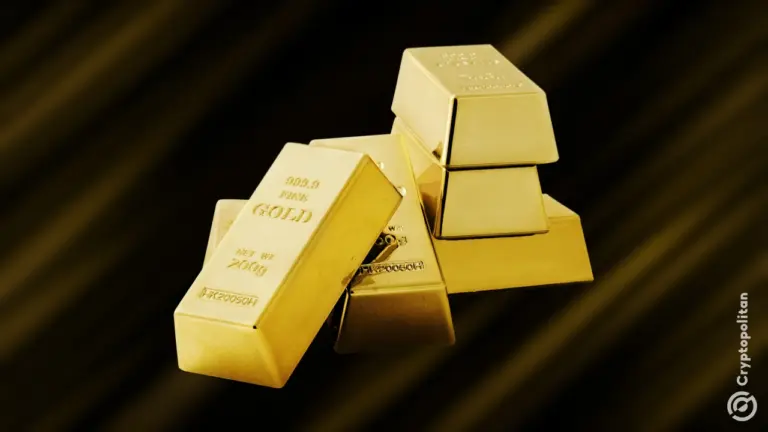
- Some central banks are selling gold because war-driven oil costs, weak currencies, and cash needs are forcing them to use reserves.
- Spot gold has dropped about 10% from its late January peak and traded near $4,838 per ounce.
- Turkey led the selling with a 131-ton drop in March, while Russia, Ghana, and Poland also showed signs of using gold reserves.
Gold is no longer getting the same support from central banks that helped keep prices strong over the past few years.
Of course, the reason is Trump’s war in Iran, because as you know, war costs money, and higher oil prices are hurting countries that depend on imports, local currencies are under pressure, and some central banks need fast access to cash.
Instead, gold has pulled back. Spot gold currently trades around $4,838 per ounce and is down about 10% from its late January high, putting it in correction territory, even per data from TradingView.
Silver fell by 0.2% to $79.40 per ounce, Platinum rose by 0.8% to $2,119.52, while Palladium dropped by 1.1% to $1,570.10.
Turkey is leading central bank gold sales
Turkey’s official gold holdings fell by 131 tons in March through swaps and direct sales as authorities tried to steady the lira, Metals Focus said in a report published last Thursday. Since the Iran war began, the Turkish lira has fallen about 1.7% against the U.S. dollar and slipped to new all-time lows.
Putin’s Russia has also trimmed gold holdings in recent months, with the cuts likely tied to budget shortfalls. Ghana has also sold reserves to raise foreign currency liquidity. Poland’s central bank governor briefly looked at selling part of the country’s gold stockpile to help pay for defense spending. That got attention because Poland was the biggest central bank buyer of gold in both 2024 and 2025.
Right now, oil is more expensive, the U.S. dollar is stronger, and borrowing costs are higher All three make life tougher for countries already dealing with weak currencies. When exchange rates come under pressure, central banks often step into the market to support them. That takes cash. Gold is one of the few reserve assets they can quickly use when stress gets worse.
From 2022 through 2024, central banks bought more than 1,000 tons of gold a year, the World Gold Council said. 2022 was the biggest year on record for annual central bank gold demand. In 2025, that pace slowed to 863 tons as price swings became more violent.
Big reserve holders Reserve Bank of India, the People’s Bank of China, and the Bundesbank have said little about recent activity, so the full picture is still hard to see.
Investors watch falling gold prices as rate fears and weak demand hit the market
Meanwhile, retail investors are also pulling money out of gold positions, meaning two major sources of demand for bullion are weakening at the same time.
Some in the market say the selling does not mean central banks are done with gold. Shaokai Fan, global head of central banks at the World Gold Council, said: “It really emphasizes why central banks hold gold… it’s a liquid asset that typically performs well during periods of uncertainty, and therefore they can deploy it if needed.”
China has also stepped in during price dips in the past, which keeps traders alert for fresh buying if prices fall further.
Chicago Fed President Austan Goolsbee said Tuesday that the Federal Reserve may have to wait until 2027 to cut rates if high oil prices from the Iran war keep slowing progress toward the Fed’s 2% inflation goal.
The market now sees a 32% chance of a U.S. rate cut this year. In ECONS 101, you learn that higher interest rates tend to hurt gold because it does not pay yield, so investors lose more by holding it instead of interest-bearing assets.
If you're reading this, you’re already ahead. Stay there with our newsletter.
Disclaimer. The information provided is not trading advice. Cryptopolitan.com holds no liability for any investments made based on the information provided on this page. We strongly recommend independent research and/or consultation with a qualified professional before making any investment decisions.

Jai Hamid
Jai Hamid has been covering crypto, stock markets, technology, the global economy, and the geopolitical events that affect markets for the past 6 years. She has worked with blockchain-focused publications including AMB Crypto, Coin Edition, and CryptoTale on market analyses, major companies, regulation, and macroeconomic trends. She has attended London School of Journalism and thrice shared crypto market insights on one of Africa’s top TV networks.









