

BOJ holds rates and slows bond taper, yen edges up on Ueda warning over trade risks


- The BOJ kept interest rates at 0.5% and confirmed it will slow bond purchases starting April 2026.
- Governor Kazuo Ueda warned of global trade risks, causing the yen to rise slightly against the dollar.
- President Trump left the G7 summit early and warned Americans to evacuate Tehran, fueling market uncertainty.
The BOJ ended its policy meeting Tuesday by keeping its short-term interest rate locked at 0.5%, exactly where it’s been since March.
All members backed the call. No changes were made to the ongoing bond taper schedule, which runs until March 2026, but the central bank released a new roadmap for what happens next.
Starting April 2026, it’ll slow things down. Monthly bond purchases will be cut by 200 billion yen every quarter, eventually trimming them to 2 trillion yen per month by March 2027.
The decision showed that the BOJ still prefers a cautious, drawn-out approach. While other global central banks are slamming brakes or even reversing course, Japan is easing off the gas like it’s driving in thick fog.
Ueda’s warning pushes yen slightly higher
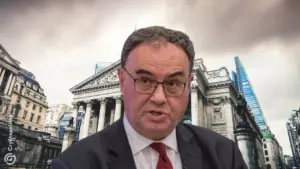
After the meeting, Kazuo Ueda, the BOJ Governor, gave a press briefing in Tokyo and said there’s still “high uncertainty” in global trade. That line was enough to move the yen. It had been wobbling before Ueda spoke, but edged higher once he pointed out the risks. The dollar, by contrast, was flat. Traders had already priced in the decision, but Ueda’s trade comments added weight.
Currency markets barely moved elsewhere. The euro was stuck at $1.1556, with no big reaction. The pound dropped slightly to $1.3562 after President Donald Trump signed a deal on Monday at the White House that cuts some tariffs on UK goods.
But not everything got relief—steel imports are still stuck with tariffs. The Australian dollar, often seen as a bet on risk, went up 0.22% against the greenback. The US dollar index hovered at 98.18, barely moved by any of it.
Ueda wasn’t signaling any new policy shifts. He was pointing out the same thing traders already knew: with tensions rising across global trade routes, it’s hard to commit to tighter monetary policy. The BOJ wants room to breathe, and Ueda just gave it a reason.
Markets drop as Middle East crisis escalates
Away from Japan, markets were shaken by new conflict headlines out of the Middle East. Fighting between Iran and Israel intensified this week. On Monday night, Trump used his Truth Social account to post that “Everyone should immediately evacuate Tehran.”
That post dropped just before he left the G7 summit in Canada early. Trump told reporters his early exit had “nothing to do with a Cease Fire. Much bigger than that.”
This came after Emmanuel Macron, the French President, claimed that Trump proposed a truce between Israel and Iran. Trump denied that. The contradiction left diplomats scrambling. No clear outcome emerged from the G7, and analysts weren’t impressed.
Jim Reid, a strategist at Deutsche Bank, summed it up in a note: “We’re all in a bit of a limbo in terms of whether anything substantive came out of the summit and whether Trump was alluding to new information with his post and his early G7 meeting departure.”
US stock futures didn’t like any of it. The Dow Jones Industrial Average futures dropped 191 points, or 0.5%. Futures tied to the S&P 500 also fell 0.5%, as did Nasdaq 100 contracts. No one was buying into uncertainty.
Energy traders responded even faster. With tensions rising in the Middle East and Trump stirring the pot, oil prices spiked. West Texas Intermediate futures rose 1.5%. Brent crude climbed 1.7%. Risk-off sentiment was all over the place, and safe havens were in demand.
Through all of it, the BOJ stayed the course. They’ll keep buying bonds for now, but with smaller steps each quarter after 2026 starts. Until then, it’s status quo. Inflation in Japan hasn’t broken out like it has in the US or Europe. That gives them time. Whether that lasts is a whole different question. But for now, the BOJ is taking its time.
Don’t just read crypto news. Understand it. Subscribe to our newsletter. It's free.
Disclaimer. The information provided is not trading advice. Cryptopolitan.com holds no liability for any investments made based on the information provided on this page. We strongly recommend independent research and/or consultation with a qualified professional before making any investment decisions.

Jai Hamid
Jai Hamid has been covering crypto, stock markets, technology, the global economy, and the geopolitical events that affect markets for the past 6 years. She has worked with blockchain-focused publications including AMB Crypto, Coin Edition, and CryptoTale on market analyses, major companies, regulation, and macroeconomic trends. She has attended London School of Journalism and thrice shared crypto market insights on one of Africa’s top TV networks.