






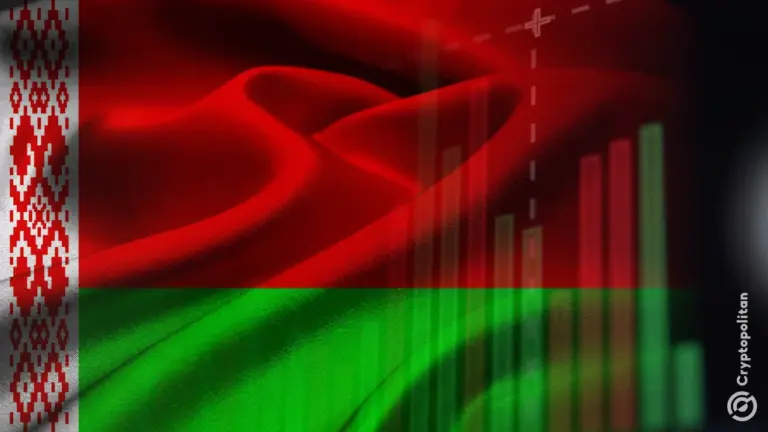
- Minsk is restricting access to global trading platforms from Belarus.
- The websites of crypto exchanges such as Bybit and Bitget have been blacklisted.
- The ban has been ordered by the Belarus Ministry of Information, which gave no reasons for it.
Belarusian authorities have targeted several of the largest global crypto exchanges, making them unavailable in the country.
The decision to prevent Belarusians from using their services comes from the Ministry of Information, local and regional media revealed.
Belarus blacklists leading coin trading platforms, skips Binance
The websites of several of the world’s top crypto trading venues have been added to a Belarusian list of restricted internet resources.
The latter is maintained by BelGIE, a government body serving as the country’s watchdog overseeing the telecommunications sector.
The measure is affecting some of the most popular exchanges in the global crypto space, including Bybit, Bitget, and OKX, the Onliner.by outlet informed, quoted by the Russian business news portal RBC.
According to Sputnik Belarus, their sites were blacklisted on Wednesday, December 10, without providing any specific reasons for the move.
The entries in the state-run database, however, reveal that access has been blocked “based on the decision of the Ministry of Information.”
Attempts to reach Bybit through the national internet provider Beltelecom returned a message indicating that the restrictions are in accordance with the Belarusian Law “On Mass Media.”
Later, the ministry explained the measure is based on a signal from the Minsk City Executive Committee which identified “inappropriate advertising” on the following websites: okx.com, bitget.com, bingx.com, bybit.com, weex.com, and gate.com
It also said that “more detailed information on the nature of the violations can only be provided to the owners of these internet resources,” noting that access can be restored after these violations are eliminated.
Some users are suggesting using a VPN, which is currently the only option, but Onliner warns that this could potentially result in the blocking of accounts by the exchanges themselves, as they are capable of detecting login attempts from banned jurisdictions or hidden IP addresses.
RBC later noticed that some of the targeted exchanges, like the blacklisted Bitget and OKX, as well as Kucoin and MEXC, became temporarily accessible.
The Russian news outlet also highlighted that other major digital-asset platforms, most notably Binance, the world’s largest crypto exchange by trading volume, and KuCoin, are not on the list at all.
Belarus bringing order to its Bitcoin scene
Amid a growing volume of cryptocurrency transactions, the government in Minsk has been taking steps to update crypto rules in Belarus, a leader in the post-Soviet space in terms of regulations.
Belarus was one of the first countries in Eastern Europe to introduce a regulatory framework for what it broadly calls “digital tokens.” It did it with a presidential decree on the development of the digital economy, which went into force in 2018.
Since then, both the regulated and unregulated crypto markets in the country have been expanding, and in September, President Alexander Lukashenko urged officials and government institutions to catch up with the industry.
The long-term Belarusian leader also highlighted the increasing importance of cryptocurrencies, particularly in payments, with those made by his compatriots expected to reach $3 billion by the end of the year.
Access to global exchanges is now being restricted after financial authorities already banned private citizens and individual entrepreneurs from trading crypto on non-Belarusian exchanges last year, amid concerns about capital flight from the sanctioned nation.
Minsk has also been attacking the use of cryptocurrencies for illicit purposes. At the end of November, the head of the country’s state auditing body announced the establishment of a register for wallets used in criminal activities, as reported by Cryptopolitan.
The database has been set up as part of a mechanism for the seizure of such digital funds, introduced ahead of the country’s next assessment by the Financial Action Task Force (FATF), the international organization fighting money laundering and the financing of terrorism.
Last month, the National Bank of Belarus suggested the establishment of a unified framework for crypto regulation within the Eurasian Economic Union (EAEU) – the single market format led by Russia, which is now preparing to adopt its own comprehensive crypto rules in 2026.
The smartest crypto minds already read our newsletter. Want in? Join them.
Disclaimer. The information provided is not trading advice. Cryptopolitan.com holds no liability for any investments made based on the information provided on this page. We strongly recommend independent research and/or consultation with a qualified professional before making any investment decisions.










