


- The Bank of England will cut rates to 4.25% on Thursday due to global trade uncertainty.
- More cuts are expected this year, with rates possibly falling to 3.5% by December.
- Inflation dropped to 2.6% in March, below forecasts, while wage growth remains high.
The Bank of England is getting ready to slash rates by 0.25 percentage points on Thursday, which will drop the UK’s benchmark interest rate from 4.5% to 4.25%.
That decision is coming straight from the Monetary Policy Committee (MPC), and it’s likely gonna be the first of many as policymakers prepare for more cuts in the coming months, according to a report from the Financial Times.
The MPC is, of course, dealing with the chaos triggered by President Donald Trump’s ongoing trade wars, which have been screwing with global markets for months at this point.
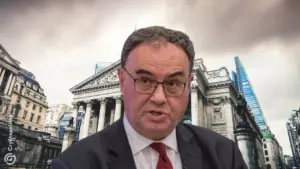
So far, Andrew Bailey, the governor of the Bank of England, hasn’t held back. He’s already said the US tariffs are bad news for UK business activity. But this Thursday will be the first time the committee actually lays out how those policies might change their outlook on inflation.
MPC prepares for deeper cuts as inflation drops
Right now, markets think Thursday’s rate cut is practically guaranteed. Some investors even believe one or two MPC members might vote for a 0.5% cut, not just 0.25%. They’re also betting on three more cuts by the end of 2025, which would take the rate all the way down to 3.5%. That’s a huge drop from the 5.25% rate where the MPC started its rate-cutting spree last summer.
That’s not what the MPC originally said they’d do. Back in February, they promised a slow, “gradual and careful” approach to bringing down borrowing costs. Clearly, plans have changed. Investors are pushing for action. Some economists are not so quick to jump in, though. According to a Reuters poll, they think the MPC might only go as far as 3.75% by the end of the year. But even that would show a shift toward a more aggressive stance.
Jack Meaning from Barclays said the MPC will probably confirm that risks are moving toward lower inflation. In his words, they might not promise anything right away, but they’ll probably “open the door to a June cut.” And it’s not just talk. The data since February backs them up. Inflation is cooling down, just like the MPC hoped.
UK GDP did better than expected at the start of the year. That gave policymakers some breathing room, even though things are starting to look rough again. Inflation dropped faster than anyone guessed. It was down to 2.6% in March, below the MPC’s February predictions.
Wage growth is still a problem. It hit 5.9% in the three months leading to February, and the Bank of England thinks that’s still too high. But the job market is starting to slow. That’s helping balance things out. All these shifts might calm the committee’s earlier fears that weak growth and rising prices were caused by deeper issues on the supply side of the economy.
BoE forced into faster action
Rob Wood from Pantheon Macroeconomics said the MPC still has work to do to beat inflation but added that Trump’s tariffs might actually help them out. If tariffs kill demand, they could lower prices without the MPC lifting a finger.
The committee hasn’t said much publicly, but Megan Greene, one of the more hawkish members, recently admitted that tariffs are more likely to bring prices down than push them up. Sandra Horsfield at Investec added that nearly everything related to trade points toward less inflation pressure in the UK.
The uncertainty surrounding trade is hitting businesses and consumers hard. Companies don’t want to invest, and people are holding onto their wallets. There’s also talk of a weaker dollar, lower global energy costs, and Chinese exporters slashing prices as they look for new markets outside the US. All of this stacks up in favor of disinflation.
Everyone’s waiting to see how the MPC updates its risk scenarios. Back in March, the committee said it was looking at two major situations: one where weak global demand keeps inflation low and one where high wages continue pushing prices up. They might tweak those scenarios now to factor in Trump’s trade fight.
The smartest crypto minds already read our newsletter. Want in? Join them.
Disclaimer. The information provided is not trading advice. Cryptopolitan.com holds no liability for any investments made based on the information provided on this page. We strongly recommend independent research and/or consultation with a qualified professional before making any investment decisions.

Jai Hamid
Jai Hamid has been covering crypto, stock markets, technology, the global economy, and the geopolitical events that affect markets for the past 6 years. She has worked with blockchain-focused publications including AMB Crypto, Coin Edition, and CryptoTale on market analyses, major companies, regulation, and macroeconomic trends. She has attended London School of Journalism and thrice shared crypto market insights on one of Africa’s top TV networks.