






- Apple’s iPhone Air faces shipment delays in China as regulators review eSIM approval, despite support from all three major telecom operators.
- China Mobile, China Unicom, and China Telecom confirm readiness for eSIM, while other iPhone 17 models remain on schedule for September 19 release.
- Strong pre-orders boost Apple’s iPhone 17 series in China, but investor concerns drive a $100 billion market value loss.
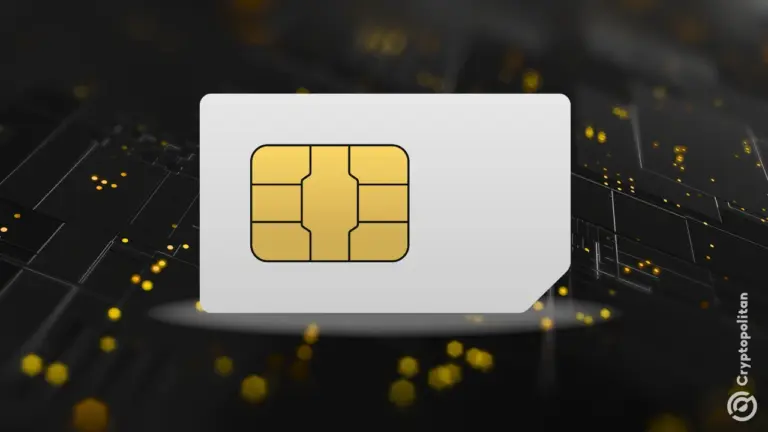
Apple’s latest iPhone Air is facing regulatory delays in China. However, the company confirmed that all three of the country’s major telecom operators will support the device’s embedded SIM technology.
Apple China said that China Mobile, China Unicom, and China Telecom will provide eSIM support for the upcoming iPhone Air. This is the first time all three state-owned operators are included, as Apple had previously only partnered with China Unicom for embedded SIM services.
The company did not provide a specific timeline for activation because the rollout is subject to regulatory approval. As reported by Cryptopolitan, the Ministry of Industry and Information Technology (MIIT) must authorize commercial deployment of eSIM technology before consumers can use it in mainland China.
e-SIM support unactivated, but network operators ready
At just 5.6 millimeters thick, the iPhone Air’s design does not have space for a traditional SIM tray, making eSIM the only option for network operators.
While the iPhone Air faces delays, the basic iPhone 17, iPhone 17 Pro, and iPhone 17 Pro Max will begin shipping from September 19. Pre-orders opened Friday evening on Apple’s official website, with the company confirming that schedules for these models are unaffected.
Apple’s global rollout of eSIM-only devices has already advanced in markets such as Europe and the United States.
As reported by the South China Morning Post, China Mobile announced on microblogging platform Weibo this week that it had enabled eSIM services for mobile phones, but said details of the commercial launch would be disclosed separately.
China Telecom’s Beijing branch similarly posted on social media platform RedNote that it would introduce eSIM services on September 19, the original shipping date for the iPhone Air, but the post was later removed.
According to Chinese media outlet The Paper, a China Telecom representative said the company was waiting for final approval from MIIT, which was expected “very soon.”
Reports from The Post last week suggested that shop assistants at Apple-authorized resellers in Foshan and other cities in Guangdong province had not received training for eSIM support. For Apple staff in Europe, reseller staff were required to complete eSIM training courses as early as last Friday, according to aggregator site MacRumors.
Overseas eSIMs won’t work in China
Apple also confirmed that iPhone Air models purchased outside mainland China will not work with eSIMs from Chinese carriers. The restriction is supposedly meant to block customers from bypassing local regulations by purchasing devices overseas.
The limitation may discourage some Chinese consumers from sourcing the iPhone Air abroad, even with the availability of Apple Intelligence features in foreign markets.
Analysts say the iPhone Air is positioned to capitalize on this consumer trend, with its 5.6-millimeter profile making it one of the slimmest smartphones ever released.
China has a strong demand for iPhone 17
Away from iPhone Air’s delay in the Chinese market, Apple’s iPhone 17 lineup has recorded high numbers in the first minute of pre-orders. Sales on JD.com had sped fast ahead of the first-day exceeding the pre-order volume of last year’s iPhone 16 lineup. According to the e-commerce platform, the standard iPhone 17 with 256 gigabytes of storage was the most popular variant among consumers.
Financial markets, however, responded oppositely to the demand for the newest iPhone lineup. Apple’s stock declined 1.5% immediately after the unveiling of its new smartphones last Tuesday, and dropped more than 3% the following day. The slump wiped out over $100 billion in market value.
The sell-off came against the backdrop of Apple’s confirmation that it would absorb nearly $1 billion in US tariffs without increasing consumer prices. Economists believe the choice is very customer-friendly, but in the eyes of investors, it will translate to thinner profit margins.
The smartest crypto minds already read our newsletter. Want in? Join them.
Disclaimer. The information provided is not trading advice. Cryptopolitan.com holds no liability for any investments made based on the information provided on this page. We strongly recommend independent research and/or consultation with a qualified professional before making any investment decisions.

Florence Muchai
Florence has been covering for the past 6 years crypto, gaming, tech, and AI news. Her Computer Studies at Meru University of Science and Technology and Disaster Management and International Diplomacy at MMUST amply equip her with language, observation and technical skills. Florence has worked at VAP Group and as an editor for several crypto media houses.









